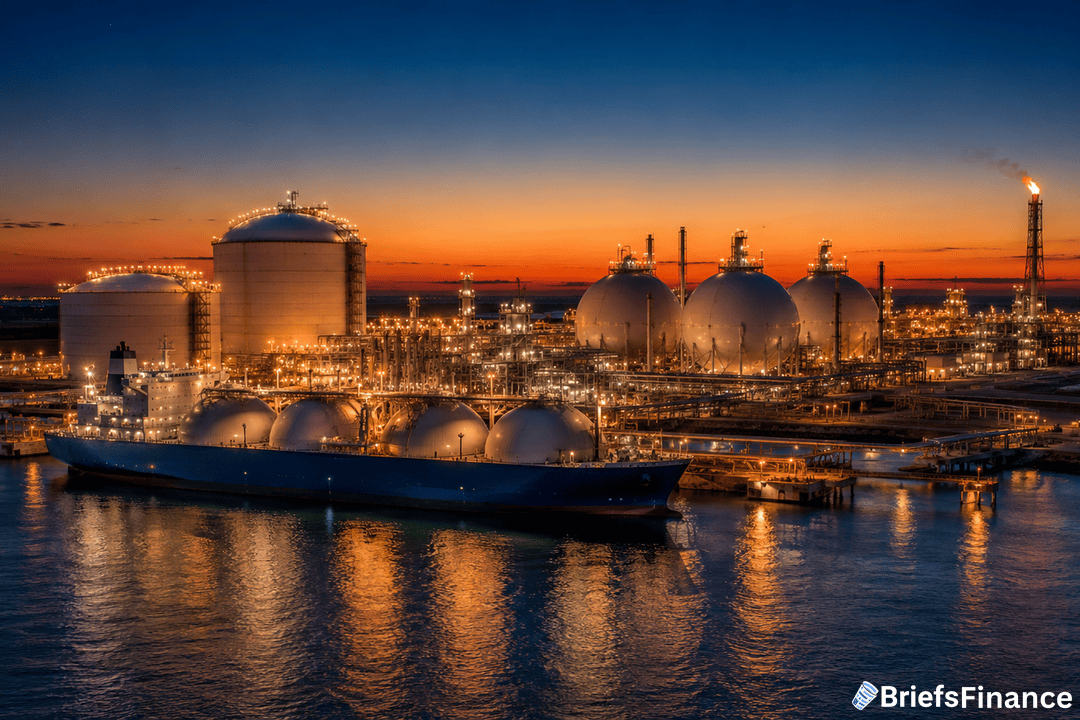
China is hosting APEC this year, so the U.S. is using the stage to pitch the room on American energy.
Casey Mace, the U.S. Senior Official to APEC, told Bloomberg TV on Friday that the 21-economy group is an "enormous market" for American goods and services, worth about $1.5 trillion last year. The pitch is that there is room for a lot more.
LNG was the headline product.
What Mace Said
Mace said President Trump views APEC "as an important dimension to our trade agenda," which is notable framing because APEC is one of the few multilateral forums the Trump administration has openly engaged with this year.
Liquefied natural gas got a specific call-out, since the U.S. has been pushing LNG as both an energy-security solution for partners and a flagship product under the America First trade plan.
The U.S. delegation took part in APEC's Second Senior Officials' Meetings and Ministerial Meetings in Shanghai and Suzhou from May 11 to 23.
Deputy U.S. Trade Representative Rick Switzer led the U.S. delegation at the Ministers Responsible for Trade meeting in Suzhou, which capped the run.
Market Briefs covers global trade and energy moves like this every weekday morning, with a free investing masterclass when you sign up.
Why This Matters For Investors
LNG has been one of the biggest growth stories in U.S. energy this decade, with American exports climbing sharply after 2022 as European buyers replaced Russian gas and Asian buyers added capacity to feed growing power demand.
Selling more of it to APEC economies is a clear win for the U.S. energy export chain - terminal operators, gas producers, and the shipping firms that move the cargoes.
It is also a way for buyers in Asia to diversify away from any single supplier, which Mace pitched as a feature of the deal.
The U.S. working the room while China hosts is the part to watch.
The Bigger Trade Picture
Energy diplomacy is becoming a bigger piece of the U.S. trade pitch this year, with LNG, refined fuels, and even nuclear technology framed as products that lock in long-term partnerships.
American LNG terminals on the Gulf Coast are mostly backed by long-term sales contracts that stretch well past 2030, which gives Washington leverage in any new trade deal that touches energy.
For Asian buyers, the appeal is supply that does not run through any single chokepoint and is priced against a different benchmark.
What To Watch
APEC moves to South Korea in 2027, which gives Washington roughly six months to lock in trade and energy commitments while the U.S. has the diplomatic spotlight in Asia.
Mace's pitch was not a deal but a sales call, and the follow-up is the part that counts.
The U.S. is using China's stage to sell American gas.
Want this kind of read on global trade and energy every morning? Join 350,000+ investors reading Market Briefs and grab a free 45-minute investing course as a sign-up bonus.