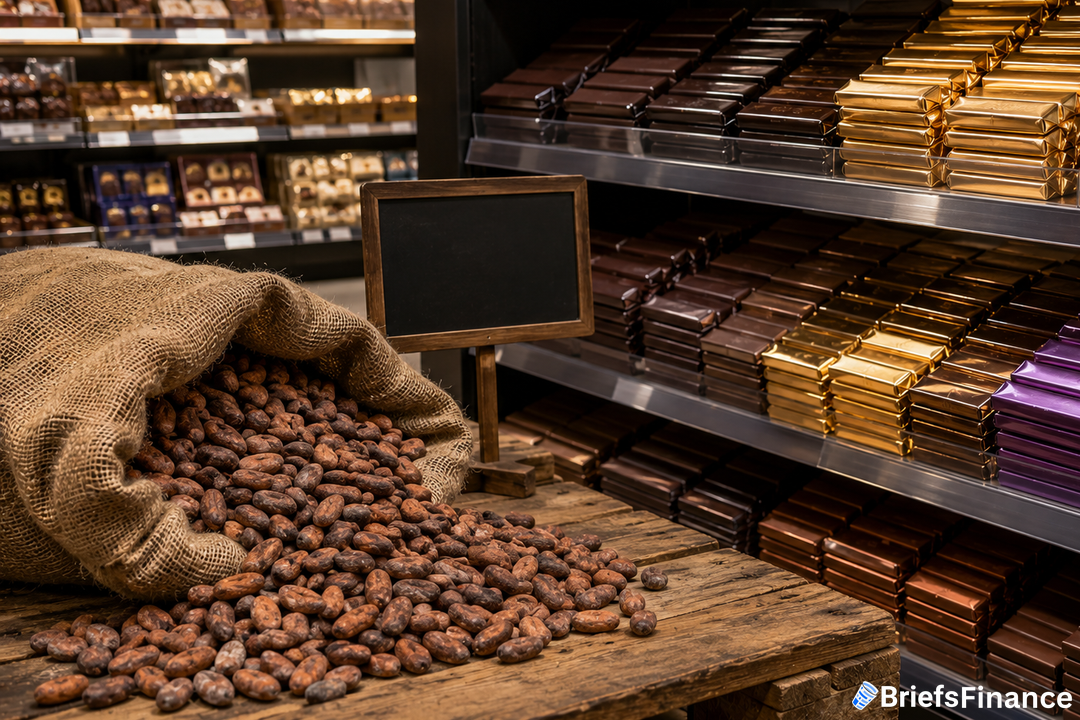
The Cocoa Price Crash That Didn't Reach Your Grocery Bill
Cocoa prices took off like a rocket two years ago. Poor harvests in West Africa - where 60 to 70 percent of the world's cocoa beans come from - combined with El Niño weather patterns and climate change to squeeze supply. By the end of 2024, cocoa futures hit almost $12,000 per metric ton.
Since then, prices have come down hard. That is still a lot higher than the typical $2,000 to $3,000 range the market saw for the last twenty years.
Those companies responded to the surge by raising prices sharply. Nestlé blamed higher cocoa and coffee costs for a 2.8 percent drop in its underlying profit during the initial six months of 2024.
The disconnect between wholesale cocoa costs and retail chocolate prices stems from the way companies manage their supply chains. Most major chocolate producers buy cocoa futures contracts months in advance to lock in prices, meaning retail prices today still reflect the higher costs from earlier in the year. As these hedges expire, consumers might eventually see some relief, but manufacturers are reluctant to cut prices while they can maintain margins through premium branding.
Get the market news that matters in a five-minute read with Market Briefs, our free daily newsletter
Premium Bars and Viral Trends to the Rescue
Chocolate makers are not rushing to cut retail prices. Instead, they are trying a different playbook. Lindt has selectively lowered prices in key markets like Germany and Switzerland, especially around Christmas, but Barry Callebaut and Nestlé have not mentioned any broad price cuts.
The bigger bet is on premium products and social media buzz. Lindt's CEO, Adalbert Lechner, said the "extraordinary success" of the company's Dubai-style chocolate launch demonstrated "the growing power of social media in building awareness, engagement, and demand for our brands." Nestlé's CEO, Philipp Navratil, said the company wants to get "more digital, more social, more organic, more fun" to reach younger consumers. Dubai chocolate has also appeared on shelves at major retailers including Walmart, Trader Joe's, Shake Shack, and Harrods.
Lindt's CEO said the company can "attract new consumers, increase purchase frequency, and offer more touchpoints with the Lindt brand without compromising our premium positioning."
The volume drop is real. But Barry Callebaut's overall sales volume grew 5.7 percent in the third quarter - its first positive quarter in over two years - helped by an 18 percent jump in cocoa sales after a market correction earlier this year.
What This Means for Your Portfolio and Your Wallet
UBS analysts expect Lindt's cocoa hedging to save the company about 500 million Swiss francs by 2027, which would help ease cost pressure.
Consumers are clearly feeling the pinch. Higher prices pushed people to buy less. For shoppers, do not expect your favorite chocolate bar to get cheaper anytime soon. Cocoa futures are still well above historical averages, and the companies have shown they will hold prices rather than compete on cost.
Join Market Briefs, our free daily newsletter, for a quick daily rundown of the markets