Big Tech makes money when you stare at your screen. So a few users now pay for phones built to stop them.
That is the quiet bet behind the dumb phone comeback. And it is growing fast.
One Teacher's Flip Phone Life
Cheryl Geliebter is a 40-year-old teacher in New York. She has only ever carried a flip phone.
She keeps it to dodge the pull of alerts and the open web. She told CNBC it feels like a blessing most days.
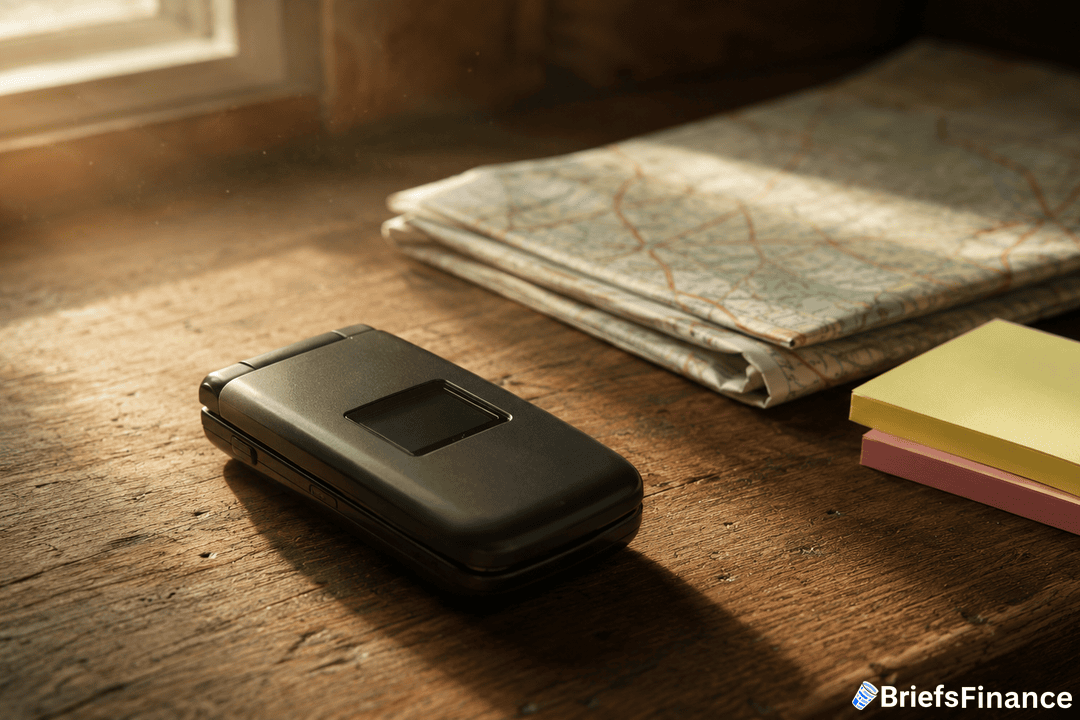
Her habits sound like a different decade. She prints map directions before trips.
She also writes reminders on Post-it strips. They are stuck right inside the phone's case.
She spends about an hour a day on it. Once a text is done, the phone goes away.
There is nothing else to do on it. For her, that is the whole point.
Her family once stuck with dumb phones together. Her dad switched in 2016 to track his commute.
Her mom changed later when an old network shut down. Geliebter and her brother stayed put.
She even won a smartphone once. But she never turned on service for it.
She used it as a small tablet instead. Real buttons just feel better to her.
It is not all upside, though. She nearly missed a party planned in a work chat she could not see.
Long texts are a chore too. She types them on a laptop, emails them to herself, then sends them on.
We unpack the trends shaping how people spend and invest every morning in Market Briefs - five minutes a day, with a free investing masterclass when you join.
Dumb Phone Sales Are Climbing
She is not alone, and the sales data shows it. Dumb phone sales among 18-to-24-year-olds jumped about 148% from 2021 to 2024.
Smartphone use in that age group slipped at the same time. The trade is on purpose.
The pitch is less screen time and more focus. Think of it like trading a buffet for a set menu.
The limits are the whole point. Close to half of Gen Z now say they try to cut their screen time.
The reasons go beyond focus. Some buyers want more privacy, since a basic phone holds far less of their data.
Others just like the look. Old flip phones are trendy again.
Phone makers have noticed the pull. Brands like HMD and Light Phone now sell simple models on purpose.
Where The Ad Money Comes From
For tech's biggest names, your attention is the product. They sell it to ad buyers.
That is how Meta and Google grew into giants. Both built trillion-dollar businesses.
The crowd ditching smartphones is still tiny. It sits next to billions of phone users.
But it points at a real tension. The screen time that pays for ads is the thing these buyers want less of.
The catch: this is a niche, not a threat to profits yet. The firms behind basic phones lean into the "less is more" pitch.
That pitch keeps pulling in new buyers. Even Apple and Google now ship screen-time tools of their own.
Worth Noting
The bigger question is whether this turns into a habit. A mood is easy to start and easy to drop.
A teacher in New York has lived this way for decades. The market is only starting to follow.
If you want this kind of read on the market every morning, join 350,000+ investors reading Market Briefs and get a 45-minute investing course thrown in.