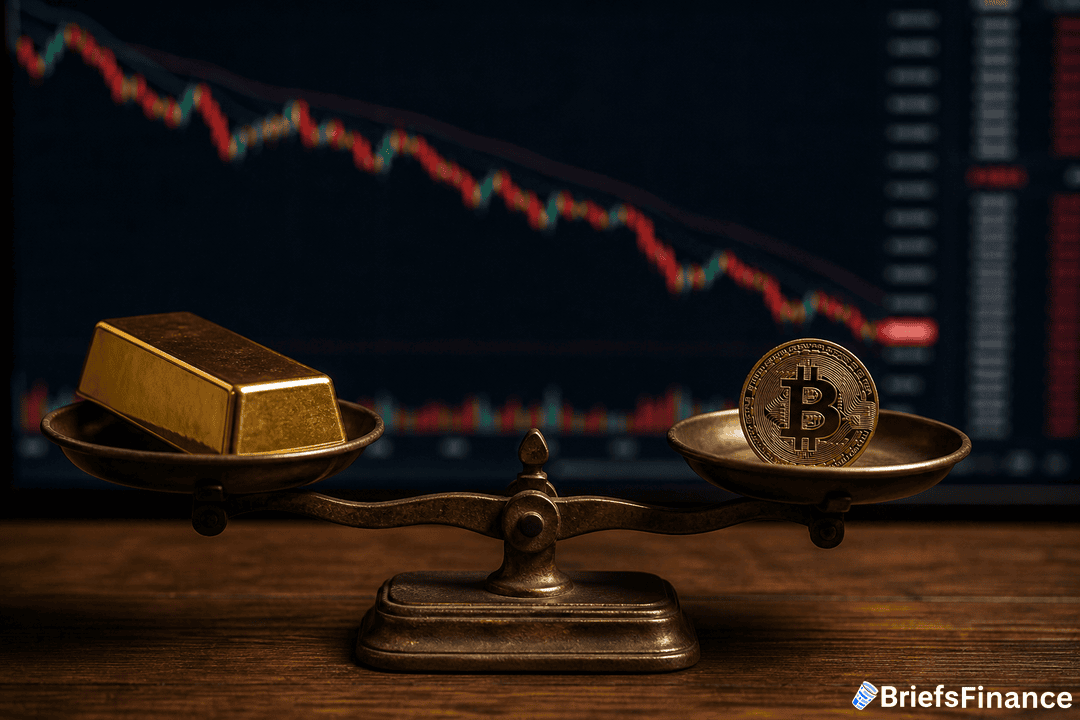
Investors are pouring money into both gold and bitcoin exchange-traded funds at an unprecedented pace. Over the past five trading days, these two asset classes attracted a combined $7 billion, according to Bloomberg Intelligence.
The biggest beneficiaries were the two largest funds in their categories. SPDR Gold Shares (GLD) saw $3.4 billion in inflows, while iShares Bitcoin Trust (IBIT) added $1.5 billion. Both ranked among the top U.S. funds for weekly inflows, with GLD trailing only a few other vehicles, such as the Vanguard S&P 500 ETF (VOO).
What stands out is that investors are buying both assets at the same time. Traditionally, gold and bitcoin have attracted different types of investors - gold for cautious, safety-seeking portfolios, and bitcoin for those comfortable with higher risk. Now, both are being embraced by the same crowd.
The reason, according to several analysts, is the deteriorating state of government finances. Large deficits and heavy borrowing are raising worries that currencies will lose value over time. In such an environment, assets with a fixed or limited supply become more attractive. Gold fits that description, and so does bitcoin, which has a hard cap of 21 million coins.
This dynamic has revived what some call the "debasement trade." The idea is that growing fiscal pressures and looser monetary policy make scarce assets more appealing. Gold is benefiting from its status as a traditional safe haven, while bitcoin is gaining traction as a modern hedge against government overreach.
When fear of debasement drives money into both gold and Bitcoin, grab the free Always Be Buying E-Book to build wealth steadily
Gautam Chhugani, a senior analyst at Bernstein covering digital assets, pointed out that governments now face higher interest payments after a long period of falling rates came to an end. He argued that investors could benefit from owning scarce assets like bitcoin, which cannot be easily created or diluted.
Eric Balchunas, senior ETF analyst at Bloomberg Intelligence, highlighted the symbolic importance of the move. He said that bitcoin is increasingly being treated as a "debasement hedge," similar to how gold has been viewed for decades.
The simultaneous surge in gold and bitcoin ETFs also reflects a shift in how institutional investors view portfolio construction. Historically, gold was the primary hedge against currency risk, while bitcoin was often dismissed as too volatile. But with fiscal deficits expanding across major economies, some money managers are now treating both as complementary stores of value. This has led to a convergence in demand, even as the two assets continue to trade differently on a day-to-day basis.
For regular investors, the takeaway is straightforward: the line between gold and digital gold is blurring. Bitcoin is no longer a fringe experiment but a mainstream hedge against inflation and government spending. However, these flows can reverse quickly, as both assets are volatile and sentiment can shift suddenly.
Still, the fact that major money managers are parking billions in both gold and bitcoin suggests a longer-term bet on the direction of government finances. Whether that bet pays off remains to be seen, but the trend is worth watching.