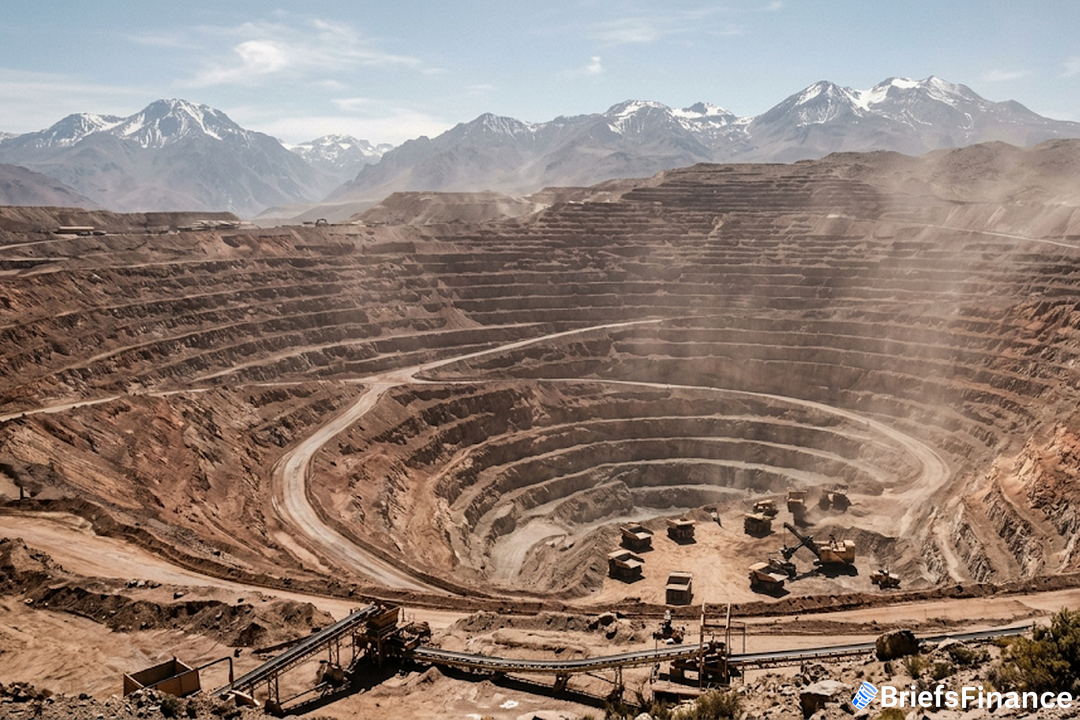
Why Chile Is Producing Less Copper
The country's shortfall is fundamentally a matter of supply, driven by conditions at the mines themselves.
Codelco and BHP Group are among the major producers investing heavily to counter those pressures, but the country has yet to get its copper sector growing again.
Grant Sporre, a Bloomberg Intelligence analyst, said, "Copper mine supply could stay tight in 2026, supporting a constructive price view." He added, "Unplanned outages and slow restarts at major mines are offsetting newly added supply."
Because Chile supplies roughly one-fourth of worldwide mine output, a sustained drop in its production tightens the global supply-demand balance.
Market observers track Chile's quarterly output closely because its mines supply a global market that has very little cushion. When the top producer underperforms, other countries cannot quickly make up the difference, which is why the price response has been clear.
Get the market news that matters in a five-minute read with Market Briefs, our free daily newsletter
Chile's data also shows how slowly copper supply can respond. New mines take years of planning and construction, so the gap left by weaker output from Chile cannot be filled quickly. That timing mismatch is why analysts see tightness lingering into 2026.
The struggle is also structural. Many of Chile's large copper operations were developed decades ago, and miners now have to process lower-grade ore while managing more waste and unplanned stoppages.
The same pattern is visible in other mining countries, where mature deposits and difficult project approvals make new supply slow to arrive. New projects may add capacity in the future, but they are still years from ramping up. With demand expected to grow from power grids, data centers, electric vehicles and other electrification uses, the market has little room for error.
The Squeeze Shows Up in Prices
The Generic 1st 'HG' future contract was up 0.93% on the day.
Shares of three big producers moved higher with it:
- BHP Group rose 1.96%.
- Freeport-McMoRan gained 1.13%.
- Antofagasta added 1.32%.
That deepens worries of a supply shortfall as power infrastructure, artificial intelligence, and electrification boost consumption.
For the current quarter, heavy storm damage in central Chile could have weighed on July output. The market will be watching the third-quarter numbers closely.
What It Means for Your Money
As long as supply stays constrained, the pressure on prices may remain.
The slow response from the supply side is part of the price story. If major mines continue to underperform, copper prices could stay elevated even if demand growth slows. Any sign of a recovery in Chilean production, by contrast, could take some heat out of the market.
Join Market Briefs, our free daily newsletter, for a quick daily rundown of the markets