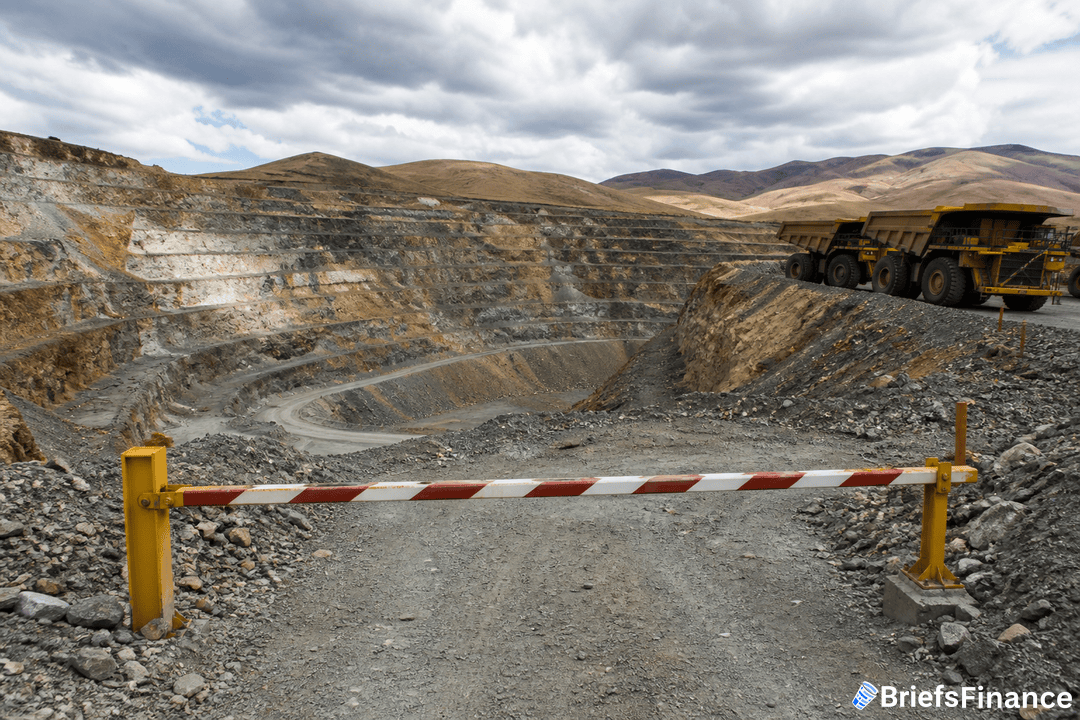
What happened at Centinela
Two unions at Antofagasta Plc's Centinela mine wrapped up government-brokered negotiations without an agreement, and the walkout began at 8 a.m. local time. The action involves more than 700 workers, or about 22% of the site's workforce. Union leaders say the stoppage will limit operations, while the company stated in a release that "projected production remains unchanged." It is the first strike at Centinela and only the second ever at the company.
What triggered the walkout
Union representatives cite gaps in pay and benefits among employees performing identical roles in different unions as the main sticking point. Antofagasta said it offered a 2% real-terms raise to base pay, plus a per-worker 22.5 million pesos end-of-dispute bonus, equal to $22,900.
Copper strikes move global metal prices within days. Market Briefs tracks commodities free every weekday.
The broader copper backdrop
The Centinela strike lands as Chile's mining sector navigates rising labor tensions and prices near recent peaks. Supervisors at BHP Group's Escondida mine, the world's largest copper operation, are also in government-mediated talks to avoid a strike. Any lengthy interruption at Centinela would feed into supply worries in Chile, where production has already been hampered this year by adverse weather and operational setbacks. Prices are also supported by how hard it is for the industry to bring on additional supply, with demand rising from data centers and grid upgrades.
Why it matters for your money
One mine can account for a meaningful slice of world supply. Join Market Briefs free and follow the disruption.