Free NewsletterPro Login
S&P 500 6,287 +0.42%
DOW 44,521 -0.18%
NASDAQ 21,103 +0.71%

Warning: Undefined variable $funds in /var/www/briefs.co/htdocs/wp-content/plugins/oxygen/component-framework/components/classes/code-block.class.php(133) : eval()'d code on line 491

Warning: foreach() argument must be of type array|object, null given in /var/www/briefs.co/htdocs/wp-content/plugins/oxygen/component-framework/components/classes/code-block.class.php(133) : eval()'d code on line 491
/* the link was here */

A Discarded SpaceX Rocket Stage Leaves a Fresh Crater on the Moon

Published Aug 5, 2026
[tts_player]
Share:
Summary:
  • Astronomers believe a spent Falcon 9 upper stage struck the moon in the early hours of August 5, 2026.
  • The stage looped around Earth for roughly 18 months before hitting near the Einstein and Bell craters on the near side.
  • Bill Gray, who first predicted the impact, worked with other astronomers to pin down the exact time and location.

A Long Trip Ends With a Bang

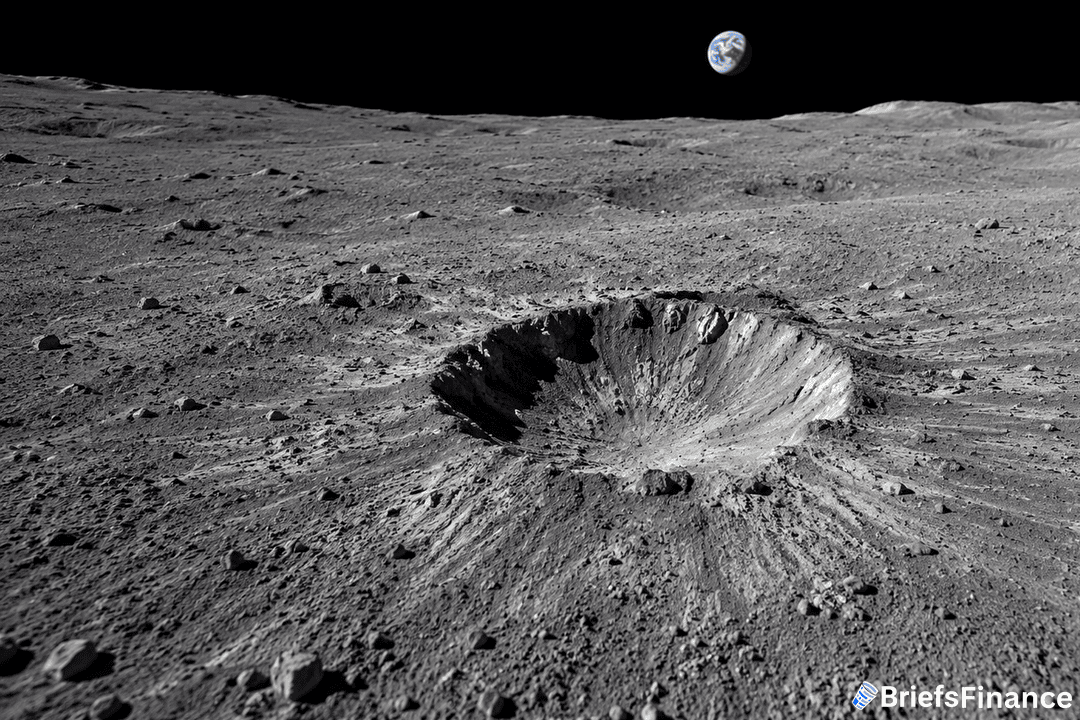
The moon has a new crater, and a stray piece of a SpaceX rocket put it there.

Astronomers think the leftover upper stage from a Falcon 9 rocket crashed into the moon in the early hours of Wednesday, August 5, 2026.

The upper stage is the part of a rocket that finishes the job after the first section falls away. This one did its work, then kept flying.

For about 18 months, it looped around Earth, occasionally drifting close to the moon before finally hitting it near the Einstein and Bell craters on the side that faces us.

Bill Gray, who had been the first to foresee the impact, worked with other astronomers to determine exactly when and where it would occur.

The moon is used to hits. It has no thick atmosphere to burn up incoming objects, so meteorites slam into it all the time.

In 2022, a leftover part from a Chinese rocket made a similar hole. NASA has also deliberately crashed spacecraft into the moon to study the material thrown up by impacts.

Like the Chinese stage, this Falcon 9 upper stage was not aimed at the moon. It was left in orbit after completing its job, and over 18 months its path drifted until it crossed the moon's. With no atmosphere to slow it, the stage hit at full speed.

Natural impacts have shaped the moon's surface for billions of years, and human-made craters are only a small addition to that long history. The agency is applying the same curiosity to this accidental strike.

Get the free Always Be Buying eBook and learn the simple system for building wealth on any income

What This Crash Is and Isn't

NASA Administrator Jared Isaacman tried to keep the crash in perspective. He told Fox News, "It is very infrequent to have a Falcon 9 second stage hit the moon," and added, "It's not a big deal right now. The moon has clearly seen better days."

The bigger issue is why the stage was still wandering. Spacecraft operators usually try not to leave uncontrolled hardware in orbit, so SpaceX and others dispose of spent rockets or put them on paths that avoid other satellites.

Bill Gray warned about what happens when operators slip. "The more junk you have, the more likely such collisions become, and the product of a collision can be still more smaller bits of junk," he wrote.

NASA was watching closely. Lunar spacecraft - including the Lunar Reconnaissance Orbiter - tried to photograph the event.

There is a real trade-off. NASA says launchers sometimes have limited disposal options, but controlled disposal is preferred, and for some low-lunar-orbit missions, putting an upper stage on the moon is safe and technically accepted.

Controlled impacts are often chosen because they give predictable and trackable results at the end of a mission.

What It Means for Investors

The timing was awkward for SpaceX. The company had just released its first earnings report after a summer IPO, or first sale of stock to the public, that was the largest ever, and executives did not mention the looming lunar collision on their Tuesday earnings call.

SpaceX's stock was listed at 115.16.

That was an 8.11% move.

Firefly Aerospace, which had a spacecraft on that same launch, was listed at 22.55.

The small launch company moved 3.34%.

For investors, the moon crater is less important than the lesson underneath it. The space business is growing fast, and growing businesses leave stuff behind.

That junk does not stay still. It orbits, drifts, and occasionally crashes into something.

The companies that build a reputation for cleaning up after themselves may earn a real advantage. The risk is not a new scar on the moon. It is a sky full of debris and a race to avoid the next collision. That race is already shaping how launchers build, price, and dispose of their hardware, and the next earnings reports are where investors will see the cost.

Download the free Always Be Buying eBook and start putting your money to work today
Disclosure

Recent News

1 2 3 49

Get Market Briefs delivered to your inbox every morning for free!

No fluff. No noise. No politics. Just finance news you can read in 5 minutes.

Blogs

June 29, 2026
Portfolio Diversification: Why Putting All Your Eggs in One Basket Destroys Wealth
  • Real diversification means spreading investments across all 11 economic sectors plus bonds, alternatives, and cash so no single bet can sink the portfolio.
  • Different sectors perform at different times, so a diversified portfolio captures upswings while smoothing the brutal drawdowns that wipe out concentrated bets.
  • Total market index funds offer the simplest path to diversification, and annual rebalancing is what keeps the structure working over time.
Read More
June 29, 2026
Non Taxable Income: What It Is and Why It Matters
  • Non taxable income is money you receive that you don't owe income tax on.
  • The tax code treats workers, investors, and business owners very differently, and investors often come out ahead.
  • Learning how income is taxed is a quiet superpower for keeping more of what you earn.
Read More
June 29, 2026
Semiconductor Stocks: A Simple Guide for Investors
  • Semiconductor stocks are companies that design and make computer chips, the brains inside nearly every modern device.
  • The AI boom has turned chips into one of the market's most important and most watched groups.
  • They offer big growth potential, but come with high valuations and a notoriously cyclical history.
Read More
June 25, 2026
How Stocks Work: A Simple Guide for Beginners
  • A stock is a slice of ownership in a company - buy one, and you own a piece of the business.
  • You make money two ways: the share price rising over time, and dividends paid to shareholders.
  • The simplest path for most beginners is buying into the whole market through a low-cost index fund.
Read More
June 25, 2026
Stop Loss vs Stop Limit: What's the Difference?
  • A stop loss order sells your stock once it hits a trigger price, prioritizing getting you out.
  • A stop limit order only sells within a price range you set, prioritizing price over a guaranteed exit.
  • The trade-off: a stop loss almost always executes; a stop limit might not if the price moves too fast.
Read More
June 25, 2026
Energy Stocks: A Simple Guide for Investors
  • Energy stocks are companies that produce and supply the power the world runs on, from oil and gas to newer sources.
  • They make up one of the 11 sectors of the market and tend to move with energy prices and big-picture shifts.
  • Like any sector, the key is diversification and understanding the forces driving demand.
Read More
June 18, 2026
What Is a Stop Loss Order? A Simple Guide
  • A stop loss order automatically sells a stock once it falls to a price you set.
  • It's a tool to cap losses or lock in gains without watching the market all day.
  • It works best for active strategies, and can backfire if used carelessly on long-term holdings.
Read More
June 18, 2026
Best S&P 500 Index Fund: How to Choose One
  • The best S&P 500 index fund for most investors is simply the cheapest, most established one that tracks the index well.
  • Funds like VOO, IVV, and SPY all hold the same 500 companies, so the biggest difference is the fee.
  • Pick one, automate your buys, and let time do the heavy lifting.
Read More
June 17, 2026
What Are Penny Stocks? Risks and Rewards Explained
  • Penny stocks are very low-priced shares of very small companies, often trading for just a few dollars or less.
  • They promise huge gains but carry huge risks: low liquidity, high failure rates, and wild price swings.
  • Most investors are better served by quality companies and funds than by chasing cheap shares.
Read More
June 17, 2026
Best Stocks for Beginners With Little Money
  • The best stocks for beginners with little money usually aren't individual stocks at all - they're low-cost index funds.
  • You can start with $100 or less and use small, regular investments to build wealth over time.
  • Focus on diversification and consistency, not on picking the next big winner.
Read More
1 2 3 24
Share via
Copy link











