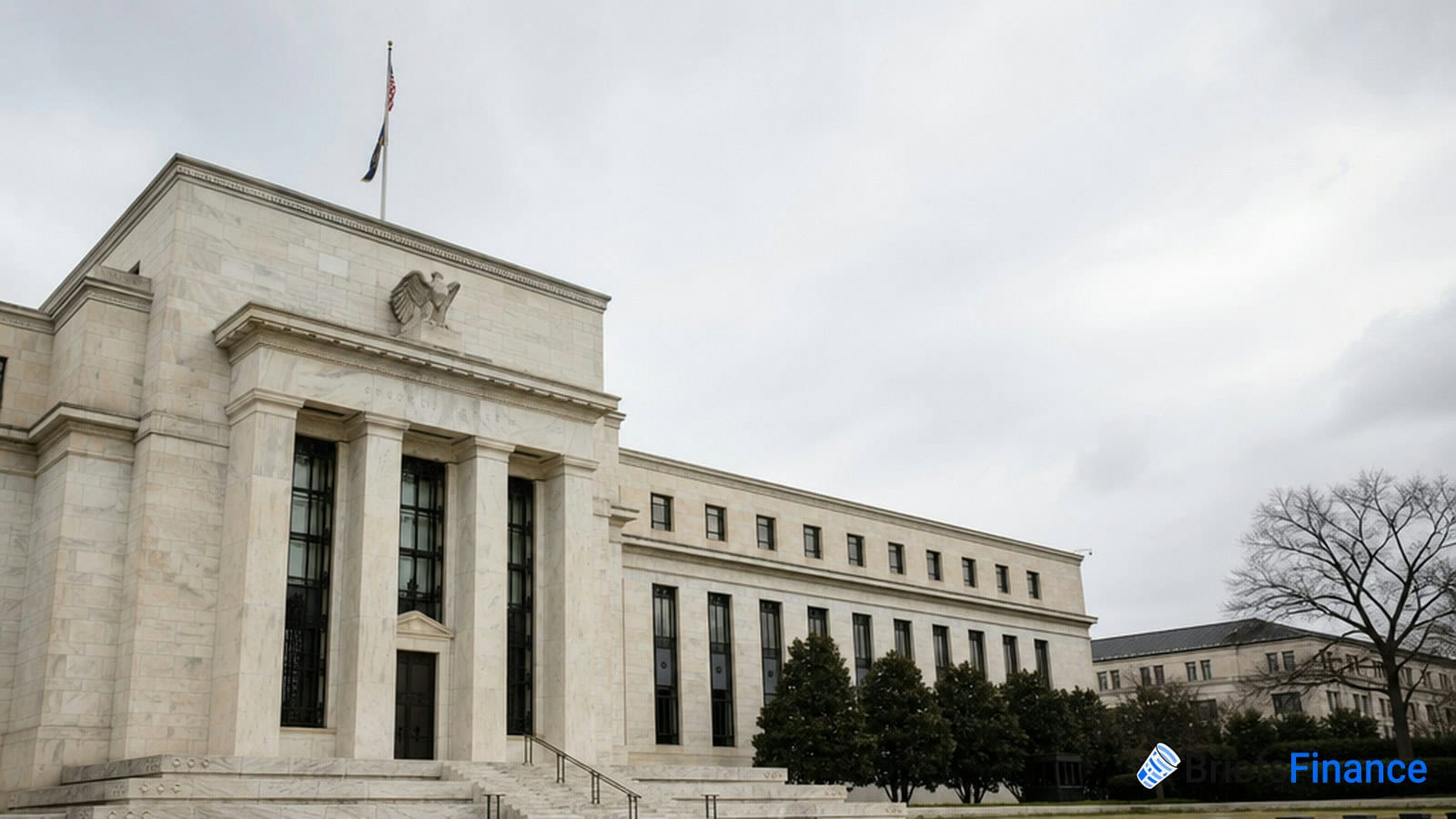
The Fed has two tools to steer the economy. One gets all the headlines.
The other is a $6.7 trillion balance sheet that almost nobody talks about.
Kevin Warsh just put it in the spotlight.
The new Fed Chair announced a task force to review the central bank's balance sheet at his press conference Wednesday. That came right after the Fed held rates steady at 3.5% to 3.75%.
The move is Warsh's first major signal as chair, putting a tool the Fed rarely talks about at the center of policy.
A Quiet Tool Gets A Loud Review
Warsh has said for years that the Fed's financial footprint is too big. Now he's doing something about it.
The task force will look at whether the Fed should steer policy through interest rates or through its balance sheet. It'll also study how big that balance sheet should actually be.
Most of the work wraps by year-end. That's faster than Wall Street expected - most strategists figured a shift toward a smaller Fed footprint would play out over years, not months.
The stakes: A smaller Fed footprint could push up long-term interest rates. That would ripple through mortgage rates, corporate borrowing costs, and stock valuations.
Every morning, Market Briefs breaks down what moves like this actually mean for your portfolio - in five minutes a day, plus a free investing masterclass when you join.
How The Balance Sheet Got This Big
Twenty years ago, the Fed's balance sheet sat around $800 billion. By June 2022, it had grown to $8.9 trillion.
Two events did most of the lifting: the 2008 financial crisis and the Covid pandemic. The Fed bought trillions in bonds during both - a process called quantitative easing - to push down long-term rates and keep credit flowing.
The Fed started unwinding that pile in 2022, letting bonds roll off without replacing them. That's called quantitative tightening.
Then at the end of 2025, the Fed pulled the plug on tightening and started buying short-term Treasury bills again to keep enough cash in the banking system.
Since December, the Fed has added more than $284 billion in short-term Treasuries to its books. Without those purchases, overnight lending rates can spike - the kind of crunch that hit markets in September 2019.
What To Watch
The Fed also tweaked how it talks about balance sheet moves this week. The Open Market Desk in New York will now expand bill purchases "when appropriate" - a small wording change that strategists read as a bigger signal.
"Introducing conditionality to balance sheet expansion is a first step and it sends a pretty strong signal on how they're thinking about it," said Deutsche Bank strategist Steven Zeng.
The other thing to watch is rates. Fed officials are split - nine see at least one hike this year, six see at least two, and another nine see no move or a cut.
That's a wide gap for a committee that usually moves together.
Either way, Warsh just made the balance sheet the story.
If you want this kind of read on the market every morning, join 350,000+ investors reading Market Briefs - you also get a 45-minute investing course as a bonus.