Free NewsletterPro Login

AI's Copper Rally Pushed Japan's 10-Yen Coin Above Face Value

Published Jun 17, 2026
Share:
Summary:
  • Japan's 10-yen coin is 95% copper, and at current benchmark prices that metal is worth about 10.4 yen per coin.
  • Japan's copper benchmark jumped 56% in the year through May, driven by AI data center construction from Microsoft, Amazon, Google, and Meta.
  • Water meter thefts have surged across Japan as thieves target the copper inside, tracking the metal's price climb in real time.

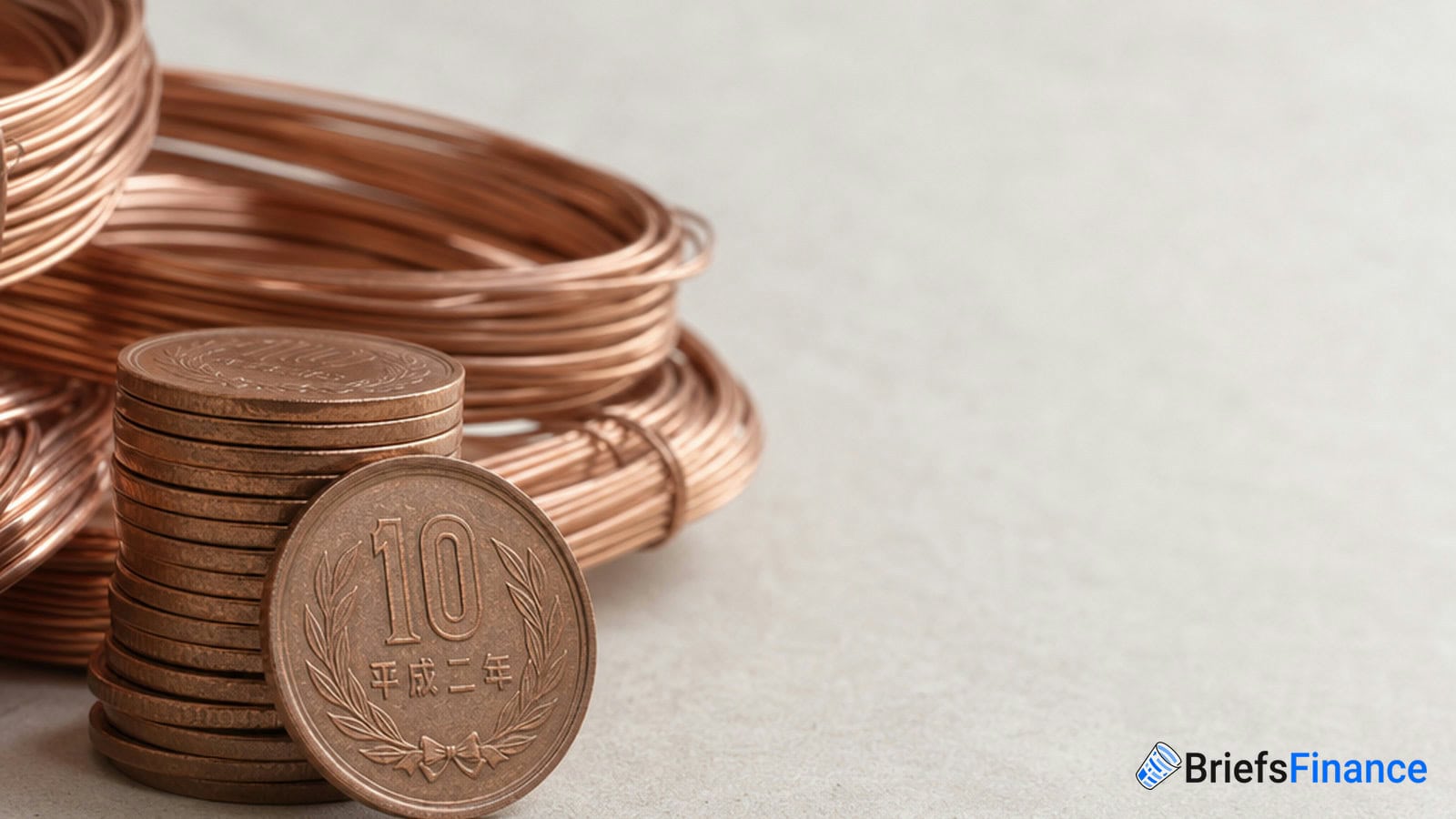
The copper inside Japan's 10-yen coin is now worth more than the coin itself.

At today's metal prices, that copper works out to about 10.4 yen per coin - the result of an AI-driven rally pushing copper near record highs.

The same dynamic is showing up everywhere in Japan, from corporate supply chains to apartment buildings.

Why The Coin Is Worth More Melted

The 10-yen coin is 95% copper, 4% zinc, and 1% tin.

Run those weights through Japan's benchmark copper price, and the metal alone comes out to about 10.4 yen.

That math only works because copper is on a tear.

The reason: AI data centers need huge amounts of it for power lines, cooling systems, and the wiring that links every server rack.

One large data center can use thousands of tons of copper, and builders are racing to put up hundreds of them.

The builders themselves are familiar: Microsoft, Amazon, Google, and Meta plan to spend hundreds of billions of dollars on AI infrastructure this year alone.

All that demand has pushed global copper prices up about 35% over the past year, with futures near record highs.

And the squeeze could get tighter: Goldman Sachs sees AI alone adding one million extra tons of copper demand a year by 2030.

Citi shares that view, expecting copper to keep climbing as new mine supply struggles to keep up.

The biggest stories in markets show up in Market Briefs every morning - five minutes a day, plus a free investing class when you sign up.

Japan Imports All Its Copper

Japan doesn't mine copper, so it buys all of it from places like Chile and Peru.

The country is one of the world's biggest copper smelters, but every ton of raw ore has to be shipped in.

That setup means local prices ride every global swing, which is why Japan's home copper benchmark - set by JX Metals - jumped 56% in the year through May.

The squeeze pushed three of Japan's biggest names into a rare team-up: JX, Mitsubishi Materials, and Marubeni joined forces this year to buy copper together, citing the AI boom and tougher bidding from foreign smelters.

The bottom line: when a country that imports all its copper sees prices climb 56% in a year, even the coins start to look like commodities.

What To Watch

The loudest sign of the rally isn't in markets - it's in apartment buildings.

Japanese police have been chasing a wave of water meter thefts this year, with thieves walking out with hundreds of units at a time and the copper inside as the likely motive.

That kind of theft tends to track copper prices, which means the meters are now a real-time read on how high metal has climbed.

If copper keeps rallying, the 10-yen coin won't be the only thing in Japan starting to look like a commodity in disguise.

Join 350,000+ investors reading Market Briefs and get a 45-minute investing class as a bonus.
Disclosure

Get Market Briefs delivered to your inbox every morning for free!

No fluff. No noise. No politics. Just finance news you can read in 5 minutes.

Blogs

June 17, 2026
What Are Penny Stocks? Risks and Rewards Explained
  • Penny stocks are very low-priced shares of very small companies, often trading for just a few dollars or less.
  • They promise huge gains but carry huge risks: low liquidity, high failure rates, and wild price swings.
  • Most investors are better served by quality companies and funds than by chasing cheap shares.
Read More
June 17, 2026
Best Stocks for Beginners With Little Money
  • The best stocks for beginners with little money usually aren't individual stocks at all - they're low-cost index funds.
  • You can start with $100 or less and use small, regular investments to build wealth over time.
  • Focus on diversification and consistency, not on picking the next big winner.
Read More
June 16, 2026
Tech Stocks: A Simple Guide for New Investors
  • Tech stocks are companies in the information technology and related sectors, from software to chips to the internet giants.
  • They've driven much of the market's growth, but they can be volatile and richly valued.
  • The smart approach is to understand what you own and not let one sector run your whole portfolio.
Read More
June 16, 2026
What Is a Joint Stock Company? A Simple Guide
  • A joint stock company is a business owned by many people, each holding shares of stock that represent a slice of ownership.
  • It's the basic idea behind every public company you can buy on the stock market today.
  • Owning a share makes you a part-owner, entitled to a piece of the profits and growth.
Read More
June 16, 2026
Capital Gains Tax in California: A Simple Guide
  • Capital gains tax is what you owe when you sell an investment for more than you paid for it.
  • How long you held it matters: long-term gains are taxed more gently than short-term gains at the federal level.
  • Smart investors lower the bill with tools like tax-loss harvesting and holding for the long run.
Read More
June 15, 2026
Top Covered Call ETFs: How to Compare Them
  • Top covered call ETFs are income funds that own stocks and sell call options against them to generate steady cash.
  • The best one for you is the fund whose income, holdings, and fees fit your goals, not simply the one with the flashiest yield.
  • They all share one trade-off: more income today, less upside in a big rally.
Read More
June 15, 2026
What Are Stock Options? A Plain-English Guide
  • Stock options are contracts that give you the right, but not the obligation, to buy or sell a stock at a set price by a set date.
  • There are two kinds: calls (the right to buy) and puts (the right to sell).
  • Options can multiply gains or wipe out your money fast, so they suit investors who already know the basics.
Read More
June 15, 2026
EBITDA Margin: What It Is and How to Calculate It
  • EBITDA margin measures how much core profit a company keeps from each dollar of sales, before interest, taxes, and accounting deductions.
  • The formula is EBITDA divided by revenue, shown as a percent.
  • A higher, steadier EBITDA margin usually signals a more efficient, more durable business.
Read More
June 15, 2026
What Is Taxable Income? A Simple Guide for Investors
  • Taxable income is the portion of your money the government can tax after deductions are applied.
  • Not all income is taxed the same: job income, investment income, and passive income face different rates.
  • Investors and business owners get more tools to legally lower their taxable income, which is a big edge over time.
Read More
June 15, 2026
What Is a Covered Call? How the Strategy Works
  • A covered call is an options strategy where you own a stock and sell someone the right to buy it from you at a higher price.
  • You collect cash, called the premium, up front, and keep it no matter what happens.
  • The trade-off: if the stock soars, your shares get sold at the set price and you miss the extra upside.
Read More
1 2 3 23
Share via
Copy link












