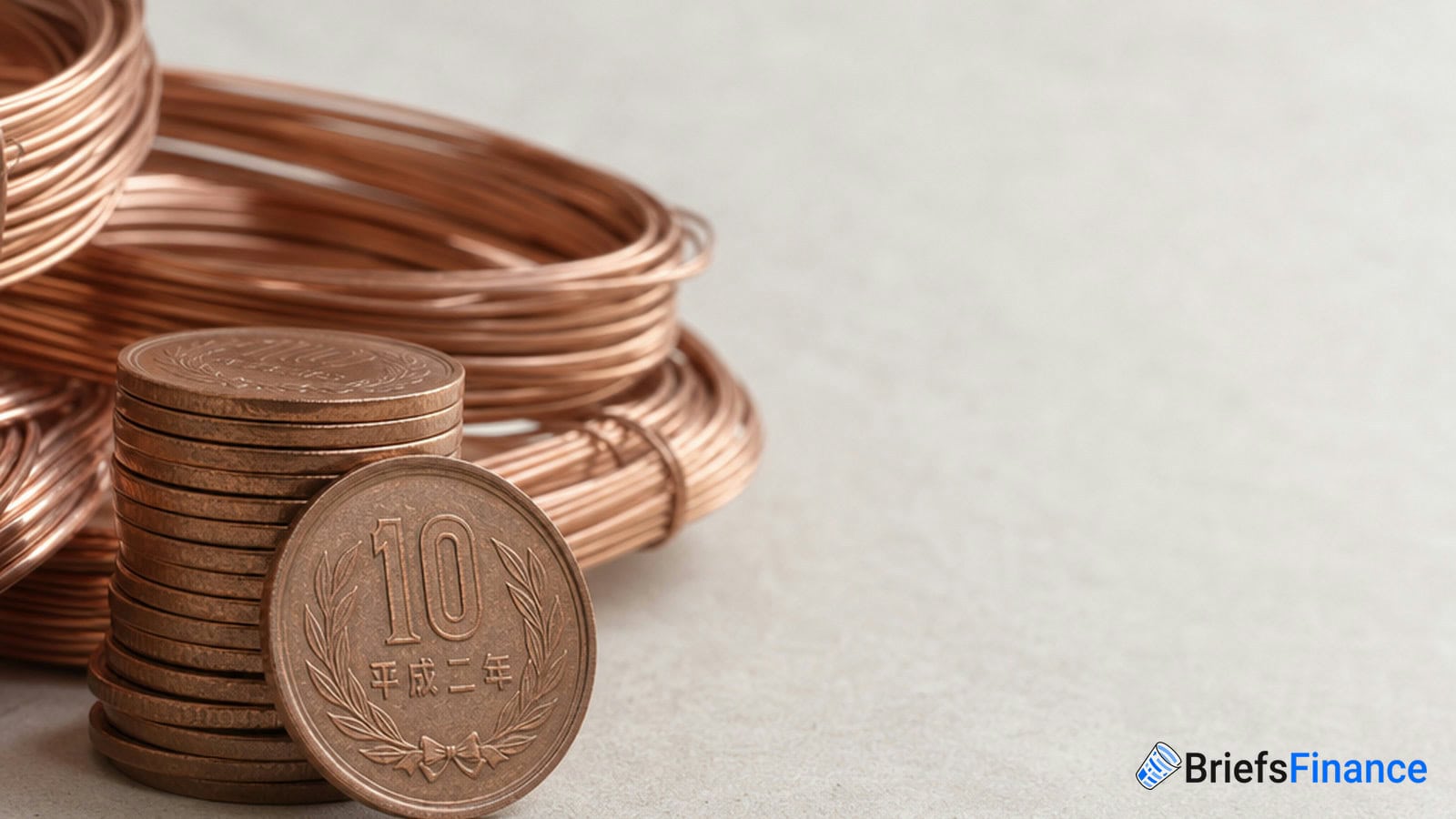
The copper inside Japan's 10-yen coin is now worth more than the coin itself.
At today's metal prices, that copper works out to about 10.4 yen per coin - the result of an AI-driven rally pushing copper near record highs.
The same dynamic is showing up everywhere in Japan, from corporate supply chains to apartment buildings.
Why The Coin Is Worth More Melted
The 10-yen coin is 95% copper, 4% zinc, and 1% tin.
Run those weights through Japan's benchmark copper price, and the metal alone comes out to about 10.4 yen.
That math only works because copper is on a tear.
The reason: AI data centers need huge amounts of it for power lines, cooling systems, and the wiring that links every server rack.
One large data center can use thousands of tons of copper, and builders are racing to put up hundreds of them.
The builders themselves are familiar: Microsoft, Amazon, Google, and Meta plan to spend hundreds of billions of dollars on AI infrastructure this year alone.
All that demand has pushed global copper prices up about 35% over the past year, with futures near record highs.
And the squeeze could get tighter: Goldman Sachs sees AI alone adding one million extra tons of copper demand a year by 2030.
Citi shares that view, expecting copper to keep climbing as new mine supply struggles to keep up.
The biggest stories in markets show up in Market Briefs every morning - five minutes a day, plus a free investing class when you sign up.
Japan Imports All Its Copper
Japan doesn't mine copper, so it buys all of it from places like Chile and Peru.
The country is one of the world's biggest copper smelters, but every ton of raw ore has to be shipped in.
That setup means local prices ride every global swing, which is why Japan's home copper benchmark - set by JX Metals - jumped 56% in the year through May.
The squeeze pushed three of Japan's biggest names into a rare team-up: JX, Mitsubishi Materials, and Marubeni joined forces this year to buy copper together, citing the AI boom and tougher bidding from foreign smelters.
The bottom line: when a country that imports all its copper sees prices climb 56% in a year, even the coins start to look like commodities.
What To Watch
The loudest sign of the rally isn't in markets - it's in apartment buildings.
Japanese police have been chasing a wave of water meter thefts this year, with thieves walking out with hundreds of units at a time and the copper inside as the likely motive.
That kind of theft tends to track copper prices, which means the meters are now a real-time read on how high metal has climbed.
If copper keeps rallying, the 10-yen coin won't be the only thing in Japan starting to look like a commodity in disguise.
Join 350,000+ investors reading Market Briefs and get a 45-minute investing class as a bonus.