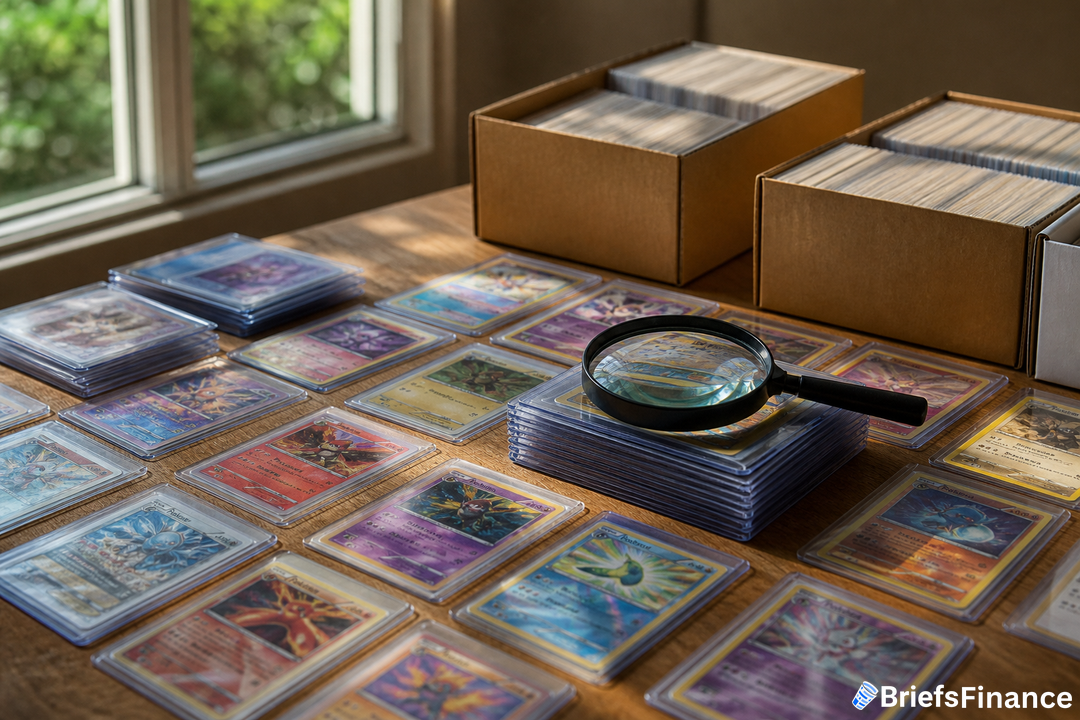
The sale that turned heads
A 1998 Pikachu Illustrator Pokémon card changed hands for $16.5 million earlier this year. The seller was Logan Paul, who said he originally acquired it in 2021 for $5.3 million plus a trade. That eyebrow-raising price point follows the 2022 sale of a Topps 1952 Mickey Mantle baseball card for $12.6 million and underscores how trading card games - think Pokémon, Magic: The Gathering and Yu-Gi-Oh - and broader non-sports cards are muscling into a sports-card market many see as overstuffed.
For collectors and speculators alike, the draw is clear. Outside the playing field, non-sports cards span everything from historical sets to pop culture icons like Luke Skywalker, with values hinging on rarity, authenticity and condition.
Where the money is flowing
Demand is rising on the biggest marketplaces. "It is one of our fastest-growing categories that we've seen and one of the largest contributors to [our] growth over the last number of quarters," said Adam Ireland, who leads eBay's collectibles business as VP and GM; the marketplace also verifies items and provides pricing tools for TCGs and non-sports cards. "From an investment point of view, you start with Pokémon," he said, noting it ranked as the top search on eBay's collectibles platform during the first six months of the year.
Auction houses are leaning in too. Six years back, Heritage set up an in-house department focused on TCG. "Now it's a $50-million category," said executive vice president Joe Maddalena.
That figure is just for TCGs. He noted that non-sports also contributed around $10 million to Heritage's 2025 haul, which totaled more than $2.1 billion.
Headline sales continue to stack up. Heritage now pegs a first-edition Pokémon Charizard that was worth $20,000 before Covid at $500,000. On eBay, a Tyler the Great Warrior Yu-Gi-Oh!
card fetched $311,211, and Magic's Black Lotus has sold for $500,000. In May, a 1977 Luke Skywalker card realized $687,500 at Heritage.
On the retail side, ICv2 reported that sales of newly released TCG products hit $2.5 billion in 2025. Editor-in-chief Milton Griepp said the tally this year is on track to be close to $5 billion, helped by excitement around Pokémon's 30th anniversary. He also flagged that resale volumes from platforms such as eBay and TCGplayer are harder to pin down, so the estimates come with some air in the numbers.
Collectibles markets move on scarcity and sentiment in equal measure. Market Briefs covers alternative assets free every weekday.
Grading is the gatekeeper
Pricing power in this corner of collectibles rides on how cards grade out. PSA, founded in 1991, starts by confirming a card is genuine, then rates condition on a 1 to 10 scale where 10 is gem mint. Populations of PSA 10s for the most chased cards tend to be tiny, which is why top grades can command huge premiums.
Since it began, PSA has evaluated non-sports cards. "But with more people viewing it as a potential asset class or thing they want to potentially invest in or speculate in, you're seeing more demand for grading services in the last seven years," said PSA president Ryan Hoge. PSA's 2025 output topped 19 million cards, up from two million in 2020.
By last May, the company's tally exceeded eight million graded cards, with January through April production up 39% year over year. Hoge said TCGs now represent 50% of PSA's business, more than all sports cards combined.
To keep pace, PSA's parent, Collectors, is committing $200 million to the operation. The plan is to double PSA's physical footprint, roll out new logistics tech and hire 1,000 additional employees, including hundreds of graders. Collectors additionally holds a portfolio of vertically integrated businesses - among them Beckett, SGC and Card Ladder.
Beyond sports: who's buying and why
Trading cards have been around for over a century, but the mix is changing. Sports cards traditionally featured baseball, football, basketball and hockey stars from brands like Topps, Upper Deck, Fleer and Donruss, with Topps acquired by Fanatics in 2022. Baby boomers helped build the sports card boom, and the market saw big waves in the early 1990s and again during the pandemic, when stimulus-fueled consumers poured in. Today the action has tilted toward rare vintage icons and high-end inserts, while modern base sets have been produced in volume.
As prices climbed in sports, collectors started looking elsewhere. "The sports side of the hobby has gotten so expensive," said Jeff Copeland, an emeritus professor at the University of Northern Iowa and longtime collector who writes for The Wrapper. "In some cases, cards that sold 10 years ago for $20 are now $1,000. So collectors feeling the pinch in sports cards looked across the aisle at non-sports cards, remembered collecting them in their childhood and saw the value on the prices." He estimates that about 95% of non-sports collectors today aren't in it primarily for investment.
New money is showing up too. Non-sports dealer Alex Tymchuk said some newcomers "weren't really into baseball or basketball [card] collecting, but they can relate to Mickey Mouse, Spider-Man or Captain America." Veteran dealer Kit Young has noticed "younger folks coming in with money. People think [the cards] are going to go up in value, so they're buying on the come based on the future."
For your wallet, the takeaway is simple enough. Prices can climb fast when supply is thin, grading populations are low and demand is hot. But this market lives and dies on authenticity, condition and verifiable sales, not hype. If you're tracking collectibles alongside your other assets, the trends to watch are where buyers are flocking, how many top-grade copies exist and how quickly the big platforms can certify and move inventory.
Record sales tend to pull the whole category up with them. Join Market Briefs free and follow the trend.