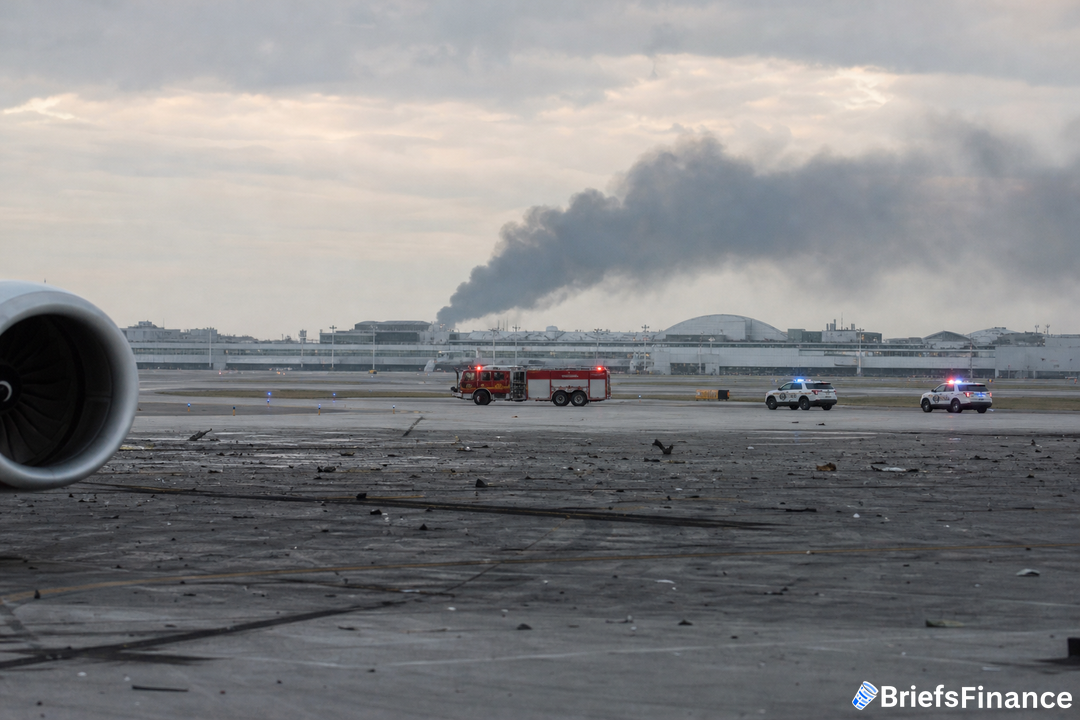
What happened at the airport
Asked Saturday if Washington would back Saudi strikes, President Donald Trump said, "We may. We're going to look at it," and added, "We just found out about the recent attack. So, we'll make a decision. We move very quickly."
According to the Saudi Gazette, Saudi Arabia's General Authority of Civil Aviation reported that 12 people were killed and 309 wounded in Saturday's strike at King Khalid International Airport in Riyadh. The Associated Press said that on Sunday a projectile hit a passenger terminal at the airport, coming just a day after a missile struck that same terminal. AP said details on the latest strike were not immediately available and noted the King Khalid complex's terminals 3 and 4 serve domestic flights.
Colonel Turki Al-Maliki, spokesman for the Saudi-led Coalition to Support Legitimacy in Yemen, called the attack a "war crime" and said, "Therefore, the Joint Forces Command of the Coalition will respond decisively to this terrorist attack in accordance with the Customary International Humanitarian Law."
The wider fight and new warnings
The attack marked the second fatal strike on Riyadh's airport within a week. On Thursday, attacks by Iran-backed Houthi militants killed three Saudi nationals there, including a pilot. After Saturday's blast, the Houthis warned on X that airlines, aviation workers and travelers should avoid Saudi airports and airspace because they are vulnerable to attack, while excluding Mecca and Medina from the warning.
Earlier this month, Yemeni government forces announced they had taken back Mokha, a crucial Red Sea port city, from the Houthis.
Security commitments in the Gulf carry direct consequences for oil. Market Briefs covers that intersection free every weekday.
International responses and potential U.S. role
The Critical Threats Project at the American Enterprise Institute said, "Potential U.S. involvement in the Saudi-Yemeni government air campaign to degrade Houthi ballistic missile capabilities would mark the first direct U.S. military action against the group since the conclusion of Operation Rough Rider in May 2025." Although that operation was intended to limit the Houthis' capabilities, the newest rounds of strikes suggest the group has recovered.
"After seven months of war, there are questions about the U.S. capacity to wage a sustained campaign against the Houthis, return to combat against Iran if necessary, and prepare for contingencies in other parts of the world, notably East Asia," Steven Cook, a Council on Foreign Relations scholar specializing in Arab and Turkish politics, wrote last month.
Meanwhile, U.K. Defense Secretary Wes Streeting said his government is examining additional support for Saudi Arabia. He said he has spoken with his Saudi counterpart in recent weeks about "what more we can do to support Saudi Arabia." Streeting noted that the U.K. is not participating in offensive operations "at this stage," and said there isn't a military solution to the conflict.
Markets, oil and what to watch next
WTI Crude (Nov′26) was last at 91.85 USD per barrel as of 10/10/26 EDT, unchanged, with delayed data. Energy prices have surged since the Iran war started on February 28, when U.S. and Israeli airstrikes hit Iranian targets, straining budgets around the world. The run up in domestic fuel prices has also become a top concern for voters heading into next month's U.S. midterms.
Despite the violence, Saudi Arabia's energy ministry said a long planned international energy conference will still go ahead in Riyadh on Sunday, according to Reuters. The WPC Energy Congress, scheduled for five days, is being held at a convention venue near King Khalid airport. Reuters also reported that a ministerial gathering of the International Energy Forum is planned, and the plenary session will occur in a closed-door format.
For your wallet, here is the through line: a major airport under repeated fire, Riyadh asking Washington for urgent help, and the possibility of U.S. involvement all point to elevated supply risk and headline driven swings. With a global energy summit proceeding in the same city, the link between geopolitics and pump prices is unusually tight right now, and that can show up fast in everyday budgets.
Where the US commits militarily shapes energy risk premiums. Join Market Briefs free and follow it.