What buyers are running into right now
London's hottest season underscored a problem at the top of the market: a lot of prime homes are simply not built for today's climate shocks. That is the view of Guy Meacock, a director at Prime Purchase, which represents buyers in the upper tier. He says heat resilience is becoming a bigger deal across some of the city's priciest postcodes, and that too many elite properties still fall short.
Cooling is a particular sticking point. Fewer than 1 in 10 homes across the UK have air conditioning. Meacock says overseas clients are taken aback at how rare AC is in high-end London stock, so "your pool of potential properties suddenly shrinks." As he put it, "We are dealing with a lot of American buyers at the moment and the subject of air conditioning for them comes up every single time."
Even basic solutions are a headache. Buyers report that items like shutters and awnings can be surprisingly hard to secure for marquee addresses. Heritage rules add to the friction, especially in Westminster and Kensington & Chelsea, where a high concentration of protected buildings can make retrofits a slog.
Flood risk is rising, and the safety net has holes
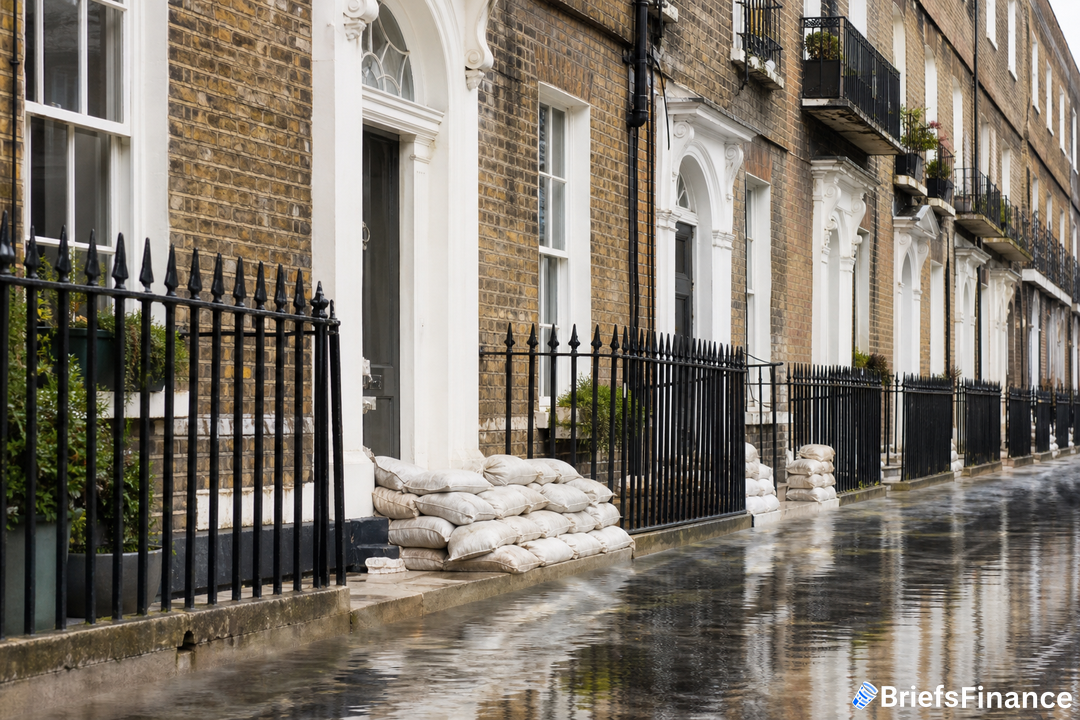
Short, intense rainstorms linked to climate change are putting more homes in harm's way, including properties with vast basements that are proving tougher to insure. The government's Environment Agency said in July that close to 320,000 homes and businesses in London are now considered at high risk from surface-water flooding. A month later, the Mayor of London's office warned that extreme heat is a "major and growing public health threat," noting that 86% of Londoners surveyed said their homes overheated.
Insurance is getting harder to secure. Flood Re, the state-backed backstop for flood insurance, covers only properties built before 2009, and apartments located in blocks with over three units fall outside its remit. In July, Flood Re set out changes aimed at avoiding outsized benefits for wealthy homeowners, meaning commercial insurers with multimillion-pound properties will lose some of the public support they once had. The shift is expected to start in 2028.
"They just manage without flood insurance," she said, adding that while such owners "may well be asset rich," they are not always "day-to-day wealthy."
Climate risk is quietly becoming a line item in property values and insurance premiums. Market Briefs covers housing economics free every weekday.
How insurers are adapting, and the knock-on for deals
Brokers say worries about insurability are already chilling transactions. At Howden Group, staff are fielding calls from clients anxious that a sale could collapse if buyers cannot get cover. Its position near the river Thames and ineligibility for Flood Re initially left buyers unable to secure a policy.
Seatter says a typical commercial carrier would see the site flagged as flood prone, note it was a second home built after 2009, realize it could not be passed into Flood Re, and stop there. In this instance, after a deeper review showed the precise riverside location wasn't the deal-killing hazard it seemed, Howden secured coverage underwritten by a US insurer. He adds that carriers who dig deeper are winning business from rivals spooked by the headline trend. "From a flood risk perspective, we're doing this all the time," he said. With more homes landing in flood affected areas, if an insurer can shift exposure and push more cost to the client, "why wouldn't you?"
The market backdrop and what it means for your wallet
This all arrives on top of a market already squeezed by expensive mortgages. Lloyds Banking Group's latest read shows Nationwide's index turned negative year over year in August for the first time since 2023. Savills says prime central London values are 26% below their 2014 peak.
Meacock warns that if London is seen as having "architecture that's fundamentally not fit for purpose," values could feel it. He singles out the golden postcodes in Kensington and Chelsea and parts of Westminster as uniquely sensitive to shifts in overseas sentiment. With roughly half of buyers in those areas coming from abroad, sellers "can't rely purely on domestic wealth, especially not with the current tax climate."
Translation for your money: if you own or are eyeing a trophy address, climate readiness and insurability are no longer nice-to-haves. They are part of the price, part of the timing, and increasingly part of whether a deal even gets done.
Flood and heat exposure now move prices even at the very top of the market. Join the free Market Briefs daily newsletter and follow the trend.