What Alibaba announced and why it matters
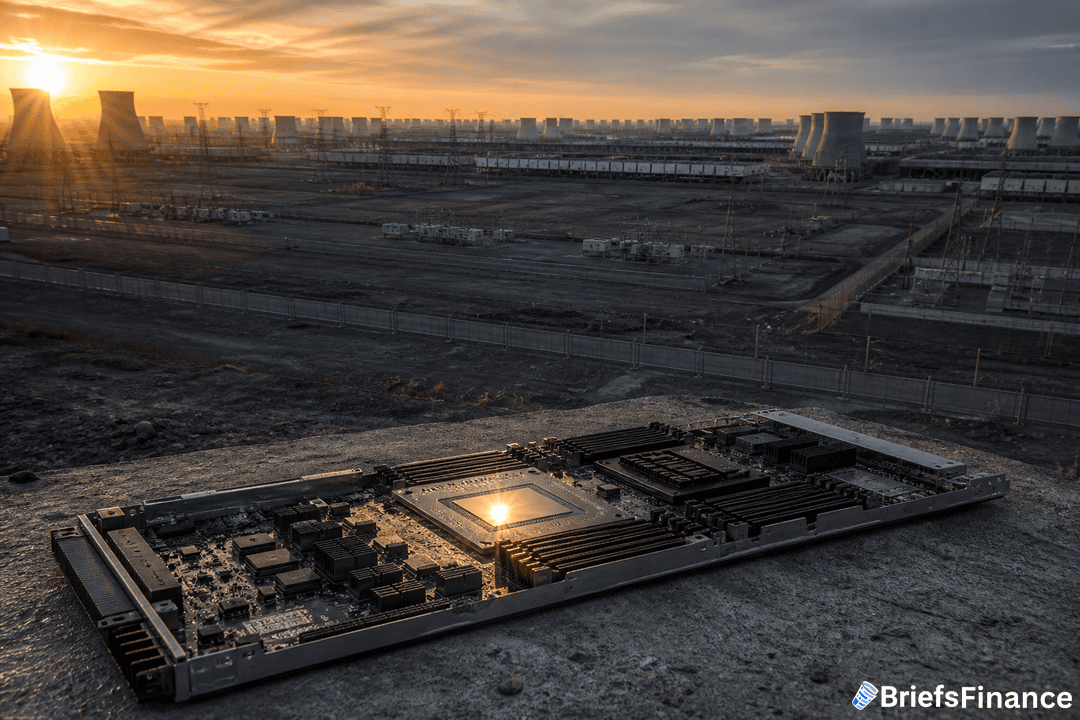
Alibaba on Tuesday introduced the Zhenwu V900, which it bills as China's most powerful AI accelerator. Built by its T-Head division, the chip is described as delivering triple the performance of its previous generation and is designed to scale for training frontier models in groupings as large as 500,000 units, according to Chief Executive Officer Eddie Wu. Bloomberg News has reported the company aims to list T-Head to tap investor demand for accelerators.
Wu also laid out a target for Alibaba Cloud to reach 20 gigawatts of global data center capacity by 2032, pointing to "exponentially rising demand." Alibaba designs its processors to operate in very large clusters to boost performance, a strategy also used by Chinese chipmakers such as Huawei Technologies and Moore Threads.
Spending, models, and where the roadmap heads next
Alibaba is among China's biggest AI spenders, committing more than $53 billion over three years to scale up its capabilities. In August, it raised about $10.2 billion through a follow-on share sale in Hong Kong. Executives say annualized revenue from AI-related products should hit $10 billion in the current quarter and that the company can recover its broader investment within three years; they also aim to lift combined cloud and AI sales fivefold to $100 billion over the next five years.
The company plans to build a model with between 5 trillion and 10 trillion parameters to handle longer, more complex tasks, well above what is typical among open-weight peers today. That quick pace stands in contrast to recent calls from some US labs to slow development, including Anthropic PBC CEO Dario Amodei's warning to temper progress to manage risks.
Alibaba last rolled out a new AI chip in May and says it will refresh the lineup annually. T-Head has delivered 560,000 chips across the Zhenwu family, and more than 400 external customers have put its processors into service.
Big tech ambitions remind investors that steady diversification helps protect long term gains. Join Briefs Finance CEO Jaspreet Singh on September 29th for a FREE live investor workshop, How to Profit From A Dollar That's Losing its Value, where he shows how we're spotting investment opportunities as the dollar falls. Save your spot.
Market reaction and competitive backdrop
AI stocks rallied worldwide on early signs of progress for Meta Platforms' personal agent, lifting sentiment after a choppy stretch. Alibaba's stock climbed over 5% in Hong Kong, while Tencent gained more than 7%. Once best known for Taobao and T-mall, Alibaba claims its model ranks first globally by downloads. The company has since moved quickly to expand its Qwen series and kept pricing low to attract users.
Alibaba's 20 gigawatt plan is large for a Chinese company, though some global projects are even bolder. SoftBank, for instance, envisions a computing center in Ohio on the order of 10 gigawatts. The push comes after the Hangzhou-based firm reported a quarterly profit drop of more than 75% following a nearly $10 billion spending surge, alongside a pledge to ramp up investment in AI hardware and infrastructure.
Geopolitics, scrutiny, and what to watch
The showcase arrived just before a planned meeting between US President Donald Trump and Chinese President Xi Jinping, where AI is expected to feature prominently. Top US tech leaders, including Nvidia's Jensen Huang and Microsoft's Satya Nadella, are attending a White House state dinner. This week, US Treasury Secretary Scott Bessent and Chinese Vice Premier He Lifeng opened discussions, and the two parties agreed to establish an AI dialogue to work toward a shared view of objectives and risks.
At the same time, Washington has accused Alibaba and developers such as DeepSeek of "illicitly accessing" US cutting edge models to build their own products. Beijing has rejected the allegations as unfounded and cautioned that it will respond in kind should Washington take steps to single out Chinese AI companies.
For your money, here is the takeaway: Alibaba is stacking custom chips, expanding data center power, and chasing much larger models, while spending heavily and aiming to earn that spend back relatively fast. That mix has already nudged its stock and lifted peers, but it also sits next to a steep profit decline and rising political crosswinds. Watch how quickly new capacity shows up in revenue, whether usage of its models keeps compounding, and how policy headlines shape the runway for China's AI buildout.
When new innovations capture attention, returning to your plan preserves and grows wealth. Our CEO Jaspreet Singh is hosting a FREE live investor workshop, How to Profit From A Dollar That's Losing its Value, on September 29th. Sign up free to join him live.