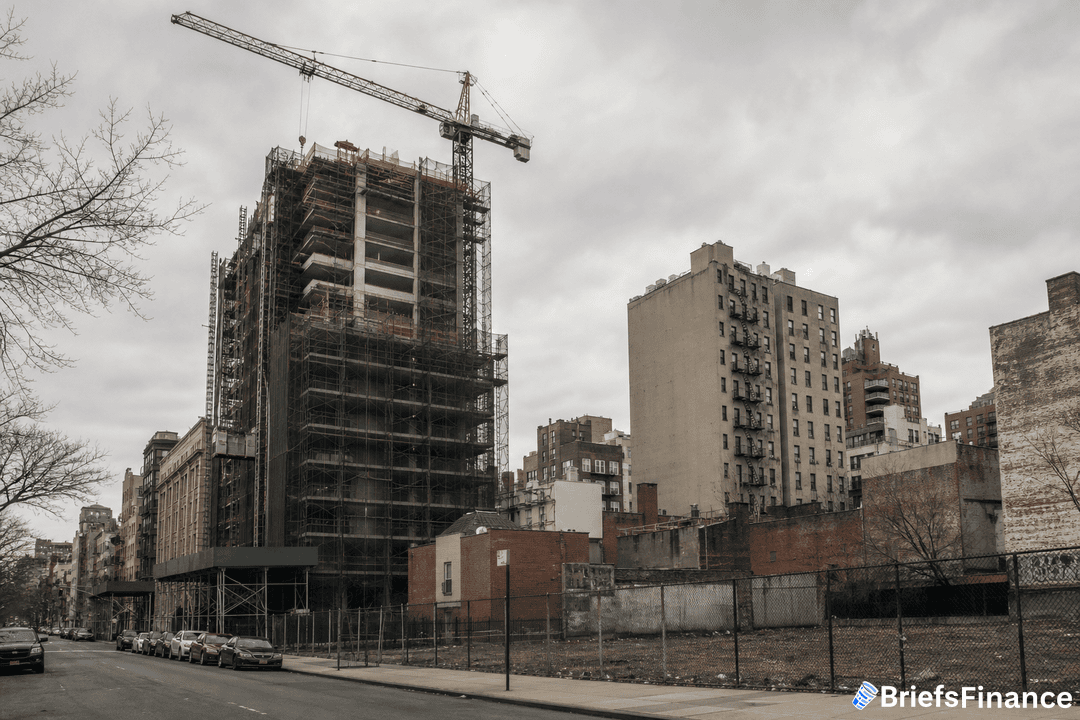
The Supply Challenge
New York's supply of market-rate housing is contracting, which is troubling for addressing the persistent housing shortage. The study examines the upcoming pipeline of new condo and rental units.
"These numbers are definitely low and definitely below what we think the market could support or certainly what it needs," said Ryan Schleis, who leads research at Corcoran Sunshine.
The for-sale segment is particularly tight. A total of 52,000 market-rate condos and rentals are projected to be introduced by 2029.
Falling Short of the City's Target
This number falls well short of the city's own goal to resolve its housing emergency. The city's administration calculates that it requires 700,000 more homes in the coming ten years - about 70,000 annually - spanning every income bracket.
Schleis attributes this to persistently elevated interest rates, which dampen demand from non-luxury buyers and escalate construction costs, making it tougher for developers to make new projects financially viable. Consequently, the condos that do get built tend to be more compact and pricier.
With fewer condos ahead, grab the free Always Being E-Book to keep your wealth building steady
Rates, prices and policy all end up in your budget eventually. Get the free Market Briefs daily newsletter and see it coming.
The Luxury and Rental Divide
In Manhattan, nearly 3,000 high-end units are under development, with prices starting at $2,400 per square foot. The central part of Manhattan has just about 170 affordable-entry units being planned.
In recent years, developers in Manhattan have delivered under 1,500 new homes for sale each year - less than the approximately 1,800 units that usually get sold annually. This shortfall has widened since 2019, when an alteration to New York's rent regulations also put a stop to the conversion of rental properties into condominiums or cooperatives. Such conversions used to provide a consistent source of for-sale homes, often at lower price points.
Developers are instead focusing more on rental properties, which provide reliable income in a city where about two-thirds of residents lease their homes. Public policy has further skewed the market, as tax breaks tend to support rental construction, and about 13,000 units coming from office-to-residential conversions in central Manhattan are likely to be rentals as well.
"There's always that need to rent in New York. There's definitely never enough rental housing," Schleis said.
Background and Context
The city's housing crisis has deep roots. For decades, New York has struggled to build enough homes to keep pace with population growth and job creation. The 2019 rent regulation changes halted the old approach of turning apartment buildings into condominiums, removing one source of supply.
At the same time, rising interest rates have made it harder for developers to secure financing, while construction costs continue to climb. These factors have created a perfect storm that is now visible in the shrinking pipeline of new for-sale homes.