Free NewsletterPro Login

Warning: Undefined variable $stocks in /var/www/briefs.co/htdocs/wp-content/plugins/oxygen/component-framework/components/classes/code-block.class.php(133) : eval()'d code on line 448

Warning: foreach() argument must be of type array|object, null given in /var/www/briefs.co/htdocs/wp-content/plugins/oxygen/component-framework/components/classes/code-block.class.php(133) : eval()'d code on line 448

Warning: Undefined variable $funds in /var/www/briefs.co/htdocs/wp-content/plugins/oxygen/component-framework/components/classes/code-block.class.php(133) : eval()'d code on line 472

Warning: foreach() argument must be of type array|object, null given in /var/www/briefs.co/htdocs/wp-content/plugins/oxygen/component-framework/components/classes/code-block.class.php(133) : eval()'d code on line 472
/* the link was here */
BREAKING
×

As Russian Blockade Chokes Grain Shipments, Ukraine's Top Exporter Builds Wind Farms

Published Aug 26, 2026
[tts_player]
Share:
Summary:
  • Russia's naval blockade has reduced Ukraine's grain exports to under a tenth of their volume earlier this year.
  • Kernel, Ukraine's largest grain exporter, is building a wind farm to diversify amid the energy crisis.
  • If exports stay blocked, Ukraine will leave 20% of land unplanted, causing a 12-million-ton food shortfall.

Wheat prices just hit a two-year high, and the reason is sitting in the Black Sea.

Ukraine is often called the breadbasket of the world, supplying about 10% of global wheat exports and a significant share of corn and sunflower oil. Before the war, it shipped around 5-6 million metric tons of grain per month. The blockade has cut that to a trickle, and the impact is rippling across many developing nations that depend on these staples for basic food supplies.

Russia's navy has intensified its blockade of Ukraine's export routes, and the country's biggest grain exporter says the blockade is now threatening not just this year's harvest, but next year's too.

The Export Squeeze Is Getting Worse

Kernel, Ukraine's largest grain exporter, says exports have virtually stopped. That leaves around 1 million metric tons of grain sitting in storage, with the harvest of wheat and corn being stuffed into plastic bags just to keep it from spoiling.

According to the Agriculture Ministry, Ukraine's storage capacity could be exhausted by early November, should the export blockade continue. After that, the country would have nowhere left to put the crop it cannot ship.

When grain exports stall, the smart move is to diversify with the free Always Be Buying E-Book

The real worry, though, is what happens in the spring. Farmers need to know whether they will be able to sell what they plant, and right now the answer is unclear. Kernel's CEO, Yevgen Osypov, puts the stakes plainly: "The main issue is: What are we going to do for the next planting season in the spring?"

If exports remain blocked, Osypov says farmers will simply leave land unplanted. "If there is no solution for exports, I believe Ukraine will reduce production and will not sow in about 20% of land. It means 12 million tons of food grains will not be produced."

That shortfall would hit developing nations hardest, since they rely heavily on wheat and corn from Ukraine for basic food supplies. It would also feed global inflation at a moment when food prices are already climbing.

This is why the blockade is a humanitarian issue as much as a trade problem. The countries most dependent on Black Sea grain have limited alternatives, and every month of disruption raises the risk of shortages and higher food bills.

Kernel Pivots to Wind Power

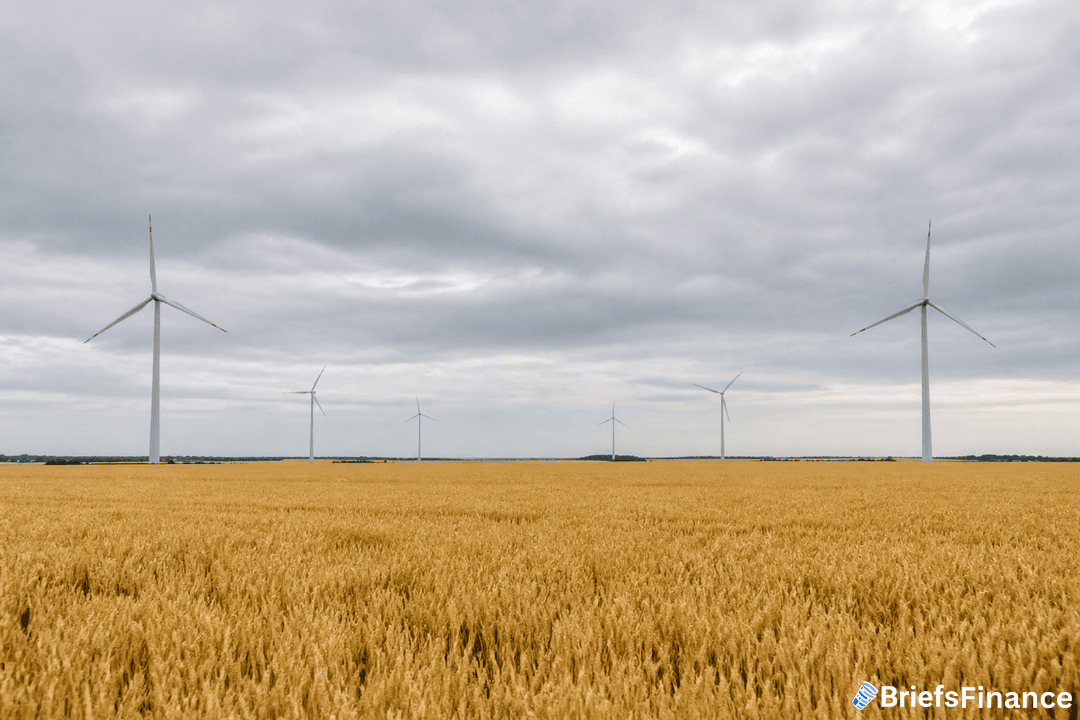
While the grain business faces a roadblock, Kernel is quietly building a second act. The company just signed a deal with Danish wind giant Vestas and the Danish export credit agency EIFO to construct a 94.5-megawatt wind farm in central Ukraine.

The move makes sense given the country's energy crisis. Osypov says Ukraine has lost around 50% of its power generation, and wind turbines are harder to knock out than other types of infrastructure. "Wind production is more resilient compared with the other types of generation and we believe that Ukraine needs to move and to increase the path of energy production from wind and from solar," he said.

Kernel's ambition goes well beyond this single project. The company aims to develop 1 gigawatt of renewable energy capacity in Ukraine by 2030, which would make it a significant player in the country's power market, not just its agricultural one.

What It Means for Investors

For investors, Kernel is becoming a two-sided story. The grain export crisis is a real and immediate drag, but the wind push offers a hedge against the very instability that is crippling the core business. If the blockade lifts, the company gets its agricultural revenue back. If it does not, the energy side could help carry the load.

For the rest of the world, the stakes are simpler. Grain from Ukraine feeds millions of people, and the window to keep that supply flowing is closing fast. The next few months will decide whether the country plants a full crop in the spring, or whether 12 million tons of food simply never makes it into the ground.

As Ukraine pivots to wind farms, you can pivot your savings to growth with the Always Be Buying E-Book

Disclosure

Recent News

1 2 3 61

Get Market Briefs delivered to your inbox every morning for free!

No fluff. No noise. No politics. Just finance news you can read in 5 minutes.

Blogs

August 23, 2026
How to Get the Most From Your Guideline 401k
  • Guideline is a company that provides low-cost 401k plans, popular with small businesses and their employees.
  • A "Guideline 401k" follows the same core rules as any 401k: tax-advantaged growth, contribution limits, and often an employer match.
  • The biggest results come from capturing the full match, choosing low-cost funds, and picking Roth or traditional to fit your situation.
Read More
August 23, 2026
Principal 401k: What to Know About Your Plan
  • Principal is one of many companies that manage workplace 401k plans, so a "Principal 401k" is simply a 401k where Principal is the provider.
  • The rules of a 401k are the same no matter who runs it: pre-tax or Roth contributions, tax-advantaged growth, and often an employer match.
  • The biggest wins come from grabbing the full match, picking low-cost funds, and knowing whether Roth or traditional fits you.
Read More
August 23, 2026
What a Tariff Dividend Means for Your Money
  • A "tariff dividend" is the idea of taking money the government collects from tariffs and paying some of it back to citizens.
  • To judge the idea, you first need to know what a tariff is: a tax on imported goods, usually paid by the companies bringing them in.
  • Tariffs ripple through prices, businesses, and your investments, so the smart move is understanding those ripples, not just the headline.
Read More
August 23, 2026
No Tax on Overtime: How Overtime Pay Is Taxed
  • "No tax on overtime" refers to a tax break that lets certain workers deduct some overtime pay, lowering the income they get taxed on.
  • A deduction does not mean overtime is truly tax-free. It means part of that pay is subtracted before your tax is figured.
  • The bigger money lesson: how you earn money changes how it is taxed, and investors often get the friendliest treatment of all.
Read More
August 23, 2026
Reading the Silver Price Forecast for 2026
  • Nobody can honestly promise a specific silver price for 2026. Any exact number is a guess, so treat forecasts as opinions, not facts.
  • Silver is unusual because it is both a precious metal and an industrial metal, so its price answers to two very different forces.
  • Instead of chasing a forecast, learn the drivers - inflation, interest rates, recession fear, and industrial demand - so you can judge any prediction yourself.
Read More
August 23, 2026
What to Do When Reddit Stocks Go Viral
  • "Reddit stocks" usually means stocks getting hyped in online communities, where crowds can send a price soaring or crashing fast.
  • These tips can be entertaining and sometimes useful, but they are opinions, not research, and often come loaded with hype.
  • The safe move is to treat every online tip as a starting point, then do your own homework before risking a dollar.
Read More
August 23, 2026
Why Is Bitcoin Dropping Right Now?
  • Bitcoin drops for a mix of reasons: interest rates, big-picture money policy, regulation news, and simple shifts in how much risk investors want to take.
  • Bitcoin has a fixed supply and no earnings, so its price runs almost entirely on supply, demand, and sentiment.
  • Sharp drops are normal for bitcoin. Understanding the drivers matters more than reacting to any single day.
Read More
August 23, 2026
The Fidelity 500 Index Fund, Made Simple for Beginners
  • The Fidelity 500 Index Fund is a low-cost fund that tracks the S&P 500, an index of 500 large U.S. companies.
  • Buying it means owning a tiny slice of 500 businesses at once, which spreads your risk in a single purchase.
  • Index funds like this win over time mostly by keeping fees low and letting compounding do the work.
Read More
August 23, 2026
USA Penny Stocks: Risks and Rewards Explained
  • USA penny stocks are very low-priced shares of very small companies, often trading under $5 and sometimes under $1.
  • They dangle the dream of huge, fast gains, but carry brutal risks: low liquidity, wild swings, and high failure rates.
  • Most investors build wealth faster with quality companies and funds than by chasing cheap shares.
Read More
August 23, 2026
Finding Cheap Stocks to Buy Now Without Getting Burned
  • A low share price does not mean a stock is cheap. Real value compares the price to what the business is actually worth.
  • The best cheap stocks to buy now are quality companies trading below their true value, not the tiniest, riskiest shares on the market.
  • For most beginners, a low-cost index fund is the simplest "cheap" way to own great companies at once.
Read More
1 2 3 25
Share via
Copy link