Why Everyone Is Watching the Door
The question hanging over the company is whether this is normal churn or something louder. Greg Brockman, the president, acknowledged that the optics are unusual and said "every departure gets scrutinized in a way it doesn't otherwise." He has a point, but the scrutiny is not just gossip. Investors are watching.
People leave companies for all kinds of reasons, and OpenAI has grown at a pace that would stress any organization. Still, when the people who run the data centers, the products, the revenue, the marketing, and the ethics reviews all head for the exits, it changes the story.
The timing makes it harder to wave off. The company also just swapped out its revenue chief, Denise Dresser, after only eight months on the job. Two days before that news broke, Brad Lightcap, a former COO, said he was "starting something new" without offering details. That is a lot of senior vacuum in a short window.
What It Means for Your Money
OpenAI has been expected to go public, but the IPO has been pushed to 2027. That delay gives investors more time to ask whether the valuation makes sense. The core worry is simple: OpenAI is spending enormous sums, and the profits have not shown up yet. When a company keeps losing executives and pushing back its stock market debut, it does not settle those doubts.
For anyone watching from the outside, the takeaway is not about any one person's exit. It is about whether the company can hold itself together while it spends into a future that is still unproven. The $500 million Stargate project and the rest of the buildout are bets on a very specific outcome. If the people who built the systems are the ones leaving, the bet gets harder to size.
The Data Center Shuffle
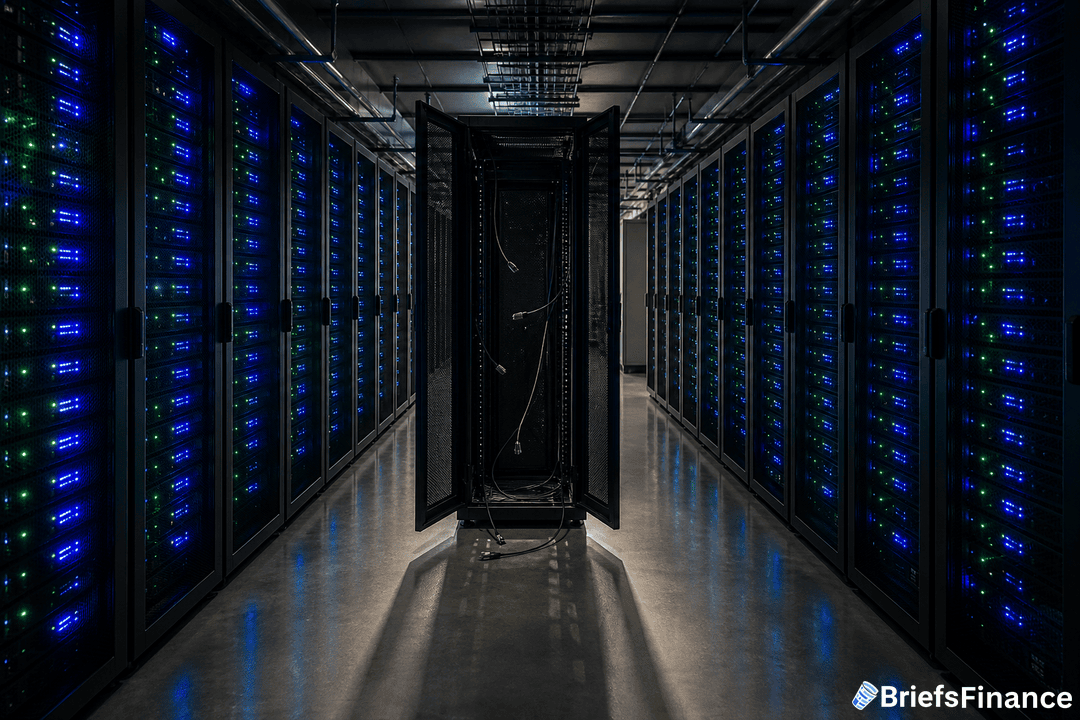
Malone's departure is the latest in a string of exits that has hit nearly every corner of OpenAI's leadership. The company publicly insists the changes are clean, saying it "recently reorganized" and that its data center team is "strong, deeply experienced" with "clear leadership."
The money story behind the headlines is usually the part that matters. Join Market Briefs free and get it every morning.
That may be true, but the optics are rough. Lightcap's exit came with no detail, Dresser's replacement after just eight months signals impatience, and Simo's departure removes a senior voice from the top table. Bakalar, the ethics lead, left in July, and the Sora team was shut down entirely, sending its leader out the door.
The pattern is not just a few bad months. It is a steady drumbeat through the entire year.
The Bigger Question for the Company
OpenAI's spending spree is not in question, and it has the backing of some of the biggest names in tech. The Stargate partnership with Oracle, Nvidia, SoftBank, and Microsoft shows that the money and the will are there.
But a company is more than its balance sheet. When the people building the critical infrastructure walk away, the execution risk goes up. And when the ones who handled revenue, product, and messaging also leave around the same time, the picture gets murkier.
The IPO delay to 2027 gives investors more time to ask whether the valuation makes sense, but it also gives skeptics more time to sharpen their pencils. The market already worries that the valuation has run ahead of the actual profits. Every exit becomes more evidence for that side of the argument.
For now, the company still has a deep bench on the data center side, with Katti, Ruddarraju, Mayo, and Lazarov holding the line. Whether that is enough to calm investors is the real test, and it will play out in public view over the next year.
The story for the rest of us is simpler. A company that cannot keep its leadership in place while delaying its stock market debut and spending heavily on unproven infrastructure is asking investors to sign a check with a lot of blanks still open. That is not a reason to panic, but it is a reason to keep watching.