A Bill Verizon Thought Was Wrong
Verizon paid the government $47 million under protest. Now it is not getting that money back anytime soon.
The money went to the government after the Federal Communications Commission accused Verizon of privacy violations.
The accusations were serious. The FCC said Verizon and AT&T improperly allowed access to customers' location details and failed to guard against unauthorized disclosure.
Both companies were handed a forfeiture order saying they owed a monetary penalty and that payment was due within 30 days. Verizon says it paid only because the FCC gave a misleading description of the order.
The central question transcends any one firm. If a company pays under protest because it feels misled, what rights does it give up?
For Verizon, the answer just got a lot more complicated.
What the Court Actually Decided
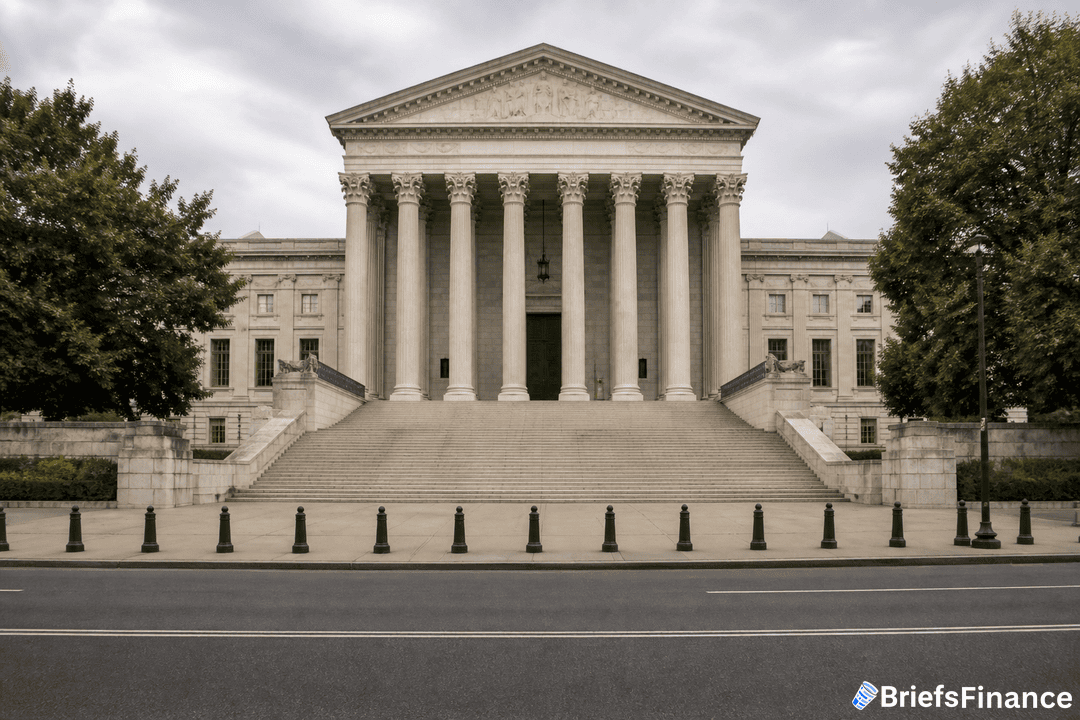
Chief Justice John Roberts wrote that forfeiture orders are preliminary statements and do not require payment until after court proceedings. But the same ruling left open the companies' claim that they were deceived into paying and deserved refunds.
The money story behind the headlines is usually the part that matters. Join Market Briefs free and get it every morning.
Verizon argued that because the justices did not remand the case to the 2nd US Circuit Court of Appeals, it had no route to pursue that claim. So Verizon asked the justices to tweak the language of the opinion.
That tweak would have let the 2nd Circuit examine the issue. The court said no.
The distinction matters because it shapes what happens next. A forfeiture order is meant to be a starting point, not the final word.
Roberts's opinion made clear that companies can still challenge the merits of the penalty itself.
Why AT&T Is in a Different Spot
AT&T watched this case closely, but its own situation looks different.
Telecom providers have long read forfeiture orders as requiring immediate payment, which is why the 30-day demand got their attention in the first place.
The FCC's action stemmed from a 2018 investigation into how wireless carriers handled customer location data. The agency found that both companies sold access to real-time location information to third-party vendors without proper safeguards, leading to the fines. Verizon argued that the FCC's order mischaracterized its conduct and that the payment demand was coercive. The Supreme Court's ruling clarifies that forfeiture orders are not final judgments, but it leaves procedural questions unresolved.
What This Means for Your Money
For the average person, the pain is a story about how rules of the road matter as much as the final destination. A company that thinks it was treated unfairly can find itself stuck in a procedural gap.
The practical takeaway is quieter. When a bill arrives with a due date, the terms matter, and the details matter even more.
Verizon is learning that lesson the hard way, and the $47 million remains out of reach unless another court opens a door.
Understanding what moved a market beats knowing that it moved. Get the free Market Briefs daily newsletter and follow the drivers.