A Ceasefire That Was Never Really a Ceasefire
The 60-day truce between the U.S. and Iran runs out Monday, and neither side is pretending a real agreement ever existed.
Iran's Foreign Minister Abbas Araghchi told Shahrara News on Saturday that the two sides do "not have anything like a ceasefire." He also said there are no direct U.S.-Iran negotiations happening right now. Instead, Qatar and Pakistan are passing messages back and forth between the parties, which Araghchi was quick to clarify is not the same as talking.
President Trump, for his part, acknowledged there are informal contacts with Iran's Revolutionary Guard but said he is in no rush to seal a deal. "I have no time schedule. I'm not in a hurry," he told Fox News. He also repeated on Truth Social that the "number one Goal is, and always will be, that Iran cannot have, in any way, shape, or form, a Nuclear Weapon."
The Strait Is Nearly Empty
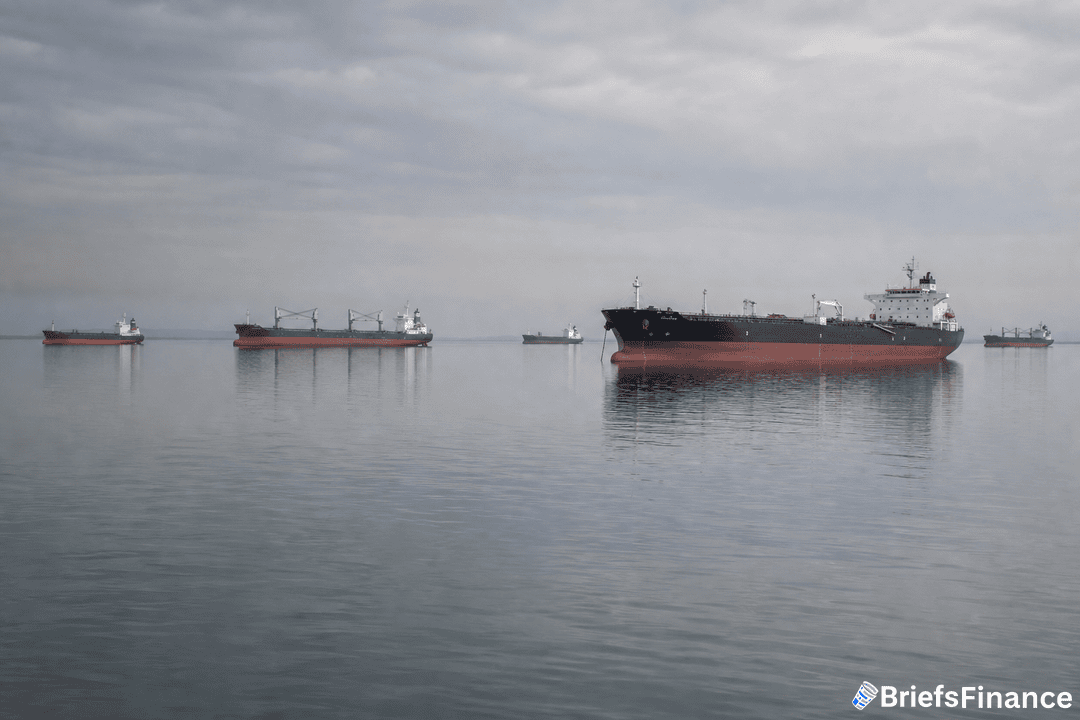
The real action is happening in the water. The Strait of Hormuz is the narrow passage between the Persian Gulf and the open ocean, and about one-fifth of the world's oil moves through it. Right now, almost nothing is moving.
Markets move every day, and most of it never reaches you in time. Get the free Market Briefs daily newsletter and stay ahead of it.
Kpler data shows only 3 ship movements through the strait on Sunday. The five-day average is 12 transits. Roughly 130 ships a day used the waterway prior to the Feb. 28 outbreak of hostilities.
That is a stunning drop, and it is not an accident. Iran's Deputy Foreign Minister Kazem Gharibabadi declared in a Friday post on X that the waterway would remain "Iranian," with any reopening or closure happening solely "under Iran's command." Tehran has been refusing to let commercial shipping through while the U.S. blockades Iranian ports.
The Oman Factor
The standoff took a strange turn Monday when Trump threatened Oman, a small country that has been quietly trying to mediate. Oman has been negotiating with Tehran about reopening the strait to commercial ships. Trump made clear what he thinks of that effort. "If Oman gets in the way, we'll bomb the s out of them," he told Fox News. He also dismissed Iran's negotiating position, saying, "They're good poker players, but they're dying."
The threat is notable because Oman has historically played the role of regional go-between, hosting back-channel talks between Washington and Tehran for years. Now it is caught in the middle of a standoff where the U.S. is blockading Iranian ports and Iran is blocking the strait in response.
What This Means for Your Portfolio
For investors, the question is how long this stays broken. Parash Jain of HSBC told CNBC's Squawk Box Europe on Monday that the shipping industry should treat "chaos is the norm" as a baseline assumption, not a worst-case scenario. In other words, the disruption is not a temporary blip. It is the new operating reality.
That matters for your money in a few ways. Oil prices are under pressure because supply routes are choked off, and that cost eventually shows up at the gas pump. Shipping rates climb when routes are dangerous and insurance premiums spike. Companies that rely on Gulf oil or move goods through the region will feel the squeeze, and so will their stock prices.
The counterweight is that no one has an interest in a permanently closed strait. Iran needs to sell oil. The U.S. wants global energy markets to stay calm.
Oman wants to keep its role as a mediator. The pieces are there for a deal, but the clock keeps resetting with no formal agreement in view.
For now, the smart play is to watch the shipping data. If the five-day average of 12 transits starts climbing back toward 130, that is a signal tensions are easing. If it keeps falling toward zero, expect more volatility in energy prices and the stocks tied to them. The strait is the world's most important oil chokepoint, and right now it is barely open.
The money story behind the headlines is usually the part that matters. Join Market Briefs free and get it every morning.