Tanker Owners Shun the Gulf as War Risk Rises
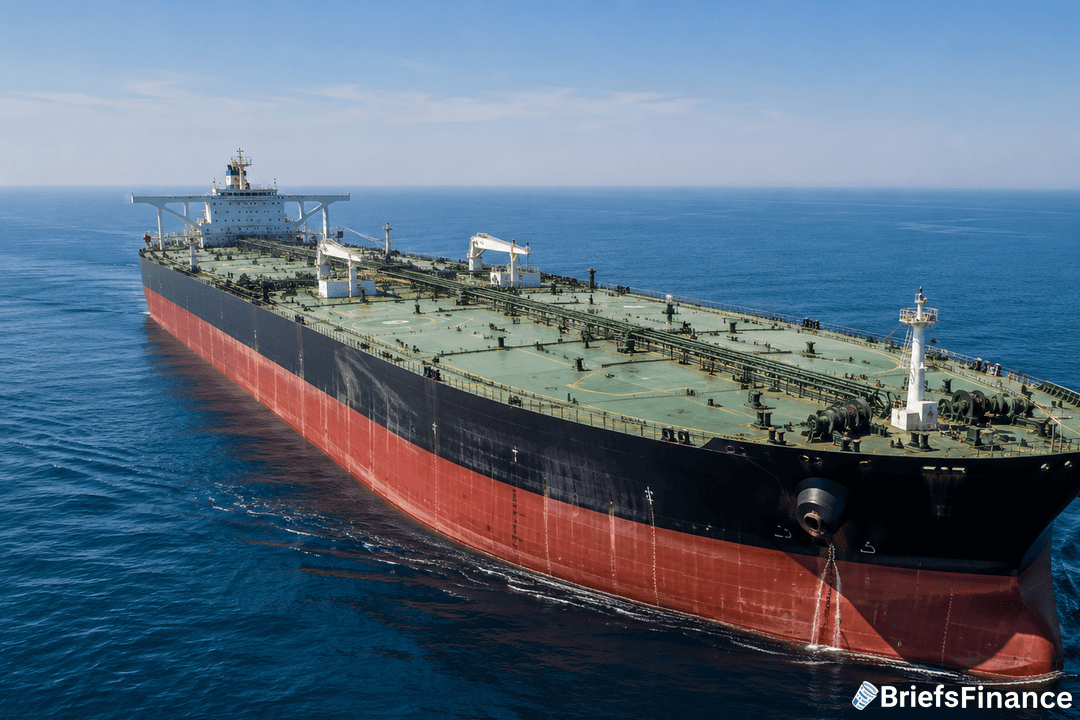
The price of chartering a supertanker to transport crude from the Persian Gulf to China has climbed to about half a million dollars per day. The escalation in the Iran conflict is causing many vessel operators to avoid the Strait of Hormuz, which has drastically reduced the number of ships willing to load within the Gulf.
This latest jump follows a provisional booking by Sinokor Group, a South Korean company that owns the largest fleet of supertankers globally. Shipping fixture data show the firm chartered one of its tankers for an unusually high rate to lift a cargo at a Gulf port and carry it to Asia. The benchmark route reached its highest level since June on Friday.
Sinokor did not respond to requests for comment outside of regular office hours.
The Benchmark Explained
The Baltic Exchange, a London-based provider of shipping benchmarks, publishes daily assessments for routes such as TD3. The exchange expresses each rate in worldscale points, a system that lets charterers and owners compare prices across different voyages. A reading of 490 points means the voyage pays close to five times the baseline rate in the official scale.
Get the free Always Be Buying eBook and learn the simple system for building wealth on any income
With ships occasionally coming under attack while traversing Hormuz, the number of owners prepared to call at ports within the Persian Gulf has dropped, although some continue to transit the strait. A significant share of Gulf-loading voyages is covered by vessels belonging to Middle Eastern producers, the private Sinokor, or a handful of smaller operators willing to accept greater danger in those waters.
Because fewer transactions are publicly reported along this route, the market has become less transparent and the main benchmark for VLCC rates is harder to assess. The turmoil has even prompted one of the world's largest commodity traders to file a lawsuit against the Baltic Exchange, which publishes the benchmark.
The Latest Numbers
The TD3 route specifically covers ships loading at Saudi Arabia's Ras Tanura port.
Sinokor's vessel was booked at 560 worldscale points, according to the fixture data, though the exact loading port inside the Persian Gulf was not specified, making it difficult to convert that into a precise daily dollar figure.
What It Means for Investors
"Owners willing to load inside Hormuz are earning a scarcity premium," wrote Clarksons Securities analysts led by Frode Morkedal in a note. They also noted that vessels taking cargoes on board in the Gulf of Oman for Asia earn far less, roughly $147,000 daily.
"The pool of willing owners remains small," they said, referring to those prepared to enter the Persian Gulf.
The sharp rise in freight costs could have broader implications for oil prices and global trade, as higher shipping expenses may eventually be passed on to consumers. With the conflict showing no signs of abating, the premium for taking on the risk of transiting Hormuz is likely to persist, keeping rates elevated for the foreseeable future.
Download the free Always Be Buying eBook and start putting your money to work today