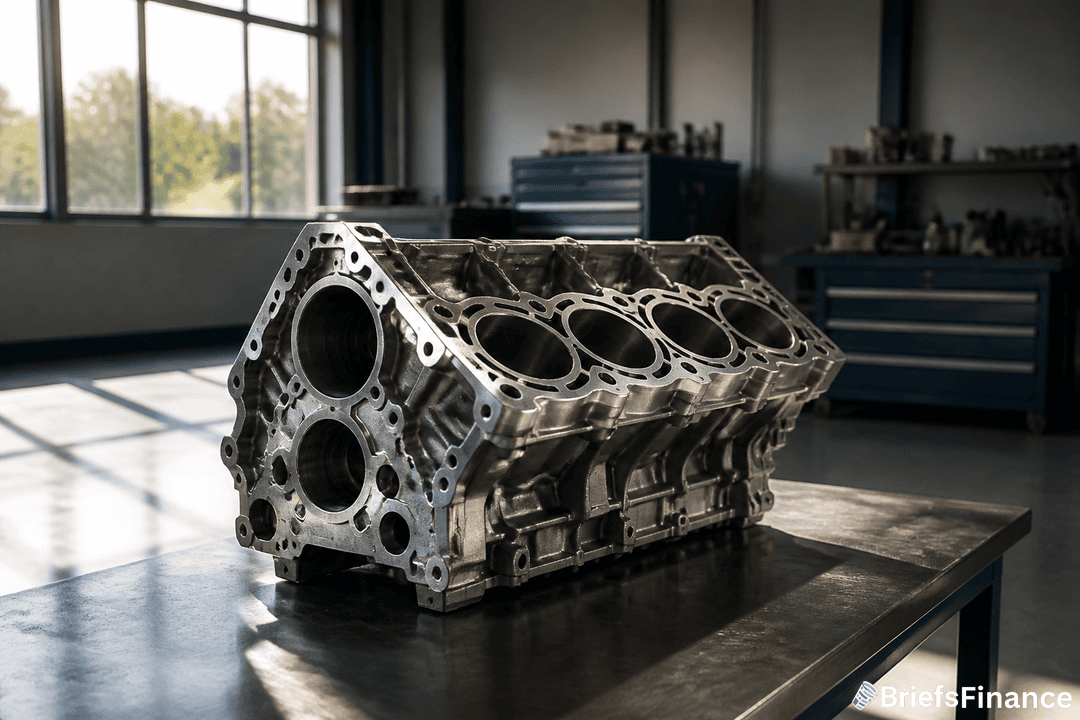
Shares Rebound After Tariff Drop
Last year, US auto tariffs briefly cost Linda Hasenfratz her billionaire status. This year, she is back in.
Bloomberg's Billionaires Index now pegs her net worth at $1.8 billion, as Linamar Corp. shares have rallied to near record levels. Linamar, based in Guelph, Ontario, is the vehicle-parts and industrial-equipment company her father started, and she led it for over two decades before becoming executive chair.
At the worst point, her wealth stood at about $800 million. The stock is now up about 27% in Toronto this year versus about 16% for Canada's S&P/TSX Composite Index, even after shares dipped Thursday when second-quarter results missed estimates.
She led the company for more than two decades, steering it through multiple economic cycles and expanding its product lines to include industrial equipment alongside vehicle components. Even after moving to executive chair, she remains a central figure in Linamar's strategic decisions.
The best financial decisions come from understanding the whole picture. Join Market Briefs free and get the full brief each morning.
Linamar's recovery is closely tied to the cross-border production system that has defined North American carmaking since the 1960s. Hasenfratz has said the company's operations are mostly protected from the tariffs, and the stock rebound suggests investors are increasingly accepting that view. The trade exemptions are not a side issue: they cover the bulk of Linamar's earnings and help explain why Hasenfratz has described the tariff pressure as short term.
Trade Rules Shield Much of the Business
Hasenfratz, 60, says the tariff problem is smaller than it looks from outside. "Tariffs are very much a short-term problem," she told BNN Bloomberg Television, adding, "the vast majority of our business, there's absolutely no tariff."
She has the trade rules on her side. Under the US-Mexico-Canada Agreement, car parts are exempt from the 25% duty that hits assembled vehicles.
Linamar earns more than 60% of its profit from products that qualify for that exemption. Trump declined this year to extend the trade deal, but it still has another 10 years to run, and the 50% tariffs he has threatened on other Canadian goods would leave auto parts alone.
The stock move shows that investors have focused on the parts of the business that are shielded from tariffs rather than on the political noise around trade. For Hasenfratz, the path back to a $1.8 billion fortune has depended on that distinction.
A Border Business Built Over Decades
North American auto manufacturing has been central to Linamar since its earliest days. The company began in 1966, just a year after the US and Canada eliminated duties on vehicles and components, and its first major contract was with Ford Motor Co.
Founder Frank Hasenfratz named Linamar after his two daughters and his wife.
Linamar's early history is inseparable from the movement of goods across the Canada-US border. The duty-free framework that began in 1965 allowed the company to grow alongside the major automakers, and that North American supply chain remains the reason most of its products avoid tariffs today. Hasenfratz has said the company's profit base is largely protected, and the share-price recovery shows the market now takes that message seriously.
Markets move every day, and most of it never reaches you in time. Get the free Market Briefs daily newsletter and stay ahead of it.