Free NewsletterPro Login
S&P 500 6,287 +0.42%
DOW 44,521 -0.18%
NASDAQ 21,103 +0.71%

Warning: Undefined variable $funds in /var/www/briefs.co/htdocs/wp-content/plugins/oxygen/component-framework/components/classes/code-block.class.php(133) : eval()'d code on line 491

Warning: foreach() argument must be of type array|object, null given in /var/www/briefs.co/htdocs/wp-content/plugins/oxygen/component-framework/components/classes/code-block.class.php(133) : eval()'d code on line 491
/* the link was here */

France Allocates $116M for Wildfire Rebuilding and Business Tax Breaks

Published Aug 17, 2026
[tts_player]
Share:
Summary:
  • France is pledging more than €100 million, about $116 million, to rebuild homes and give tax relief to businesses damaged by this summer's wildfires.
  • Prime Minister Sébastien Lecornu said Monday, August 17, 2026, that €12 million will go to the hardest-hit Gironde and Landes regions.
  • Lecornu also warned that he would publicly name any insurance company that fails to cooperate in compensating victims.

The Aid Package

France is writing a big check after a wildfire season that forced hundreds of thousands of people from their homes.

Prime Minister Sébastien Lecornu announced the package on Monday, August 17, 2026. "We are prepared to bring out the big guns," he said.

The hardest-hit areas, the southwestern departments of Gironde and Landes, will get €12 million.

For three months, companies in the area can have their social-security and property tax payments waived.

Those exemptions add up fast, Lecornu said. "When we talk about exemptions from social security contributions and tax revenues, you very, very quickly reach sums that exceed €100 million."

The goal is simple: rebuild homes that were destroyed and lighten the tax load for businesses in the affected zone. The move gives companies breathing room while they figure out their next steps.

The Cost of the Fires

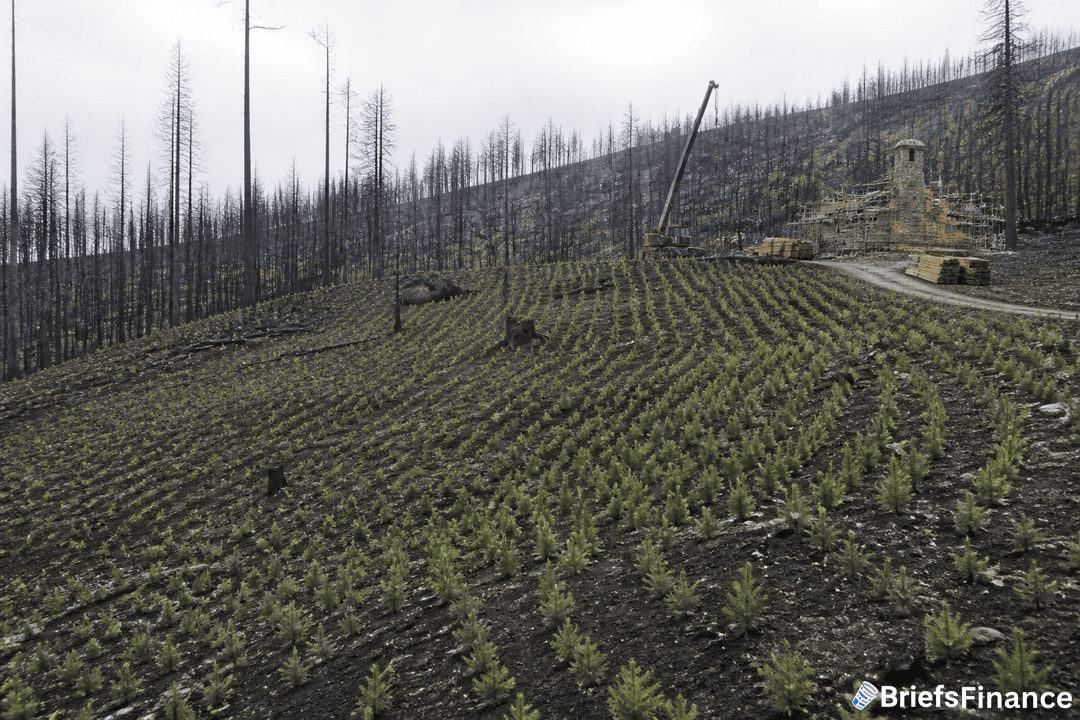
A string of heat waves this summer fueled fires that tore through forests and vegetation across France and the rest of Europe. The blazes destroyed homes and badly hurt businesses, especially tourism.

When wildfires upend lives and finances, rebuilding starts with a steady plan, so grab the free Always Be Buying eBook to learn consistent investing.

The heat stressed electricity and water systems and made public health services work harder. For towns already dealing with evacuations, that made a hard summer even harder.

The problem went well beyond France. EFFIS, a European wildfire tracker, counts 598,583 hectares burned across Europe in 2026, with most of that in Southern Europe.

France is already planning ahead with other fire-hit countries. Officials say they will coordinate with Portugal, Spain, Greece, and Canada to compare their approaches and improve preparedness.

The goal is to learn from each other before the next big fire season comes.

Where the Aid Money Goes

The aid package has a few moving parts. Minister Serge Papin also announced a guarantee fund worth €30 million, with early backers including public investment bank Bpifrance, the national government, and the Nouvelle-Aquitaine region.

There is also €2 million dedicated to helping tourism recover. That money comes from national and local government bodies plus private-sector participants, a sign of how much of the local economy depends on summer visitors.

Lecornu had a warning for insurers too. He said he would publicly identify any company that fails to cooperate in compensating victims, describing them as insurers "who do not play the game."

The warning matters because government aid is not the only money victims expect. They also have to collect from their own insurance policies.

What It Means for Your Money

Wildfires are expensive, and the cost is landing on government budgets. When a state promises €100 million in relief, the bill eventually comes back to taxpayers in one form or another.

For anyone with property in fire-risk areas, the details matter. The tax and payment breaks show how governments step in when disaster hits, but they also put insurance companies under pressure to pay claims quickly.

As heat waves become more common, fire seasons are likely to keep costing money, and the numbers are likely to keep climbing. France's package is one example of how climate risk is turning into financial risk.

For the people who lived through this summer, the aid is about more than numbers. The package is how the government says rebuilding can start.

For anyone with a home, a business, or money invested in a fire-risk area, it is also a reminder that extreme weather has a price tag, and that price is going up.

If disaster relief can help communities recover, your wealth can too, so download the free Always Be Buying eBook for a simple saving system.

Disclosure

Recent News

1 2 3 56

Get Market Briefs delivered to your inbox every morning for free!

No fluff. No noise. No politics. Just finance news you can read in 5 minutes.

Blogs

June 29, 2026
Portfolio Diversification: Why Putting All Your Eggs in One Basket Destroys Wealth
  • Real diversification means spreading investments across all 11 economic sectors plus bonds, alternatives, and cash so no single bet can sink the portfolio.
  • Different sectors perform at different times, so a diversified portfolio captures upswings while smoothing the brutal drawdowns that wipe out concentrated bets.
  • Total market index funds offer the simplest path to diversification, and annual rebalancing is what keeps the structure working over time.
Read More
June 29, 2026
Non Taxable Income: What It Is and Why It Matters
  • Non taxable income is money you receive that you don't owe income tax on.
  • The tax code treats workers, investors, and business owners very differently, and investors often come out ahead.
  • Learning how income is taxed is a quiet superpower for keeping more of what you earn.
Read More
June 29, 2026
Semiconductor Stocks: A Simple Guide for Investors
  • Semiconductor stocks are companies that design and make computer chips, the brains inside nearly every modern device.
  • The AI boom has turned chips into one of the market's most important and most watched groups.
  • They offer big growth potential, but come with high valuations and a notoriously cyclical history.
Read More
June 25, 2026
How Stocks Work: A Simple Guide for Beginners
  • A stock is a slice of ownership in a company - buy one, and you own a piece of the business.
  • You make money two ways: the share price rising over time, and dividends paid to shareholders.
  • The simplest path for most beginners is buying into the whole market through a low-cost index fund.
Read More
June 25, 2026
Stop Loss vs Stop Limit: What's the Difference?
  • A stop loss order sells your stock once it hits a trigger price, prioritizing getting you out.
  • A stop limit order only sells within a price range you set, prioritizing price over a guaranteed exit.
  • The trade-off: a stop loss almost always executes; a stop limit might not if the price moves too fast.
Read More
June 25, 2026
Energy Stocks: A Simple Guide for Investors
  • Energy stocks are companies that produce and supply the power the world runs on, from oil and gas to newer sources.
  • They make up one of the 11 sectors of the market and tend to move with energy prices and big-picture shifts.
  • Like any sector, the key is diversification and understanding the forces driving demand.
Read More
June 18, 2026
What Is a Stop Loss Order? A Simple Guide
  • A stop loss order automatically sells a stock once it falls to a price you set.
  • It's a tool to cap losses or lock in gains without watching the market all day.
  • It works best for active strategies, and can backfire if used carelessly on long-term holdings.
Read More
June 18, 2026
Best S&P 500 Index Fund: How to Choose One
  • The best S&P 500 index fund for most investors is simply the cheapest, most established one that tracks the index well.
  • Funds like VOO, IVV, and SPY all hold the same 500 companies, so the biggest difference is the fee.
  • Pick one, automate your buys, and let time do the heavy lifting.
Read More
June 17, 2026
What Are Penny Stocks? Risks and Rewards Explained
  • Penny stocks are very low-priced shares of very small companies, often trading for just a few dollars or less.
  • They promise huge gains but carry huge risks: low liquidity, high failure rates, and wild price swings.
  • Most investors are better served by quality companies and funds than by chasing cheap shares.
Read More
June 17, 2026
Best Stocks for Beginners With Little Money
  • The best stocks for beginners with little money usually aren't individual stocks at all - they're low-cost index funds.
  • You can start with $100 or less and use small, regular investments to build wealth over time.
  • Focus on diversification and consistency, not on picking the next big winner.
Read More
1 2 3 24
Share via
Copy link