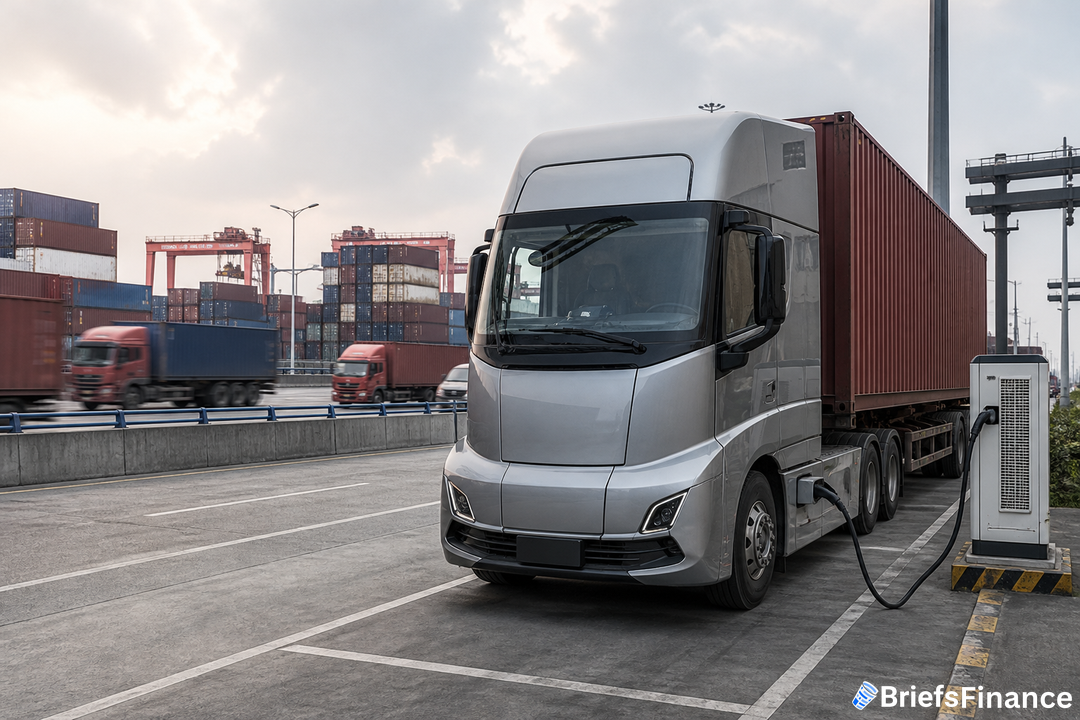
Why Scania is stepping on the pedal
Scania is moving faster in China, aiming to assemble battery-powered models at its Rugao plant as soon as it secures a production license.
The Rugao site, opened last year, is Scania's first wholly owned factory in China. Built to serve China and other Asian markets, it can produce both conventional and battery-electric trucks.
China's e-truck curve is getting steeper
According to BloombergNEF, electric-truck sales in China climbed by almost 80% during the first half compared with a year earlier, and they are projected to near one third of total truck sales this year, up from about 8% a couple of years ago. Policy and pricing are doing the pushing: trade-in subsidies and pricier diesel in the aftermath of the US-Iran war are boosting demand. Beijing had aimed for a 40% share by 2030, and the current trajectory is outrunning that mark. Reflecting the pivot, Sinopec's Economics & Development Research Institute expects China's diesel consumption will drop by more than 10% this year.
Levin said the rapid uptake implies China has figured out how to add charging stations and reinforce the power grid, which he called the biggest challenge in many countries, including in Europe.
Competitive map and infrastructure reality
China's surge in electric big rigs tightens the screws on global rivals, including Traton, Daimler Truck Holding AG and Volvo AB. Last month, German supplier ZF Friedrichshafen AG said the "center of gravity for electric-drive technology" in trucks now sits in China.
Europe looks tougher. Levin pointed to sparse charging infrastructure, limited grid capacity and higher operating costs. Market structure adds friction too: the average European haulage company runs only seven or eight trucks, and if customer patterns change, routes that fit e-trucks can disappear. "Then you're left with a stranded asset," he said.
When big shifts reshape industries, staying informed matters, so sign up for the free Market Briefs to follow developments
Diesel, autonomy and the scorecard for Traton
With incentives pared back, the US is lagging China's momentum. Levin sees fuel costs as a key lever: "If diesel prices continue to rise, then purely on its own merits, it will become cheaper to drive on electricity even in the US."
Despite record diesel typically crimping new-vehicle investment, Traton's conventional truck business has held up. Its US-based truck arm posted a 48% increase in third-quarter vehicle sales, lifting group sales by 10%. Scania also inaugurated a 975 million-krona (98 million dollar) testing complex in Södertälje, south of Stockholm, spanning 850,000 square meters that includes a high-speed oval plus areas dedicated to vehicle handling, rollover protection, and self-driving systems.
Levin anticipated that the US could see autonomous trucks deployed at scale ahead of 2030, whereas Europe is likely to trail because of regulatory obstacles, particularly for cross-border operations. Traton reports third-quarter earnings on Oct. 28.
What it means for your portfolio
China is electrifying heavy trucks faster than expected, policy and diesel prices are reshaping costs, and manufacturers are shifting capacity toward the demand. Watch Scania's licensing timeline in Rugao, China's charging and grid buildout, diesel-price sensitivity, and Traton's sales mix as competition ramps in the world's biggest truck market.
Across sectors from trucks to energy it helps to get a clear daily summary, subscribe to Market Briefs newsletter for free