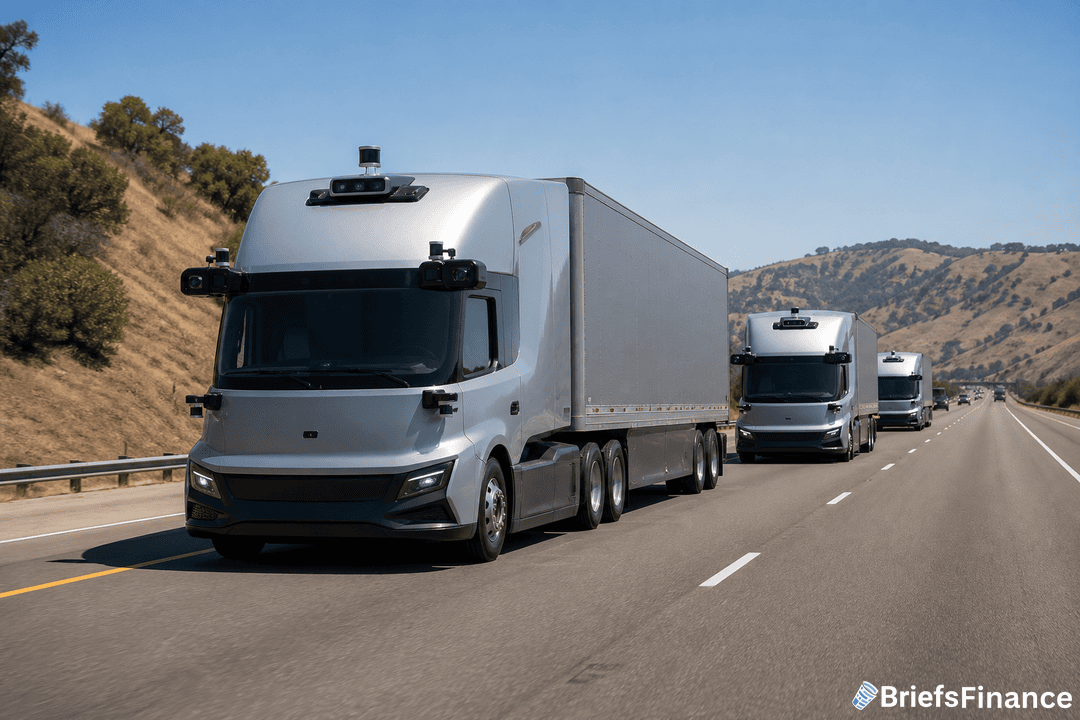
The big rig in the next lane could one day be driving itself.
California just issued its first permits for self-driving trucks to test on public roads under new rules, and one company is already rolling. The change ends a ban that had kept the heaviest autonomous vehicles off the state's highways, and it gives two California companies a reason to come home.
California Just Opened the Door
For years, the state had a simple rule: if a driverless vehicle weighed more than 10,000 pounds, it stayed off public roads. That changed on April 28.
The DMV, which regulates autonomous vehicles in California, lifted the ban and laid out a path for testing heavy trucks now and deploying them later.
Two companies asked for permits right away. Aurora Innovation and Kodiak AI, both based in California, applied in the spring after the DMV revised its rules.
Kodiak is already out there, with a handful of trucks running mostly near its Mountain View office.
The DMV says both companies cleared the bar on safety, insurance, vehicle registration, and safety-driver qualifications.
The permits come with limits. A safety operator has to stay behind the wheel.
Test drives are only allowed on roads with speed limits above 25 miles per hour, except when a truck is making a direct run between two places.
As self-driving trucks roll forward mile by mile, build your own steady wealth with the free Always Be Buying eBook.
The Pushback Was Fast
Not everyone is happy about this. Teamsters California sued the DMV last week in Alameda County Superior Court.
The union says the agency skipped legal steps to study and publish the economic effects of autonomous trucks on public roads, and that it overlooked safety risks for motorists.
So this lawsuit is about jobs, but it is also about whether the state followed its own rules before opening the roads.
It is the same fight that shows up whenever automation meets a big workforce.
Trucking employs a lot of people, and the union wants their concerns on the record before these trucks become a regular sight.
Why These Companies Came Home
While California said no, Aurora and Kodiak went where the rules were friendlier.
Aurora launched its Texas service in May 2025, running freight between Dallas and Houston at first. It later added Fort Worth to El Paso, El Paso to Phoenix, Fort Worth to Phoenix, and Laredo to Dallas.
Kodiak launched commercial driverless operations in January 2025 in West Texas's remote Permian Basin, which sits off public roads, before adding highways like Dallas to Houston.
Both companies are California-based, so Texas was always the stand-in.
Now the new rules let them test and eventually operate in their home state, on a much bigger stage than the empty roads of West Texas.
What It Means for Your Money
This is one of those moments when an industry stops being just an idea on paper. The permits are out, the trucks are rolling, and the legal fight has already begun.
For investors, that is a combination worth watching. If self-driving trucks work at scale, shipping costs fall, and the first companies to crack it could hold a real edge.
But the lawsuit is a reminder that the timeline is not only up to the engineers. Courts, safety questions, and labor opposition can all slow things down.
The bottom line: self-driving trucking just took a serious step forward in a state that had blocked it for years. How fast the trucks spread from Mountain View to the rest of California will tell you whether this industry is ready for the road.
Just like autonomous rigs stay the course, your investments can too, so grab the free Always Be Buying eBook today.