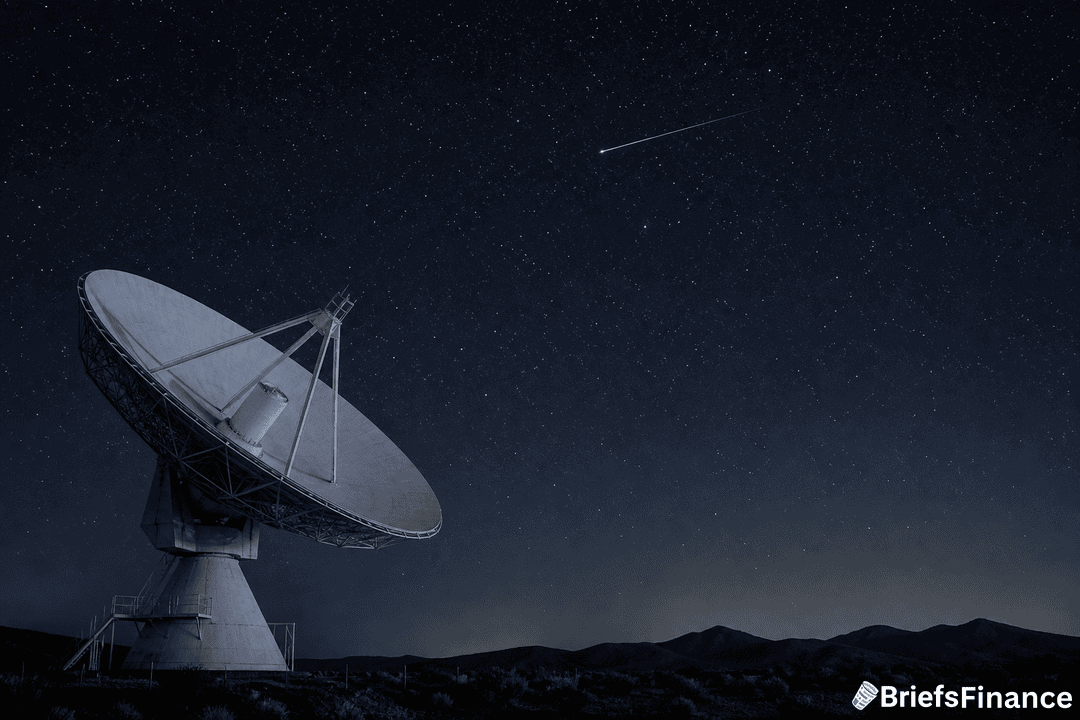
The idea of running data centers in orbit sounds like science fiction. But the plans are real, and so is the question of who insures them.
In January, SpaceX asked regulators for permission to launch a satellite network of up to 1 million spacecraft that could serve as an AI data center in space. Blue Origin submitted a plan in March for 51,600 satellites that would host computing in low Earth orbit. Google is working on a solar-powered satellite network with its AI chips onboard, and startup Starcloud has already tested an Nvidia H100 GPU in orbit.
That is a lot of expensive hardware heading for the sky. And where there is expensive hardware, there is a need for insurance.
The Race to Put Computing in Orbit
Elon Musk thinks space-based solar computing could undercut Earth-based data centers on cost within two to three years. Launch expenses are dropping while terrestrial power gets more expensive, which shifts the math in favor of space.
Jeff Bezos told CNBC in May that orbital data centers are "very realistic," though he called the two- to three-year timeline "a little ambitious." The two richest space entrepreneurs obviously disagree on the timing.
If these projects place hundreds of billions of dollars in hardware above Earth, insurance becomes essential. No one is going to put that much money into space without a way to protect it.
Patton Kline, who leads Marsh's U.S. aviation and space practice, puts it plainly: insurers that stick to Earth-based assets will miss a major growth story. He considers orbital computing a natural extension of the space insurance industry, which has insured launches and satellites for many years.
Space data centers are a whole new frontier for risk, and so is building wealth on any income. Get the free Always Be Buying eBook.
The Hard Part Is Pricing the Risk
Here is the catch. Space is a hostile environment for machines.
In space, these data centers would encounter launch failures, radiation, equipment malfunctions, thermal management problems, and growing threats from collisions and debris. If something breaks on the ground, a technician can walk over and fix it. In orbit, repairs or replacements require additional launches, which adds cost and delay.
Unlike hurricanes or earthquakes, space risks are largely independent of Earth-based disasters. That is a plus for diversification. But it also means insurers have little historical data to work with.
Roughly 30 insurers around the world currently offer space-specific coverage, with annual premiums totaling about $500 million to $750 million. That is a small market, and pricing it has always required specialized knowledge.
The problem is that orbital data centers are not just an extension of launch insurance. They are a new asset class with new failure modes. Insurers may need to create most of the rules from scratch.
Too Many Unknowns
SwissRe group CEO Andreas Berger says the idea merges two fast-growing risk areas - AI infrastructure and commercial space - but too many unknowns prevent confident risk quantification for a sustainable insurance product.
One unnamed insurance CEO was blunter, calling the concept "insane." According to that unnamed CEO, the sector has no clear rules, not enough funding, and no dependable way to evaluate hazards - he described it as 'the Wild West' of space.
Both reactions make sense. The opportunity is real, and so is the uncertainty. Regulation has not caught up to the technology.
Capital requirements are unclear. And insurers have little historical data to work with.
The bottom line: this is a market that could grow into something massive, but only if insurers can figure out how to price it. The ones that wait may find themselves playing catch-up.
For now, the plans are moving forward. The satellites are being designed, the launches are being scheduled, and the insurers are watching closely. Your portfolio does not have direct exposure to orbital data centers yet, but the companies building this infrastructure are the same ones you already own through index funds and tech stocks. If space computing becomes real, the ripple effects will reach Earth-bound investors faster than you might think.
If insurers are looking to the stars for the next big risk, look to steady investing for your next big win. Grab the free Always Be Buying eBook.