A port does not sound exciting until it stops working. When that happens, ships wait offshore, factories wait for parts, and the whole economy slows down with them.
South Africa is living that right now. A comparison by S&P Global and the World Bank, released last year, put Cape Town's port at the bottom.
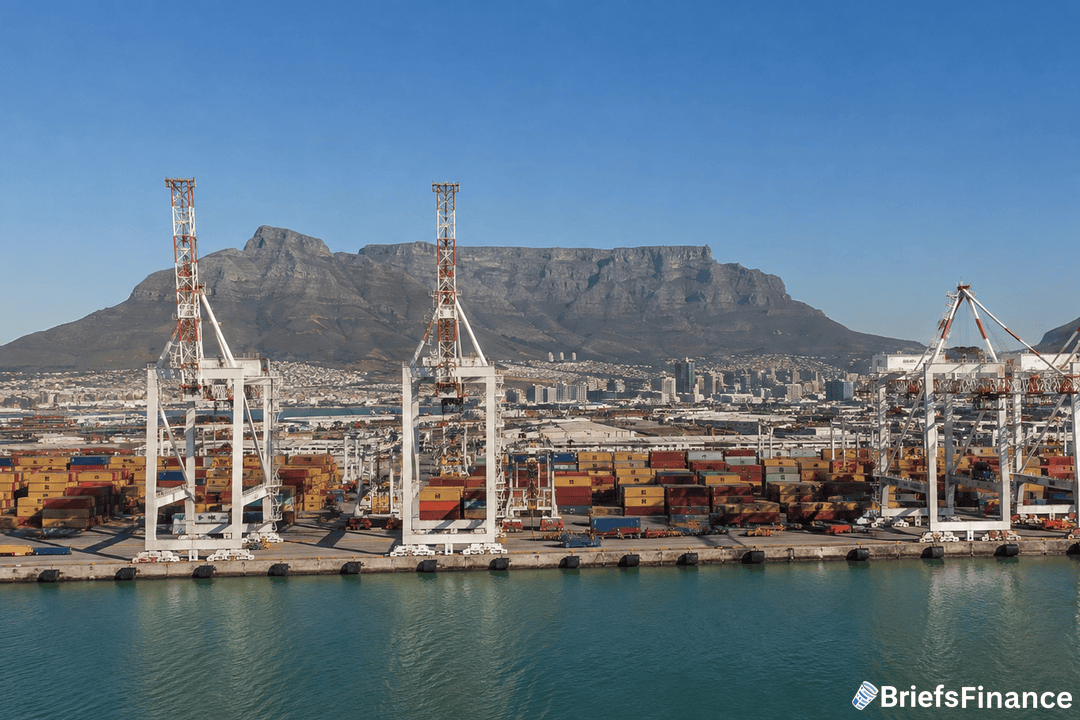
RSGT, as Red Sea Gateway Terminal is known, is weighing a 25-year proposal to redevelop and run a terminal at Cape Town's port.
The terminal in question is the Duncan Dock Precinct, one of the port's two multipurpose terminals.
Transnet National Ports Authority, the state-owned authority, wants a private company to take it over. The goal is to move more cargo through the facility, including containerized shipments, dry-bulk goods, and break-bulk items loaded piece by piece.
The current lease expires next year, so a decision can't wait much longer. RSGT's director of global investments, Gagan Seksaria, said the company attended a Thursday gathering of would-be bidders in Cape Town to "evaluate participation."
Transnet did not respond when asked for comment. The deadline for operators is Nov. 20.
Why Cape Town's Port Matters
This port problem is a big deal for South Africa, not just for the ships. As a state-owned enterprise, Transnet has endured bad weather, broken equipment, and late cargo.
Its latest fixes include a wind-forecasting model and a digital cargo-planning system. Wind forecasts help crews plan around storms, and digital cargo planning cuts the time ships spend waiting at the dock.
Get the free Always Be Buying eBook and learn the simple system for building wealth on any income
Those tools help, but they only fix part of the problem. South Africa's economy has grown at an average annual rate of less than 1% for more than a decade.
Logistics problems often get the blame. When goods sit at the port, factories wait longer for parts and stores wait longer for inventory.
That weighs on jobs and prices. Fixing the port won't solve every problem, but it is hard to move forward when the front door keeps sticking.
These delays hit more than the port itself. They ripple through the wider economy, raising costs for businesses and consumers. That is why Transnet is looking for private investment.
A terminal like Duncan Dock is a gateway for imports and exports. If cranes break or schedules slip, ships queue outside the harbor and costs climb. South Africa's wider logistics network has struggled for years, which is one reason the economy has grown so slowly.
The Saudi Money Behind the Bid
RSGT is not a newcomer. It is Saudi Arabia's first privately financed terminal operator and runs the country's largest container terminal.
Saudi Arabia's sovereign wealth fund, the Public Investment Fund, owns part of the company, so this potential bid has serious money behind it. And this fits a bigger pattern across Africa.
Over the last ten years, Gulf countries have invested upward of $100 billion in Africa, spanning energy, farming, and shipping networks. DP World, based in the United Arab Emirates, is expanding Maputo Port in Mozambique and working on the Democratic Republic of Congo's first deep-water port.
RSGT has also examined a possible bid for a fresh-produce terminal in Durban.
What It Means for Investors
For everyday investors, this is about more than one terminal. It is a test of whether foreign money can help fix the infrastructure problems that have held South Africa's economy back for more than a decade.
This matters if you own South African stocks or funds. When goods can't move, companies make less money, and that shows up in weak profits and slow share price growth.
Even if South Africa is not in your portfolio, the broader trend matters.
The next step to watch is whether RSGT turns this interest into a formal bid. The Nov. 20 deadline is just the start.
If RSGT wins that 25-year deal, the real work - refurbishing the terminal and getting it to run smoothly - would take years. Ports are not quick fixes.
But when they finally run well, the payoff shows up in smoother supply chains, steadier prices, and an economy that can finally move.
Download the free Always Be Buying eBook and start putting your money to work today