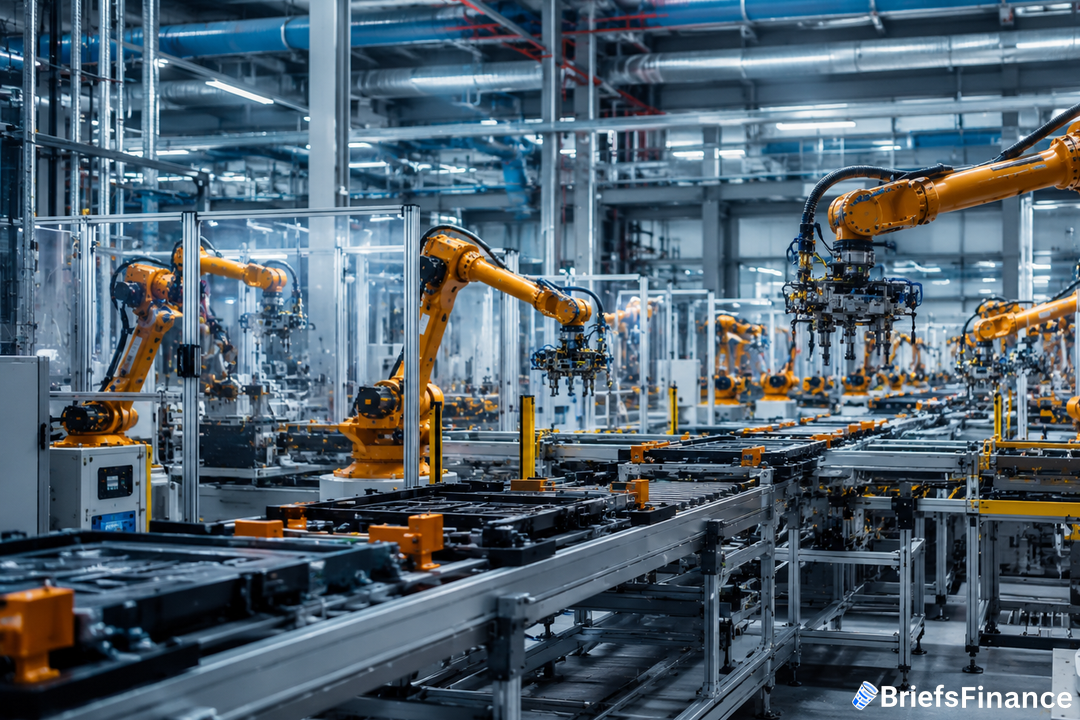
Productivity Picked Up as Output Grew
The U.S. economy got more efficient last quarter. Nonfarm productivity, which measures hourly output per employee, rose at a 1.4% annualized pace in the second quarter.
Annualized just means the growth rate if that pace lasted a full year. The reading beat every forecast except one from economists polled by Bloomberg.
The first quarter also looked better than first reported, with productivity growth revised up to 0.8%.
The second-quarter gain came with the fastest output growth since the third quarter of 2025. Hours worked rose at a more moderate pace.
Productivity matters because it is the closest thing the economy has to a free lunch. When workers produce more in the same amount of time, businesses can pay them more without passing the cost on to customers.
Over time, that is how living standards rise. For many firms, wages and benefits account for the largest share of outlays, so subdued unit labor costs also ease one of the Fed's major inflation worries.
Unit labor costs, or pay per unit of output, rose 1.3%. That came in below expectations, which means workers got more done without pushing up the price of labor too much.
Get the free Always Be Buying eBook and learn the simple system for building wealth on any income
The AI Question Hangs Over the Numbers
One big reason people watch these numbers is AI. The Federal Reserve, investors, and economists are all trying to figure out whether billions of dollars in AI spending is actually making workers more productive.
The quarterly data are too jumpy to call it a trend. So far, the labor-market effect of AI remains unclear, even though data-center and AI investment is lifting demand and prices for things like memory chips.
Fed Chairman Kevin Warsh is optimistic. "Do I believe that the productivity improvements over time will be structurally disinflationary? I do. I believe everything technology touches ultimately gets cheaper," he told lawmakers at a July 15 Senate hearing.
In plain English, he thinks technology will keep pushing prices down over time. If he is right, that is good news for anyone who buys anything.
Not everyone is convinced. Some economists worry that if AI-driven gains really do take hold, companies may delay hiring or cut workers.
What It Means for Your Money
There is a catch, though. Costs tied to the Middle East war have climbed, and those higher costs are eating into workers' paychecks.
After inflation, hourly compensation fell at a 3.1% annualized pace in the second quarter. That is the steepest drop since the end of 2022.
The employment cost index, which tracks what employers pay in wages and benefits, rose 3.4% in the 12 months through June. But after inflation, that compensation declined.
Other data show the labor market is not adding to inflation pressure. New unemployment-benefit claims stayed near historic lows last week, a sign that layoffs are still limited.
Andrew Sacher, an economist at Bloomberg Economics, said the post-pandemic productivity trend still looks intact and could show an early AI boost. He added that muted pay increases give the central bank room to keep rates on hold and point to a jobs market that is not stoking inflation.
The next big test comes Friday, when the Bureau of Labor Statistics releases its monthly jobs report. Economists expect July hiring to be stronger than June and the unemployment rate to stay steady.
For investors, the picture is mostly positive: workers are producing more, labor costs are contained, and layoffs are rare. But the squeeze on real paychecks is real, and if wages keep losing ground to prices, the people who spend money every day will feel it even if the numbers look tidy.
Download the free Always Be Buying eBook and start putting your money to work today