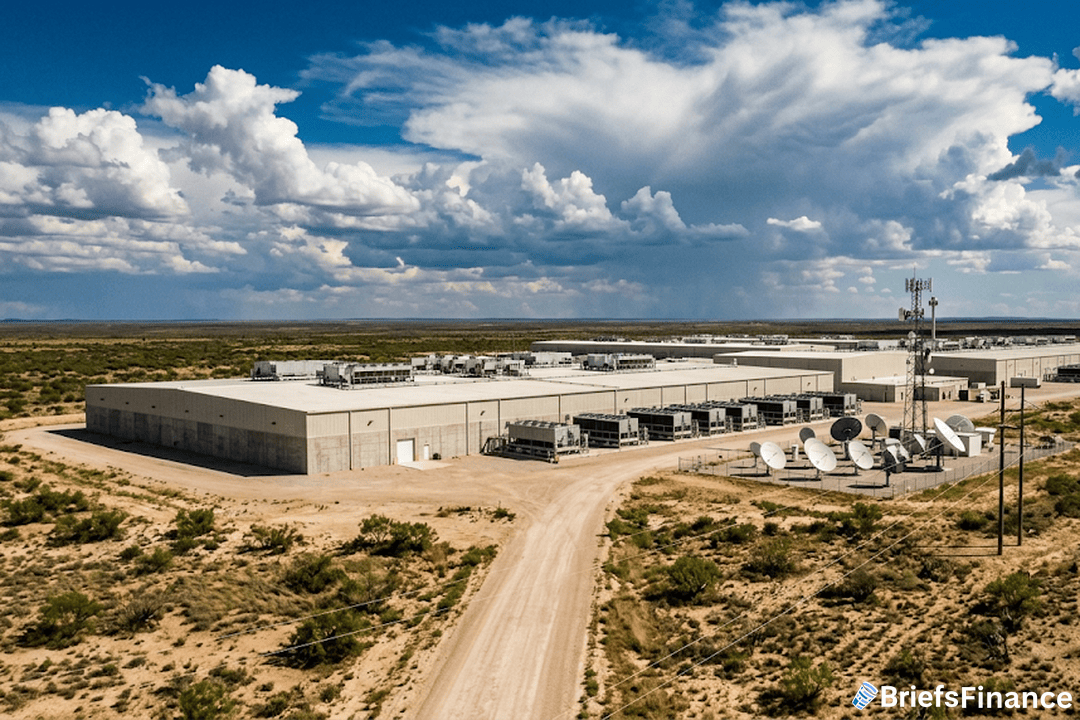
Texas Is Changing Its Welcome
Texas has long been the place where data centers go to get left alone. Cheap land, easy rules, and what looked like a surplus of electricity made it a magnet for the giant warehouses that run the internet.
That formula put Texas behind only Virginia in data center count. It also created a problem that the state can't ignore anymore.
Cheap land and light regulation were part of the appeal, but so was the energy mix. Texas has ample natural gas, and its wind and solar resources have helped ERCOT keep pace with rising demand, according to the federal Energy Information Administration. That combination attracted companies like Google and Microsoft and helped push the waiting list for grid connections to record levels.
The welcome just got more complicated. On Monday, Governor Greg Abbott directed the Public Utility Commission of Texas and ERCOT, the state's grid operator, to require audits for every proposed data center facility.
This wasn't the state's first attempt. It tried a voluntary survey first, and most developers stayed quiet, a silence that turned a request into a requirement.
The Grid Queue Doubled in Less Than Six Months
The line of projects waiting to connect to the state's grid has more than doubled in less than six months, from 233 gigawatts in January, according to ERCOT, to 474 gigawatts now, according to Abbott's office.
Get the free Always Be Buying eBook and learn the simple system for building wealth on any income
The jump is mainly a data center story. About 90% of the queued requests come from data centers.
That number comes with a big caveat. Developers often join the queue early because the wait is long, and many of those projects never get built, making the queue more of a wish list than a construction schedule.
Even with that caveat, the pressure is real. The queued capacity is more than five times the record peak demand ERCOT has ever recorded, so even a fraction of proposed projects could strain the grid.
The boom has been building for years. Google and Microsoft are among the operators that found Texas attractive because of its natural gas reserves, and the federal Energy Information Administration credits wind and solar with helping ERCOT keep pace with rising demand.
From 2021 to 2025, utility-scale solar capacity in Texas increased fourfold, which helped keep prices down for much of that stretch, according to an Amperon report, with rates still low by national standards. But the EIA says those prices are now rising, and data centers and crypto miners are part of the reason.
What the Audits Will Cover
Texas built its pro-business reputation by staying out of developers' way, and Houston doesn't even have a zoning code. Data centers, though, have become a national flashpoint as communities worry about power, water, and noise.
Abbott instructed the state grid operator and the utility commission to gather extensive details from developers, including how much electricity and water the projects would consume on-site and off-site, how they plan to handle noise and light, whether they use tax incentives, and who owns them.
Depending on what the audits turn up, Texas may no longer be such an easy place to build. That could matter for the companies behind the projects and for the state's standing as a data center hub.
What It Means for Your Portfolio
The data center business is no longer just a tech story. It is an electricity story, a water story, and a policy story, and all three are suddenly on the table in Texas.
For investors, slower approvals could mean delays for projects backed by big names like Google and Microsoft. It could also mean some of that demand lands in other states, or that developers end up paying more to get projects built.
The change also has a direct line to your power bill. The audits are a sign that state officials see the pressure coming.
Nobody knows yet whether Texas will stay on top of the data center wave or hand some of it to other states. For anyone who pays an electric bill or owns a stake in the companies building these projects, the big change is that Texas is no longer an automatic yes.
Download the free Always Be Buying eBook and start putting your money to work today