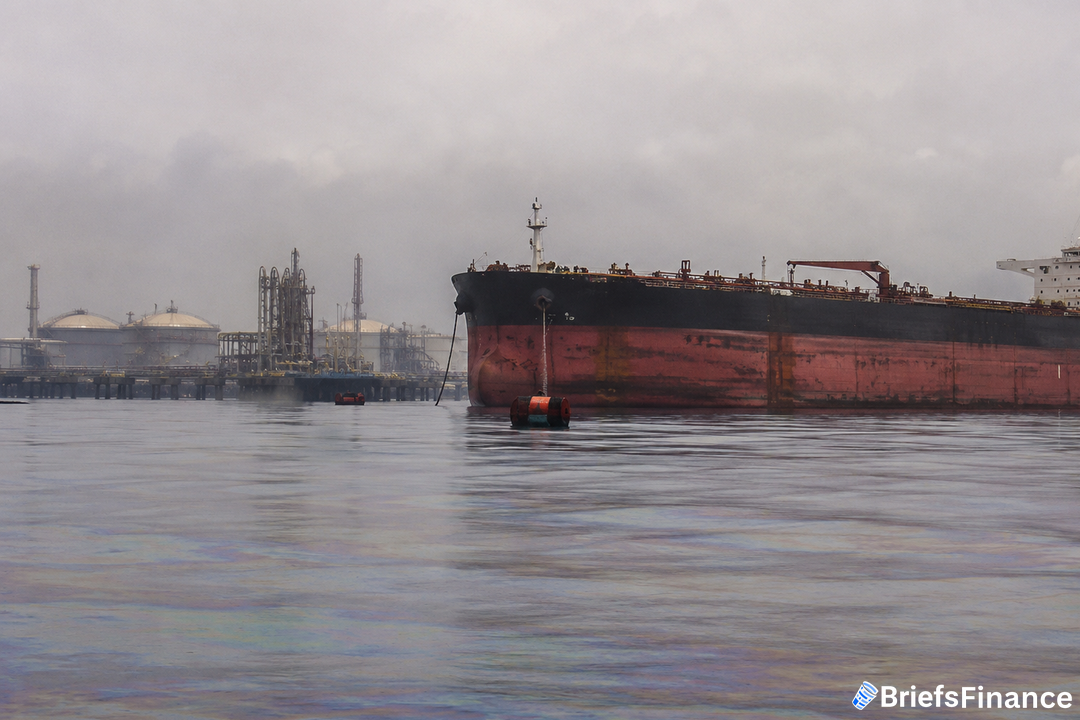
Venezuelan Exports Lose Momentum
Venezuela's overseas crude sales fell sharply in July.
The monthly totals are based on shipping records, Kpler Ltd. data, and tanker movements tracked by Bloomberg. The numbers cover crude oil only, not refined products.
Why India Stepped Back
The conflict with Iran has now run for six months. Logistical workarounds and alternative shipping routes have eased the early shock to global energy markets. On Monday, August 3, 2026, President Donald Trump halted planned military action against Iran to allow diplomatic efforts to advance.
Get the market news that matters in a five-minute read with Market Briefs, our free daily newsletter
For Venezuela, that diplomatic opening was also visible in the loading figures. The lull in the fighting also made Persian Gulf crude available again, including barrels that had earlier been trapped in the Gulf. With those supplies back in reach, India's need for Venezuelan crude weakened.
Tanker-tracking firm Kpler Ltd. said, "Venezuela has become a swing supplier for Indian refiners: it fills gaps when other barrels are hard to move, and it is the first to be left behind when normal supply routes reopen."
China Is Out of the Picture
For years, China was Venezuela's No. 1 crude buyer. But after strongman Nicolás Maduro was ousted earlier this year, China has bought no Venezuelan barrels. That leaves the United States and India as the main outlets for Venezuela's exports.
Since China stopped buying, fewer customers remain, so any variation in Indian purchases can move the monthly export figure dramatically. Chinese demand had helped support the country's export totals earlier in the year, meaning its disappearance left the July numbers more exposed to Indian buying.
What It Means for Venezuela
The drop underscores how much Venezuela's export position has changed over the past year. June's pace was roughly 1.14 million barrels per day, so the month-on-month decline amounts to about 285,000 barrels per day.
The shift has been abrupt. Chinese cargoes had helped lift Venezuela's export totals earlier in the year; with that demand gone, July's number mostly reflected Indian buying decisions.
Venezuela's reliance on this narrower set of buyers is new. For most of the past decade, China provided a regular outlet for Venezuelan crude, giving the country's oil trade a cushion when other buyers pulled back. That cushion has vanished. With only the United States and India still purchasing most of the crude, Venezuela is more exposed to sudden geopolitical shifts.
The Iran war and the recent diplomacy around it show how quickly global crude buyers can turn elsewhere when alternative supplies become available. The July numbers capture that fragility in a single month's loading data.
Join Market Briefs, our free daily newsletter, for a quick daily rundown of the markets