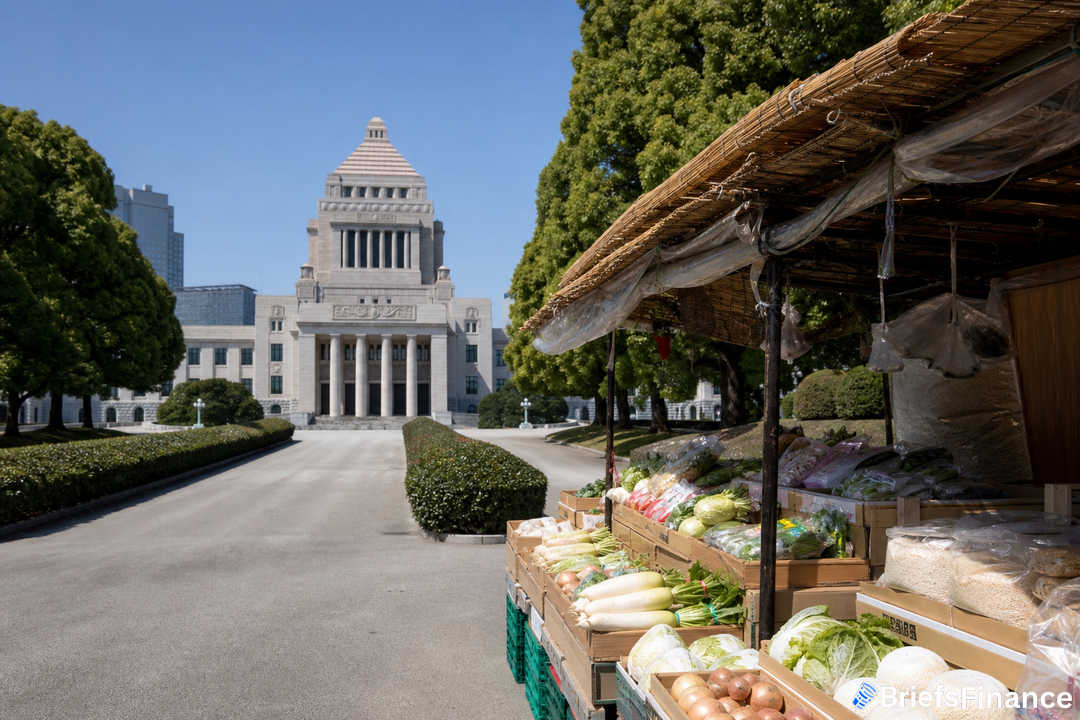
Inflation Relief Meets a Political Stress Test
Parliament kicks off a new session Monday, and the marquee item is a push to blunt inflation's sting for households. One year into the job, Prime Minister Sanae Takaichi is pushing to reduce the consumption tax applied to food and soft drinks, a proposal she plans to highlight in her policy speech later in the day. The rate on food would be trimmed to 1% from the current 8% for a two year period beginning in April, a change that is popular with many voters and aimed squarely at grocery bills that keep climbing.
The real drama is less about whether the bill can pass and more about how she gets it there. Takaichi's party holds a supermajority in the more influential lower chamber, but her ruling coalition remains in the minority in the upper house and faces a fragmented yet loud opposition. How she steers this through could preview how she plans to tackle tougher fights ahead.
How to Pay for It, Without More Borrowing
Cutting the levy on essentials would leave a revenue shortfall topping ¥4 trillion each year, which puts the spotlight on how to fund it while avoiding fresh bond issuance. Takaichi has pledged a "responsible, pro-active" fiscal stance and says a thorough review of government spending can free up money to cover part of the cost. She also wants to scrap the frequent use of extra budgets that have become a go to for disaster response and add-on spending, and instead fold expected needs into a single annual budget to improve predictability and deepen debate.
Speaking to NTV last week, she said, "We will appropriately manage the total annual volume of government bond issuance, including both the initial and supplementary budgets. We will meet necessary fiscal demands while ensuring secure funding sources." She added, "We will most certainly not be taking any action that would negatively impact the lives of citizens, now or in the future."
Price relief programs are fiscal policy aimed straight at household budgets. Market Briefs follows the spending free every morning.
Beyond Groceries: Energy and Family Names Also on Deck
Lawmakers will also consider legislation to diversify crude oil sources and to expand the use of maiden names. The naming issue has become a women's rights flashpoint because Japanese law bars couples from using different surnames, which results in most married women adopting their husband's family name.
Meanwhile, Takaichi's broader economic blueprint is built around lifting Japan's growth potential. Since taking office last October, she has rolled out a plan to spur corporate investment across 17 government-designated critical fields, from AI and semiconductors to shipbuilding and anime. The target is ¥370 trillion over 14 years, split between public and private funding. She has also vowed to overhaul the state's finances, combing through current expenditures to redirect resources to higher priority areas, and replacing ad hoc extra budgets with a single, consolidated annual plan.
What This Means For Your Portfolio
The early read on the food tax cut will double as a gauge of how the government intends to balance stimulus with fiscal restraint. Watch whether Takaichi leans on reallocating existing spending and how she manages the overall pace of bond issuance.
How a government responds to inflation shapes debt and currency for years. Get the free Market Briefs daily newsletter and watch the response.