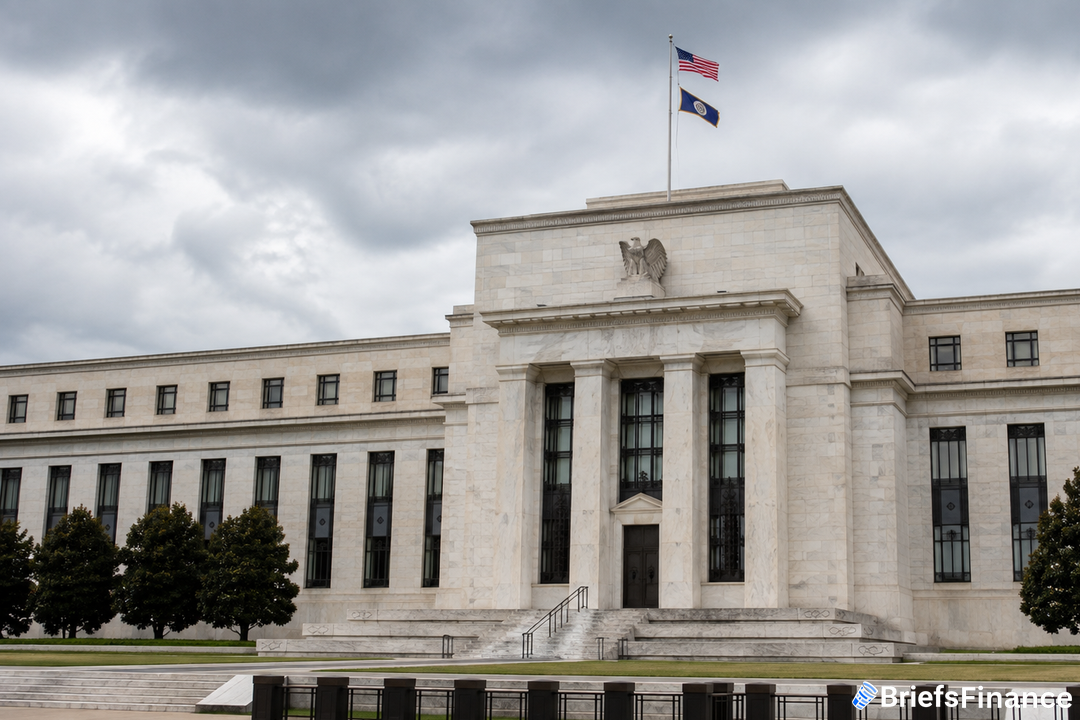
A Credibility Test for the Fed
Warsh said the move up in Treasury yields had already constrained financial conditions, so no rate change was needed.
Nohshad Shah, who runs fixed-income sales at Citadel in EMEA, wrote in a note that the market moves underscored what he called "a challenge to the credibility or clarity of the policy framework." Shah's warning comes as the central bank reviews its policy framework, a process that could influence which inflation measure the Fed prioritizes. For Warsh, the recent action in bond markets is a sign that financial conditions are already tightening, potentially taking the place of policy action. For investors, the absence of a clear reaction from the Fed raises doubts about whether officials are willing to act if price pressures persist.
For five consecutive years, price increases have exceeded the Fed's target, and Warsh has repeatedly stressed the need to bring them down.
Get the market news that matters in a five-minute read with Market Briefs, our free daily newsletter
Warsh's position puts the central bank in a delicate spot. The Fed has held rates steady even as inflation has run above target for half a decade, and the policy framework review gives officials a chance to explain whether they are still prioritizing price stability. In the meantime, investors must judge whether the Fed's inaction reflects patience or hesitation. That uncertainty is part of what Citadel Securities says is eroding confidence in Warsh's strategy.
A Negative Feedback Loop
Shah wrote that relying on markets to tighten conditions can create a damaging feedback loop. When long-term borrowing costs rise, the Fed may decide to wait longer before tightening policy. Investors, anticipating that wait, are likely to seek larger premiums for inflation and term risk, which pushes yields up again. Shah described the dynamic this way: "The Fed holds because markets have tightened, while markets tighten because the Fed has held."
Shah's warning also highlights why the kind of yield increase matters. If long-term rates climb because investors want more compensation for inflation and policy uncertainty, the effect can be to undermine confidence in the Fed's commitment to price stability. That is the credibility problem Warsh now has to manage while the framework review is under way.
A Different View Inside Citadel
Frank Flight, a colleague of Shah who serves as Citadel's head of macro strategy, argued last week that the Fed should jolt investors by raising rates. Most economists expected no change, so a hike would have strengthened Warsh's credibility as an inflation fighter and helped anchor expectations. That argument came after the Fed held rates, and it stood in contrast to the approach of waiting for markets to tighten conditions.
A rate increase would have been a surprise, but Flight's logic was that only a forceful move could convince markets the Fed was serious. By holding steady, the Fed passed up an opportunity to reset inflation expectations. That leaves Warsh relying on the same market-driven tightening that Citadel Securities warns could create a feedback loop.
When investors expect the Fed to tighten, front-end rates tend to climb, which reins in demand.
Join Market Briefs, our free daily newsletter, for a quick daily rundown of the markets