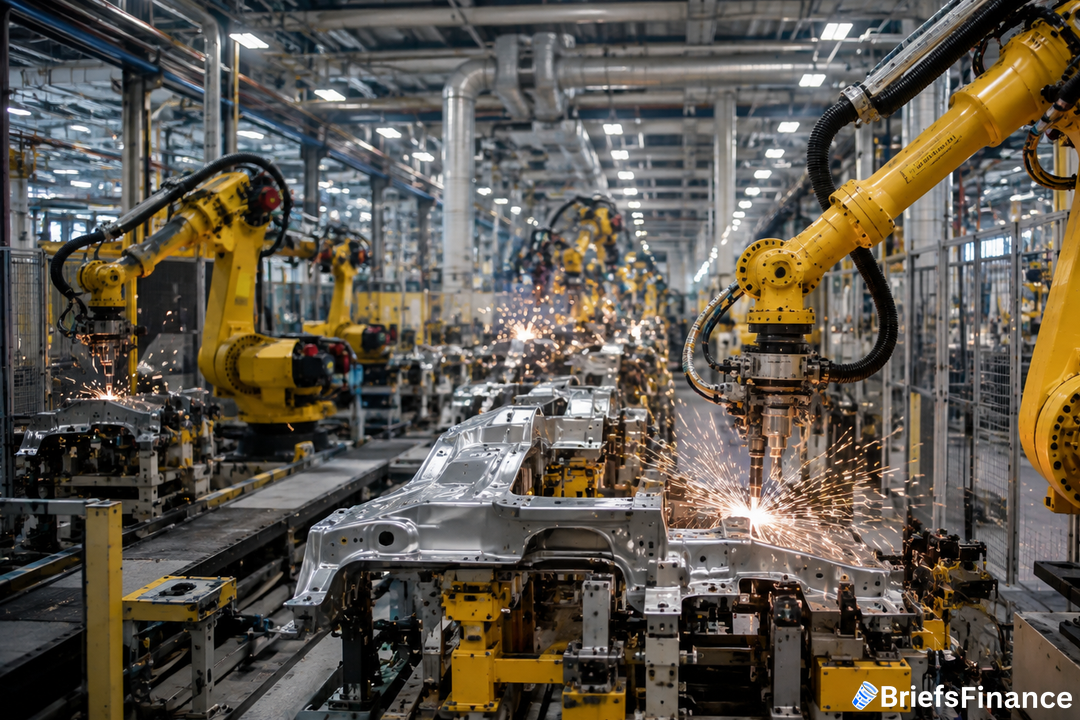
Strong Demand and Broad Growth
Factories in the United States turned in their strongest month since the spring of 2022, as output jumped, demand stayed strong and hiring returned. The Institute for Supply Management's purchasing-managers index, released at 10:00 a.m. EDT on August 3, 2026, stood at 55.6. A reading over 50 signals expansion; the industry has stayed above that threshold for seven months in a row.
Output hit 58.5, the best production reading since late 2021. An employment subindex showed factories added workers in July, something they had not done since September 2023. New orders also advanced, another sign of sturdy demand.
What It Means for Investors
The ISM report is based on responses from supply executives at factories across the country. Because the PMI blends subindexes for production, employment, new orders and supplier deliveries, it is viewed as a broad gauge of factory-sector conditions rather than a single narrow data point. It is considered a reliable leading indicator for the industrial economy, and investors watch it closely for early signs of inflation or a downturn. Rubeela Farooqi, chief U.S. economist at High Frequency Economics, said the July figures point to an economy where "manufacturing is contributing to overall expansion." She added: "The jump in employment is particularly notable because manufacturers had been slow to hire; a sustained increase in factory payrolls would support consumer spending and broader income growth."
Get the market news that matters in a five-minute read with Market Briefs, our free daily newsletter
A Broadening Recovery
Factory momentum has built steadily this year, helped by resilient consumers, steady business investment, and defense spending. The gains were widespread: just one manufacturing industry, chemical products, contracted in July. Growth was reported in apparel, electrical equipment, and printing.
Demand is also coming from abroad. Export orders hit their strongest level since March 2022, while import orders reached their best showing since June 2021. The combination suggests domestic producers are benefiting not only from US spending but also from improving conditions overseas.
The July data also reinforce the breadth of the factory sector's recovery.
Price Pressures Persist, but Ease a Bit
Suppliers are still taking longer to deliver materials, and raw-material costs remain elevated. The prices paid index slipped to 71.1 last month. It was the softest reading in five months, yet still well above its level at the beginning of the year. Survey respondents attributed the pressure to tariffs and to higher costs for petroleum products after tensions in the Middle East disrupted markets.
The Middle East was highly volatile during July. A temporary US-Iran accord fell apart, sending crude prices higher. After a short lull, hostilities resumed late in the month and the five-month-old conflict widened across the region. Those events feed directly into the cost of fuel and petrochemicals, which manufacturers cited as a key concern.
Join Market Briefs, our free daily newsletter, for a quick daily rundown of the markets