Free NewsletterPro Login
S&P 500 6,287 +0.42%
DOW 44,521 -0.18%
NASDAQ 21,103 +0.71%
S&P 500 +12.4%
Briefs Finance Fund +24.8%
JOIN THE FUND →

Honda Takes a Different Route in India: Ethanol Over Electric

Published Jul 25, 2026
[tts_player]
Share:
Summary:
  • Honda Motorcycle & Scooter India is prioritizing ethanol-blended fuels like E85 over battery-electric vehicles.
  • Electric two-wheelers made up only 8% of the over 20 million two-wheelers sold in India in the last fiscal year.
  • CEO Tsutsumu Otani emphasizes that sustainability must be practical and accessible for customers.

A Different Path for India's Roads

Most of the world's auto giants are racing toward electric vehicles. Honda's two-wheeler business in India is taking a detour.

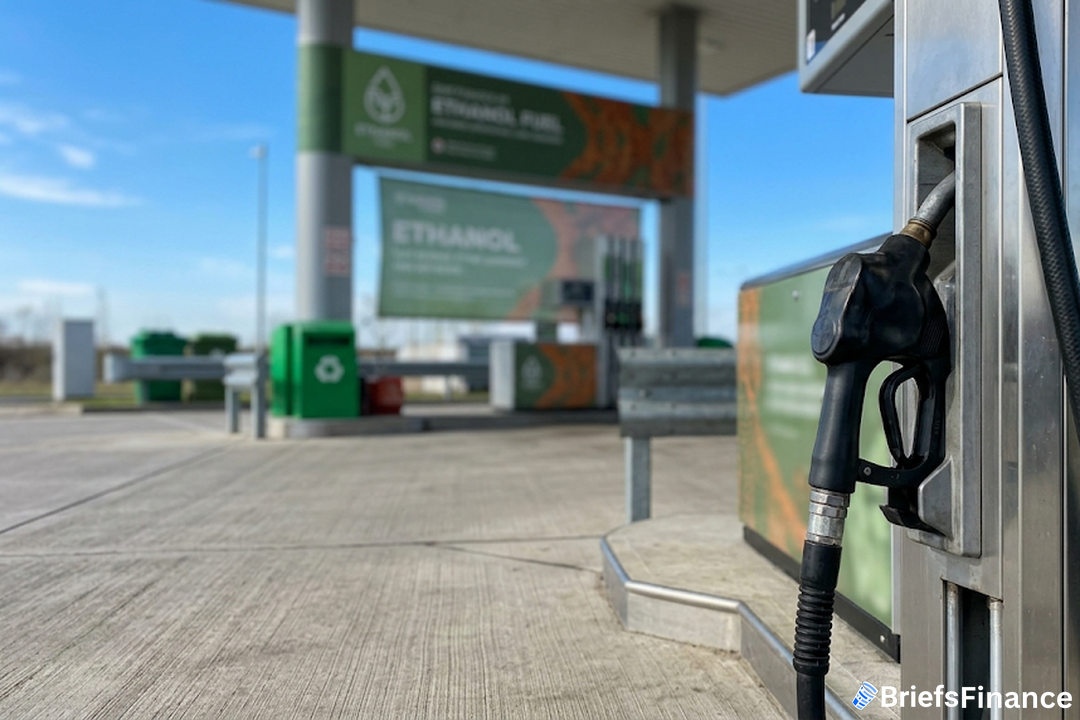
Instead of betting big on battery power, the company is pushing ethanol-blended gasoline - specifically E85, which is 85% ethanol, and even 100% ethanol as a possible option. The idea is to cut emissions without forcing drivers to rely on a charging network that is inconsistent in many parts of the country.

Tsutsumu Otani, the president and CEO of Honda's Indian two-wheeler unit, put it plainly: "Sustainability must also be practical."

That practical view comes from looking at the ground truth. Every year, more than 20 million two-wheelers are sold in India.

Why Honda Is Holding Back on EVs

The data reveals a market where electric vehicle uptake is heavily focused in southern India, where the charging network is more robust, while rural areas still prefer conventional petrol engines, according to Otani. He pointed to power outages and uneven charger availability as reasons for adopting a "multi-pathway approach" that includes ICE, electric, and alternative fuels instead of a full shift to EVs.

Get the market news that matters in a five-minute read with Market Briefs, our free daily newsletter

Honda also observed its Japanese parent company stopping the sale of its EVs in America. That experience reinforced a cautious approach for India.

In contrast, domestic competitors such as TVS Motor and Bajaj Auto are aggressively launching electric models. Pure-play startups like Ather Energy and Ola Electric dominate the battery-powered scooter segment. So Honda isn't ignoring electric - it just doesn't think now is the moment to go all in.

Instead, the company is favoring a "multi-pathway approach" that includes internal combustion engines, battery power, and other fuel types, rather than committing exclusively to electric vehicles.

Ethanol as a bridge fuel comes with its own trade-offs. E85 requires modified engines and typically delivers lower mileage per liter than pure petrol. But Honda sees these challenges as more manageable than building a nationwide EV charging network from scratch. The company is engineering models that can run on any blend from standard gasoline to 100% ethanol, giving dealers and customers gradual flexibility as fuel infrastructure evolves.

The bottom line: Honda is betting that ethanol works as a bridge fuel - less pollution than gasoline, easier to roll out than chargers - while it waits for the EV infrastructure to catch up.

What It Means for Your Portfolio

This isn't just a story about one company's strategy. It reflects a bigger debate playing out across markets like India.

India is a major two-wheeler market by volume. How that market shifts toward electric matters for anyone invested in auto companies, battery makers, or fuel suppliers. Honda's approach suggests that the road to zero emissions may be longer and more winding than the hype suggests.

Honda also exports its vehicles from India to about 60 nations, predominantly in Latin America and Africa. Those markets face similar infrastructure challenges. So the ethanol strategy could spread well beyond India's borders.

Otani summed up the mindset with a line worth remembering: "Customers don't really care about ICE or EV. Customers simply want what's good value." That is a reminder that technology wins only when it solves a real problem at a price people can stomach.

For investors, the takeaway is not about picking sides. It is about watching which companies match their technology bets to the real-world conditions of the markets they serve. Honda is playing the long game - and it is placing a big bet that practical beats perfect.

Join Market Briefs, our free daily newsletter, for a quick daily rundown of the markets
Disclosure

Recent News

1 2 3 41

Get Market Briefs delivered to your inbox every morning for free!

No fluff. No noise. No politics. Just finance news you can read in 5 minutes.

Blogs

June 29, 2026
Portfolio Diversification: Why Putting All Your Eggs in One Basket Destroys Wealth
  • Real diversification means spreading investments across all 11 economic sectors plus bonds, alternatives, and cash so no single bet can sink the portfolio.
  • Different sectors perform at different times, so a diversified portfolio captures upswings while smoothing the brutal drawdowns that wipe out concentrated bets.
  • Total market index funds offer the simplest path to diversification, and annual rebalancing is what keeps the structure working over time.
Read More
June 29, 2026
Non Taxable Income: What It Is and Why It Matters
  • Non taxable income is money you receive that you don't owe income tax on.
  • The tax code treats workers, investors, and business owners very differently, and investors often come out ahead.
  • Learning how income is taxed is a quiet superpower for keeping more of what you earn.
Read More
June 29, 2026
Semiconductor Stocks: A Simple Guide for Investors
  • Semiconductor stocks are companies that design and make computer chips, the brains inside nearly every modern device.
  • The AI boom has turned chips into one of the market's most important and most watched groups.
  • They offer big growth potential, but come with high valuations and a notoriously cyclical history.
Read More
June 25, 2026
How Stocks Work: A Simple Guide for Beginners
  • A stock is a slice of ownership in a company - buy one, and you own a piece of the business.
  • You make money two ways: the share price rising over time, and dividends paid to shareholders.
  • The simplest path for most beginners is buying into the whole market through a low-cost index fund.
Read More
June 25, 2026
Stop Loss vs Stop Limit: What's the Difference?
  • A stop loss order sells your stock once it hits a trigger price, prioritizing getting you out.
  • A stop limit order only sells within a price range you set, prioritizing price over a guaranteed exit.
  • The trade-off: a stop loss almost always executes; a stop limit might not if the price moves too fast.
Read More
June 25, 2026
Energy Stocks: A Simple Guide for Investors
  • Energy stocks are companies that produce and supply the power the world runs on, from oil and gas to newer sources.
  • They make up one of the 11 sectors of the market and tend to move with energy prices and big-picture shifts.
  • Like any sector, the key is diversification and understanding the forces driving demand.
Read More
June 18, 2026
What Is a Stop Loss Order? A Simple Guide
  • A stop loss order automatically sells a stock once it falls to a price you set.
  • It's a tool to cap losses or lock in gains without watching the market all day.
  • It works best for active strategies, and can backfire if used carelessly on long-term holdings.
Read More
June 18, 2026
Best S&P 500 Index Fund: How to Choose One
  • The best S&P 500 index fund for most investors is simply the cheapest, most established one that tracks the index well.
  • Funds like VOO, IVV, and SPY all hold the same 500 companies, so the biggest difference is the fee.
  • Pick one, automate your buys, and let time do the heavy lifting.
Read More
June 17, 2026
What Are Penny Stocks? Risks and Rewards Explained
  • Penny stocks are very low-priced shares of very small companies, often trading for just a few dollars or less.
  • They promise huge gains but carry huge risks: low liquidity, high failure rates, and wild price swings.
  • Most investors are better served by quality companies and funds than by chasing cheap shares.
Read More
June 17, 2026
Best Stocks for Beginners With Little Money
  • The best stocks for beginners with little money usually aren't individual stocks at all - they're low-cost index funds.
  • You can start with $100 or less and use small, regular investments to build wealth over time.
  • Focus on diversification and consistency, not on picking the next big winner.
Read More
1 2 3 24
Share via
Copy link