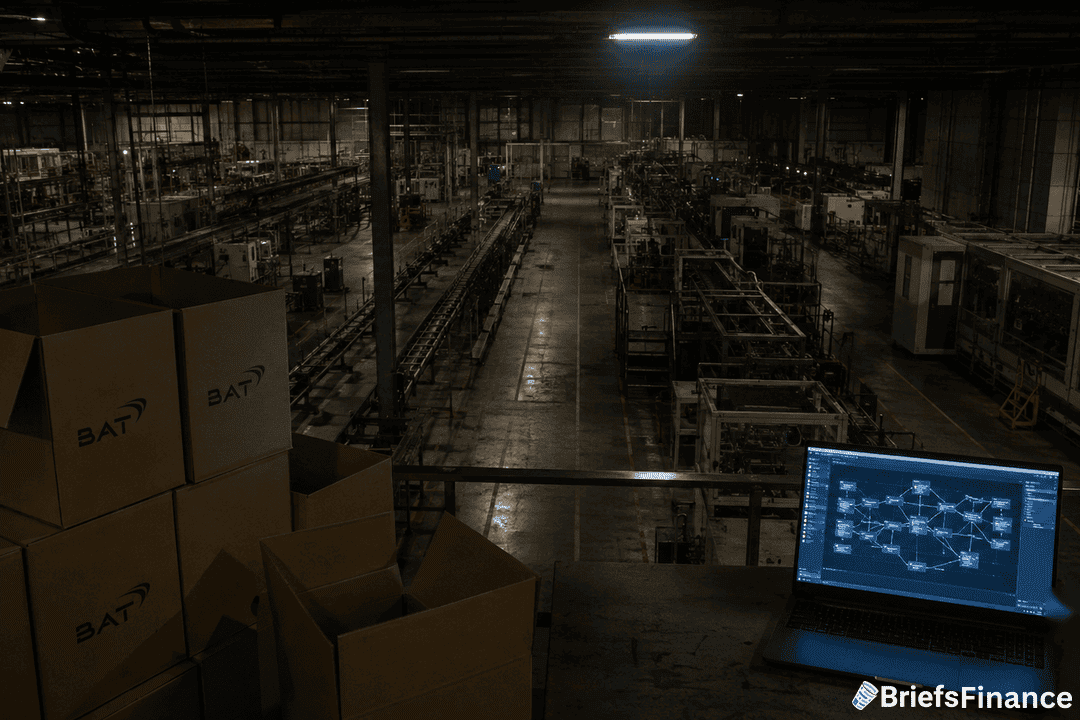
Cigarette sales are shrinking, and British American Tobacco has been struggling to hit its profit targets. Now the company is turning to artificial intelligence to cut costs and reshape its business. That means roughly one in five workers will be affected.
The Numbers Behind the Cuts
BAT plans to cut 5,500 jobs directly through layoffs. An additional 3,500 positions will be transferred to external companies such as Accenture.
The company expects the program to save $793 million per year by 2028. Most of those savings should arrive by 2027.
Why BAT Is Making These Moves
Traditional tobacco sales are expected to decline 2.5% this year. More smokers are switching to alternatives like vapes and nicotine pouches. But BAT has struggled to keep up.
BAT has consistently missed its internal revenue and earnings goals, leading to investor dissatisfaction. Some investors have grown impatient. U.S. regulators have delayed approvals for new smokeless products, which has allowed illegal Chinese imports to eat into BAT's market share.
At the same time, rival Philip Morris International is further ahead in shifting to smoking alternatives. BAT is playing catch-up. CEO Tadeu Marroco said, "the overhaul would make the company more agile, cost-disciplined and technology-enabled." BAT is now concentrating on products such as Vuse vapes and Velo nicotine pouches, but it still trails competitor Philip Morris International.
A Broader Industry Shift
This restructuring reflects a wider transformation across the tobacco sector. As cigarette volumes shrink globally, companies are racing to build profitable alternatives. BAT has invested billions in next-generation products, including heated tobacco and oral nicotine, but has faced setbacks from stringent regulation and the rise of unlicensed disposable vapes.
BAT's restructuring comes as the tobacco industry faces a fundamental shift. With cigarette consumption falling worldwide, companies are rushing to develop alternatives like vapes and heated tobacco. However, regulatory hurdles and black-market competition have complicated BAT's transition.
The job cuts and AI-driven efficiencies are designed to streamline operations and free up capital for these growth areas.
The pivot to AI-driven efficiency is intended to free up capital for these newer categories while trimming legacy costs.
BAT's move also highlights the intensifying battle for dominance in the smokeless market. Philip Morris now generates a significant portion of its revenue from heated tobacco and oral products, while BAT lags behind in both innovation and regulatory approvals. The company's investment in AI and outsourcing is meant to close that gap and accelerate its pivot away from traditional cigarettes.
What Comes Next
The company is aiming for 3% to 5% annual revenue growth over the medium term.