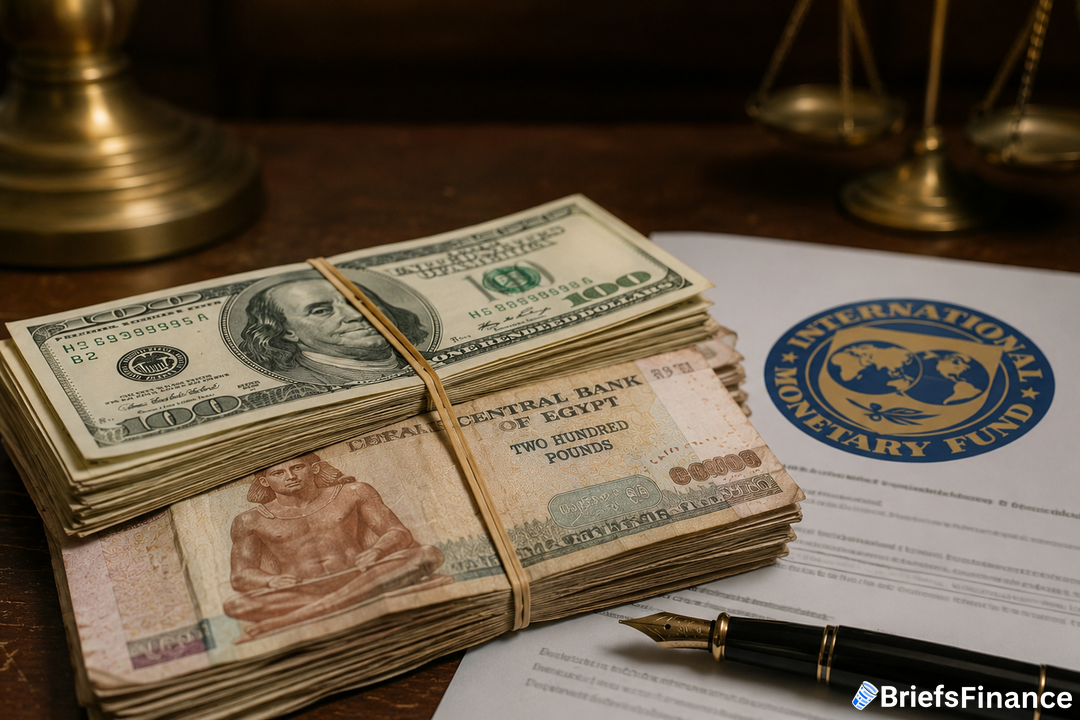
A preliminary deal between Egypt and the International Monetary Fund means the country is one step closer to a payout of more than $1.6 billion.
The Deal and What It Means
The IMF staff reached a staff-level agreement with Egypt. That is a preliminary deal that must still be approved by the IMF's executive board.
Together, these payments would raise the total amount dispensed through both programs to roughly $7.2 billion. The total IMF program was expanded to $8 billion in early 2024, when Egypt more than doubled its original deal. Investors follow these reviews closely because billions of dollars in foreign money has flowed into Egypt's local debt.
Why the Deal Got Done
Egypt made progress on long-standing promises to sell state assets. Bloomberg reported that two recent asset sales helped clear the way for the review. The first was the partial sale of gas stations whose owner is a fuel firm tied to the military. The second involved selling the rights to run and expand a wind farm located along the Red Sea.
Get your free investing masterclass bonus when you join Market Briefs, our free daily newsletter
Other reforms also helped. Egypt amended its value-added tax to bring in more revenue. It published a paper that details the government's plans for state ownership over the coming four years.
Furthermore, the country implemented a flexible exchange-rate policy, with the Egyptian pound experiencing steep declines and recoveries during the Iran conflict. After early US-Israeli strikes on Iran, the pound hit an all-time low before rebounding as Washington and Tehran moved toward a temporary ceasefire.
These reforms are part of a broader effort to revive an economy that has been struggling with high inflation, a large external financing gap, and the fallout from regional conflicts. The asset sales in particular signal to the IMF that Egypt is serious about reducing the state's footprint in the economy, a key condition for the program.
What Comes Next
Further sales are expected. On Sunday, officials said four state-owned firms would be temporarily listed on the Egyptian exchange, making it easier for them to eventually conduct initial public offerings.
An IMF team traveled to Cairo in May to review Egypt's adherence to its reform commitments. That visit helped pave the way for the current deal.
The ongoing reforms are critical for Egypt, which faces an external financing gap estimated at billions of dollars and inflation that has eroded purchasing power. The flexible exchange rate, while volatile, is seen as a necessary step to attract foreign investment and stabilize the economy.
What to Watch
The key date is the executive board vote. If approved, Egypt gets the cash.
The government has already shown it can sell assets to meet conditions. More offerings are in the pipeline.
Subscribe to Market Briefs, our free daily newsletter, and claim your bonus investing masterclass