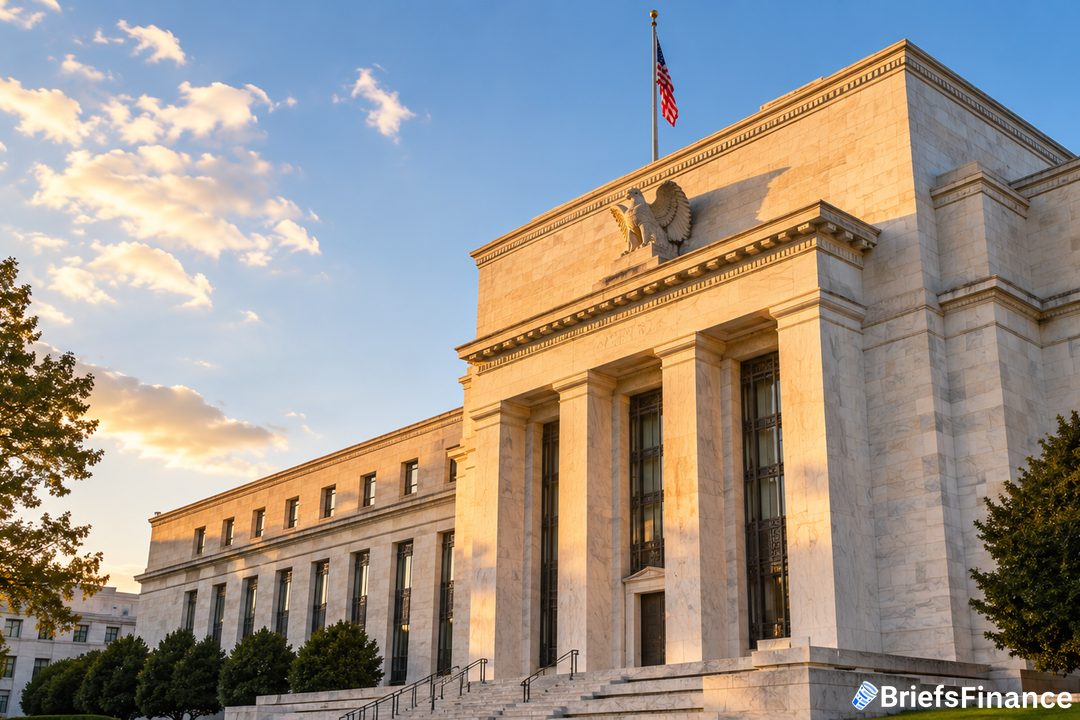
A New Direction for the Fed
Kevin Warsh has been Fed chair for about two months, and he already wants to shake things up.
Testifying before the House Financial Services Committee on Tuesday, Warsh said the central bank's old way of handling inflation was a mistake. He called it "a tax on the American people and businesses" and promised to get rid of it.
Warsh took over as chair, succeeding Jerome Powell. The inflation rate has exceeded the Fed's 2% mandate since 2021, fueling criticism of the previous policy framework.
In 2020, the central bank introduced a framework called flexible average inflation targeting. The idea was to let inflation run a little above its 2% goal after periods when it had been too low. Rather than a modest overshoot, inflation climbed much higher. Inflation has been running above 2% since 2021, and Warsh said the strategy backfired.
Warsh said, "That central bank wasn't the first central bank to ask for a little more inflation and end up with a lot more." He added, "It was a mistake."
Warsh argued that high inflation hurts ordinary households, not just traders on Wall Street. When prices go up faster than wages, your money buys less. That is the "tax" he was talking about - a hidden one that nobody votes on but everyone pays.
Get the market news that matters in a five-minute read with Market Briefs, our free daily newsletter
Five Task Forces, Six Weeks of Work
Warsh did not just complain about the old policy. He is already working on a replacement.
Warsh established five task forces to examine the central bank's operations. One group is looking at communications - how the central bank talks to the public. Another is reviewing its technology and data.
A third is examining the Fed's balance sheet, which ballooned during the pandemic. A fourth is focused on economic data and how the Fed uses it. And the fifth is about the inflation approach itself - what should replace the 2020 policy.
Warsh said the task forces are the beginning of "a set of reforms that are going to be put in place across at least five dimensions in monetary policy."
He also pointed to artificial intelligence as a potential help. Warsh said the rapid buildout of data centers and AI-related equipment is pushing investment higher, which could boost productivity. Higher productivity tends to lower costs over time and help contain inflation. But he was careful to note that nobody knows exactly how much the economy will benefit.
"We don't know the extent to which the economy will benefit from the AI buildout," he said. "Yet it seems inevitable that what is now called 'AI investment' will soon be called just 'investment.'"
Not everyone at the Fed agrees with that optimistic view. Some economists and other Fed policymakers have pushed back, arguing that AI's impact on inflation is uncertain at best.
Warsh will keep making his case on Wednesday, when he appears before the Senate Banking Committee.
What It Means for Your Portfolio
For investors, the big takeaway is that the Fed is serious about getting inflation back to 2% - and it is willing to change its whole playbook to do it. If Warsh follows through with major reforms, the path of rates could look different than what markets are expecting. A more aggressive approach to squeezing out inflation could mean higher rates for longer.
But there is also a glass-half-full view. If Warsh's task forces lead to clearer communication and smarter policy, the Fed could get inflation under control without crashing the economy. And if AI investment really does boost productivity, that could give the economy a tailwind.
Warsh himself summed it up this way: "If we get policy right - and we will - the inflation surge of the last five years will be a thing of the past."
Join Market Briefs, our free daily newsletter, for a quick daily rundown of the markets