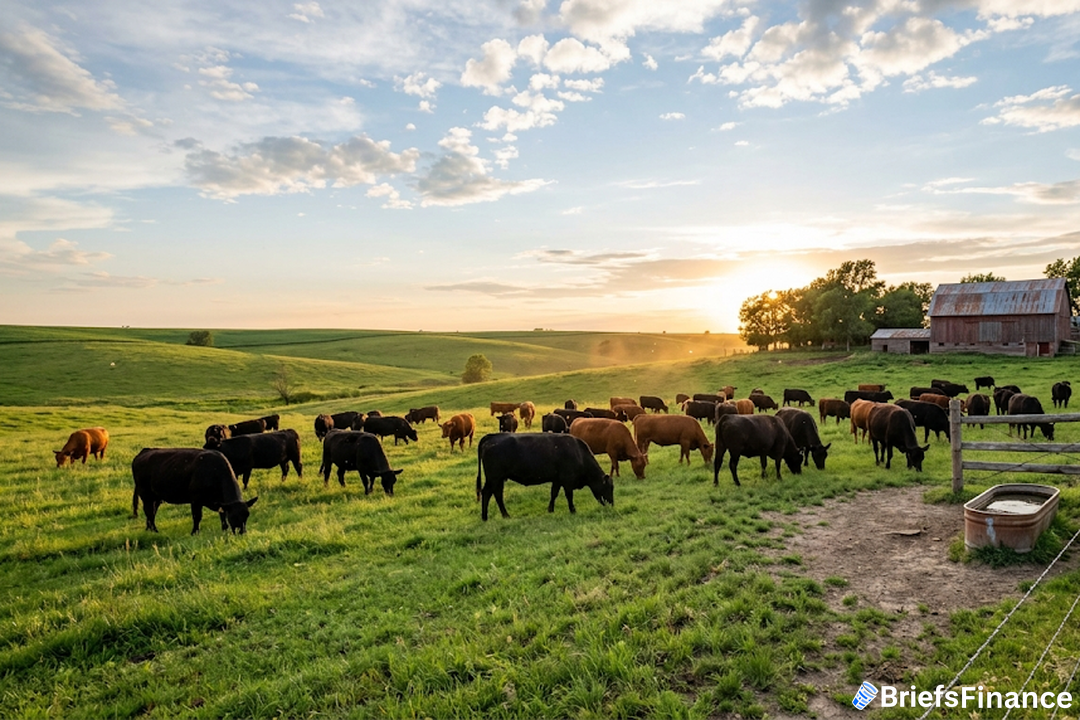
The Herd Finally Stops Shrinking
After years of steady decline, the U.S. cattle herd just caught a small break.
The U.S. cattle supply has undergone a record-shrinking phase, driven by dry weather and elevated expenses that pushed farmers to send more livestock to slaughter rather than hold them back for future breeding. This cycle - where rising cattle values encouraged further sell-offs - has persistently kept the herd size limited and beef costs elevated.
A bright spot comes from the figures on heifers, which are young female cows that haven't calved yet. According to the USDA report, the count of beef replacement heifers increased by 3% compared to the previous year. However, Ever.Ag Insights livestock market adviser Abby Greiman stressed that true herd expansion hinges on increasing the number of replacement heifers.
Get the market news that matters in a five-minute read with Market Briefs, our free daily newsletter
Greiman said, "Holding onto older cows to breed an extra calf or two is stabilizing the herd as of right now, but in one or two years we're going to have to get rid of her, whereas if we add a replacement heifer to the herd, it's six to eight years that she's going to be."
The USDA noted in another Friday report that although the number of beef replacement heifers rose, the total heifer count in feedlots destined for slaughter also edged higher year-over-year, indicating that a notable portion are still being marketed for beef.
Why Beef Prices Keep Hitting Records
The scarcity of cattle has forced beef companies to run at a loss while fighting over limited inventory. Major meat processors in the U.S. have closed facilities due to the persistent supply crunch. In June, JBS NV announced it would shut down a large Pennsylvania beef plant, one of the largest operations on the East Coast.
A parasitic insect called the New World screwworm, which mainly attacks cattle, has been discovered and is the newest hurdle for the industry. Although the parasite poses no risk to food safety, it heightens operating expenses and unpredictability for ranchers, who were already reluctant to keep animals for reproduction. This is particularly concerning because newborn calves and cows that recently delivered are especially susceptible to infestations. If the pest extends beyond its present range in southern Texas, restrictions on moving livestock could also disrupt processing operations.
The Squeeze on Smaller Processors
Cody Norton, the founder of ClearCut Forecasting and a veteran with 20 years in the beef sector, said: "That's going to be the toughest part, to have some of these smaller to midsize players keep in the game as long as they are." He added, "I think the blows will continue to take place as long as these cattle markets are at these numbers."
Join Market Briefs, our free daily newsletter, for a quick daily rundown of the markets