Free NewsletterPro Login
S&P 500 6,287 +0.42%
DOW 44,521 -0.18%
NASDAQ 21,103 +0.71%
S&P 500 +12.4%
Briefs Finance Fund +24.8%
JOIN THE FUND →

Trump Threatens EU Tariffs in Retaliation for $1 Billion Google Fine

Published Jul 25, 2026
[tts_player]
Share:
Trump Threatens EU Tariffs / Google Fine
Summary:
  • President Trump threatened new tariffs on EU goods after the bloc fined Google $1 billion under its Digital Markets Act.
  • The threat follows a 10% U.S. tariff already announced on roughly 60 trading partners, including the EU, and a new trade investigation is underway.
  • Two small businesses have sued to challenge Trump's use of Section 301 for forced-labor tariffs, adding legal uncertainty.

A Tariff Fight Over a Tech Fine

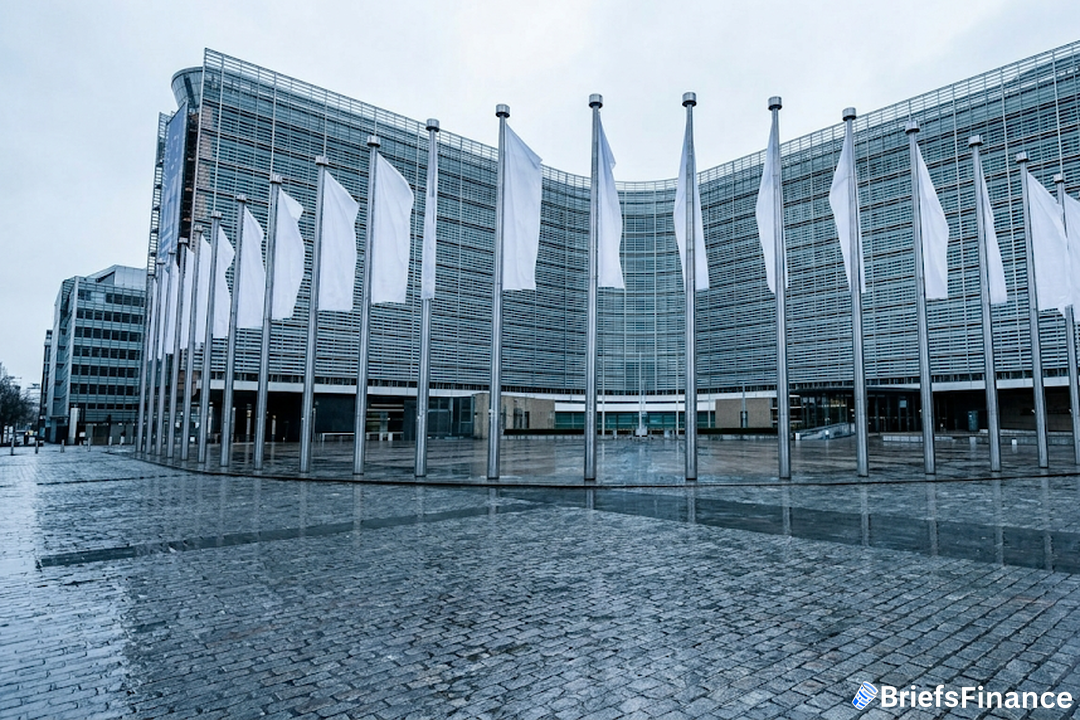
This week, President Trump intensified the trade conflict with the European Union after the bloc fined Google $1 billion. In a social media post on July 24, Trump said the penalty was "illegal and highly discriminatory practice" and that he would reverse the fines by placing "a substantial TARIFF" on EU goods at the earliest moment.

European regulators accused the company of favoring its own search services and blocking app developers from sending customers to deals outside Google's Play Store.

Trump also called out Apple and Amazon as other U.S. tech companies that have been targeted by EU regulation.

Already Tense Trade Waters

This threat does not come out of nowhere. The stated reason was forced labor concerns.

Get the market news that matters in a five-minute read with Market Briefs, our free daily newsletter

That announcement already disappointed Ireland's ambassador to the U.S., Geraldine Byrne Nason. She told Bloomberg Television that the announcement "changes the conversation" and called it disappointing. She also said Ireland does not discriminate and hopes to get to a dialogue about what the president means.

Timing adds a layer of complexity. A previous U.S.-EU trade agreement caps most American tariffs on European goods at 15%.

Conducting a new Section 301 investigation of European tech penalties would take several months. But Trump could revive a dormant investigation from his first term that looked at European digital services taxes.

Digital Markets Act Background

The Digital Markets Act, which took effect in 2023, is designed to curb anti-competitive behavior by large online platforms. Google's violation involved requiring app developers to use its own payment system and restricting them from directing customers to alternative purchasing options. The EU has also opened investigations into Apple and Amazon under the same law, which Trump has criticized as unfairly targeting American firms.

Legal Challenges Already Piling Up

The legal uncertainty adds another layer to an already complex trade dispute. Section 301 investigations, traditionally used to challenge foreign trade practices that are deemed unfair, have become a central tool in Trump's tariff strategy. The pending lawsuit argues that applying this statute to forced-labor allegations exceeds the president's authority, potentially setting up a court battle that could delay or reshape future tariff actions. Meanwhile, the EU has signaled it may retaliate with its own countermeasures if Trump follows through on his threat, raising the stakes for transatlantic commerce.

The current dispute echoes earlier conflicts during Trump's first term, when the U.S. launched Section 301 investigations into European digital services taxes. Those probes ultimately led to tariffs on EU goods such as wine and cheese, and the EU retaliated in kind. Reviving that dormant investigation could fast-track this latest tariff threat, bypassing the need for a lengthy new probe.

Join Market Briefs, our free daily newsletter, for a quick daily rundown of the markets
Disclosure

Recent News

1 2 3 41

Get Market Briefs delivered to your inbox every morning for free!

No fluff. No noise. No politics. Just finance news you can read in 5 minutes.

Blogs

June 29, 2026
Portfolio Diversification: Why Putting All Your Eggs in One Basket Destroys Wealth
  • Real diversification means spreading investments across all 11 economic sectors plus bonds, alternatives, and cash so no single bet can sink the portfolio.
  • Different sectors perform at different times, so a diversified portfolio captures upswings while smoothing the brutal drawdowns that wipe out concentrated bets.
  • Total market index funds offer the simplest path to diversification, and annual rebalancing is what keeps the structure working over time.
Read More
June 29, 2026
Non Taxable Income: What It Is and Why It Matters
  • Non taxable income is money you receive that you don't owe income tax on.
  • The tax code treats workers, investors, and business owners very differently, and investors often come out ahead.
  • Learning how income is taxed is a quiet superpower for keeping more of what you earn.
Read More
June 29, 2026
Semiconductor Stocks: A Simple Guide for Investors
  • Semiconductor stocks are companies that design and make computer chips, the brains inside nearly every modern device.
  • The AI boom has turned chips into one of the market's most important and most watched groups.
  • They offer big growth potential, but come with high valuations and a notoriously cyclical history.
Read More
June 25, 2026
How Stocks Work: A Simple Guide for Beginners
  • A stock is a slice of ownership in a company - buy one, and you own a piece of the business.
  • You make money two ways: the share price rising over time, and dividends paid to shareholders.
  • The simplest path for most beginners is buying into the whole market through a low-cost index fund.
Read More
June 25, 2026
Stop Loss vs Stop Limit: What's the Difference?
  • A stop loss order sells your stock once it hits a trigger price, prioritizing getting you out.
  • A stop limit order only sells within a price range you set, prioritizing price over a guaranteed exit.
  • The trade-off: a stop loss almost always executes; a stop limit might not if the price moves too fast.
Read More
June 25, 2026
Energy Stocks: A Simple Guide for Investors
  • Energy stocks are companies that produce and supply the power the world runs on, from oil and gas to newer sources.
  • They make up one of the 11 sectors of the market and tend to move with energy prices and big-picture shifts.
  • Like any sector, the key is diversification and understanding the forces driving demand.
Read More
June 18, 2026
What Is a Stop Loss Order? A Simple Guide
  • A stop loss order automatically sells a stock once it falls to a price you set.
  • It's a tool to cap losses or lock in gains without watching the market all day.
  • It works best for active strategies, and can backfire if used carelessly on long-term holdings.
Read More
June 18, 2026
Best S&P 500 Index Fund: How to Choose One
  • The best S&P 500 index fund for most investors is simply the cheapest, most established one that tracks the index well.
  • Funds like VOO, IVV, and SPY all hold the same 500 companies, so the biggest difference is the fee.
  • Pick one, automate your buys, and let time do the heavy lifting.
Read More
June 17, 2026
What Are Penny Stocks? Risks and Rewards Explained
  • Penny stocks are very low-priced shares of very small companies, often trading for just a few dollars or less.
  • They promise huge gains but carry huge risks: low liquidity, high failure rates, and wild price swings.
  • Most investors are better served by quality companies and funds than by chasing cheap shares.
Read More
June 17, 2026
Best Stocks for Beginners With Little Money
  • The best stocks for beginners with little money usually aren't individual stocks at all - they're low-cost index funds.
  • You can start with $100 or less and use small, regular investments to build wealth over time.
  • Focus on diversification and consistency, not on picking the next big winner.
Read More
1 2 3 24
Share via
Copy link












