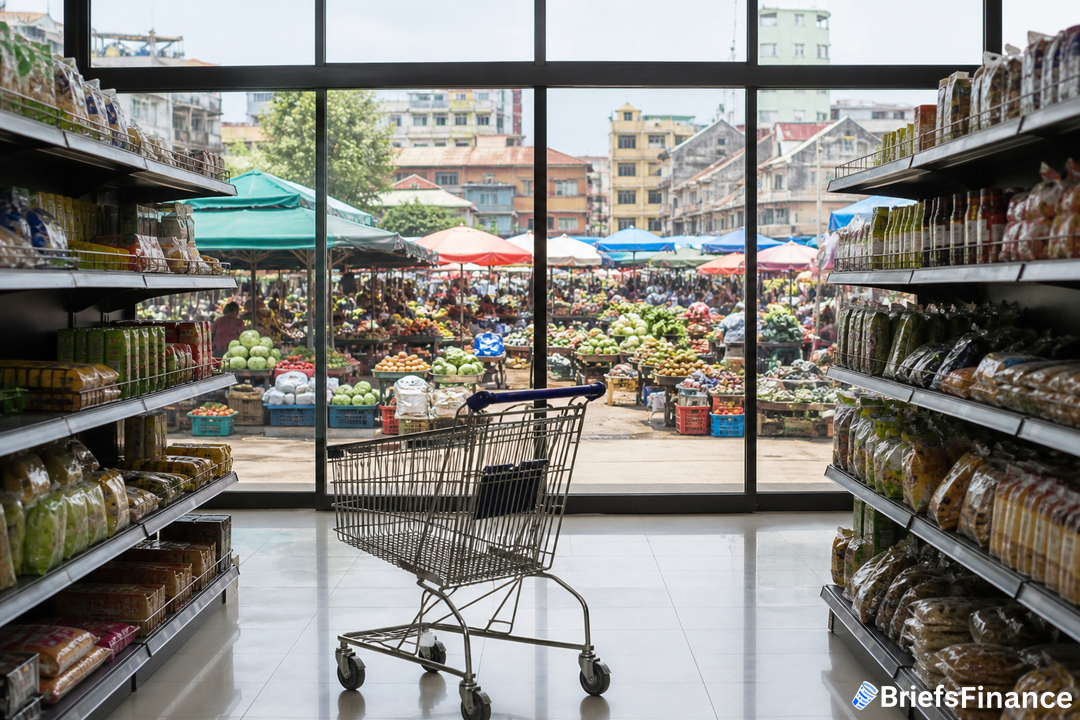
Quarter snapshot: split between developed and emerging markets
Unilever said underlying sales declined in developed markets in the fiscal third quarter, while faster growth in places like Brazil and Indonesia lifted the group result. The boost resulted in overall underlying sales rising 5.2%, topping analysts' forecasts.
"This was very much a two speed quarter," wrote RBC's James Edwardes Jones, noting the gap between emerging and developed markets. He added that the company "still own a food business that is dragging down group performance."
Chief Executive Fernando Fernandez, who is nearing two years in the role, said, "We see consumer resilience in emerging markets," and pointed out that fundamentals in many of those economies look better than in developed ones.
What went wrong in North America and in food
Investors focused on the food division's drag as Unilever prepares to merge that business - home to Hellmann's and Knorr - with McCormick next year. Food sales were flat overall, pressured by tough US retail conditions, particularly in condiments. In the US, premium mayonnaise rivals hurt sales, even as Unilever rolled out an avocado oil-based Hellmann's during the quarter.
Analysts at Jefferies, including David Hayes, said the company's challenges in food "will contain enthusiasm" among investors. The tie-up has also drawn criticism over the debt load McCormick is taking on and the outlook for the combined food operation.
Smart investors embrace new tools to gain a reliable edge in changing markets. We're hosting our first ever investor livestream on 11/17 to show you how to use ChatGPT and Claude to invest like a pro, hosted by Briefs Finance CEO Jaspreet Singh. Save your seat.
Costs, pricing and the path ahead
Developed markets brought a tougher backdrop, with higher input costs and uneven consumer confidence. Unilever has raised prices this year and plans more increases in the fourth quarter. "There is always some lag between commodity cost inflation and price," Fernandez said, adding that retailer bargaining power limits its ability to push through increases in Europe.
In North America, wellbeing offerings, including Liquid IV, underperformed as retailers discounted the brand and introduced private-label alternatives. Fernandez said he anticipates the region will resume growth in the fourth quarter. During its most recent quarter, Reckitt Benckiser Group Plc - a competitor - likewise posted weaker sales in North America, blaming a supply disruption caused by an extended US plant upgrade.
The broader macro picture has not helped. The conflict in the Middle East has fed inflation and squeezed household budgets, a challenge hitting consumer goods makers globally.
What this means for your portfolio
The brighter spot remains emerging markets. Personal care lines such as Dove accelerated in India and Latin America, while hair care - from Sunsilk to K18 - and fabric cleaning across the OXO portfolio performed well. Unilever lifted guidance, now targeting at least 3% volume growth and roughly 5% sales growth for the year, both slight upgrades.
Shares slid as much as 3.6% intraday in London despite the sales beat, with the stock roughly flat for the year through Tuesday's close. The strategy is clear: lean into home and personal care and tilt harder toward faster-growing markets like India and the US, while the food merger works toward completion next year.
Understanding broader trends helps investors make steadier decisions and refine their advantage. On 11/17, our CEO Jaspreet Singh goes live for our first ever investor livestream on how to use ChatGPT and Claude to invest like a pro. Register to join him.