What the report showed
The Commerce Department said Tuesday that orders for durable goods - items built to last at least three years - climbed 1.8% in September, marking the strongest monthly advance since spring. August was revised up to a 0.1% gain, soft but positive.
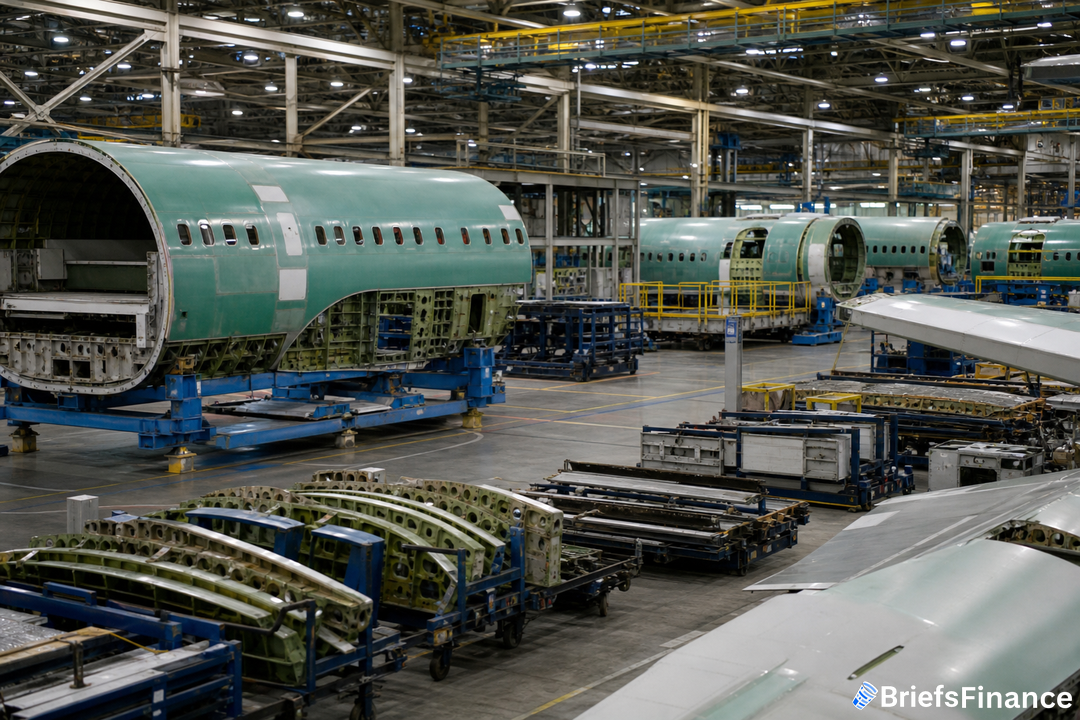
Aircraft did the heavy lifting. Bookings for commercial planes jumped 28.4% as Boeing Co. recorded more orders than in August. Demand reached beyond aviation, with orders rising for computers, machinery, and motor vehicles as well.
Under the hood, core capital goods - a stand-in for business equipment investment that strips out aircraft and defense - rose 0.5%. On the spending side that flows into GDP, non-defense capital goods shipments including aircraft increased 1.7%. The government uses shipments to tally equipment investment because orders can be canceled.
The investment pulse
"September's durable goods report points to resilient business investment," said Priscilla Thiagamoorthy, a BMO Capital Markets senior economist. "Aircraft orders powered the headline gain, but underlying demand continued to expand, while firmer capital goods shipments suggest equipment spending helped support economic growth at the end of Q3 with plenty of momentum heading into Q4."
Bloomberg Economics' Eliza Winger added, "September's durable-goods data reinforce the strong investment picture ahead of Thursday's third-quarter GDP report. AI-related investment continued to power capital spending through the quarter. Looking ahead, some firms indicated their investment plans hinge on the outcome of the midterm elections and the path of Fed policy."
Understanding shifts in business activity can help investors sharpen their decision making. We're hosting our first ever investor livestream on 11/17 to show you how to use ChatGPT and Claude to invest like a pro, hosted by Briefs Finance CEO Jaspreet Singh. Save your seat.
Shipments are where GDP happens
Core capital goods shipments, the steadier series that excludes planes and defense, rose 1.2% in September. Over the three months through September, that measure grew at a 16.5% annualized rate, the fastest outside the pandemic rebound since 2011.
Economists lean on core shipments to judge underlying capex because the lag from ordering planes or military equipment to actual delivery is long. That is also why shipments, not orders, feed into the equipment slice of GDP.
Why it matters for your portfolio
Business investment has been running strong this year, helped by AI-related spending, and September's figures suggest that carried through the quarter. Ahead of the release, the Atlanta Fed's GDPNow model projected that equipment outlays would contribute 1 percentage point to third quarter growth. If that holds, Thursday's initial GDP estimate could reflect a healthy capital spending backdrop.
In plain English: a firming capex cycle tends to benefit industrials, select tech tied to AI infrastructure, and transportation names linked to aircraft and machinery, while signaling momentum in manufacturing that can ripple through earnings.
New analytical tools can give investors a clearer sense of opportunity and risk. On 11/17, our CEO Jaspreet Singh goes live for our first ever investor livestream on how to use ChatGPT and Claude to invest like a pro. Register to join him.