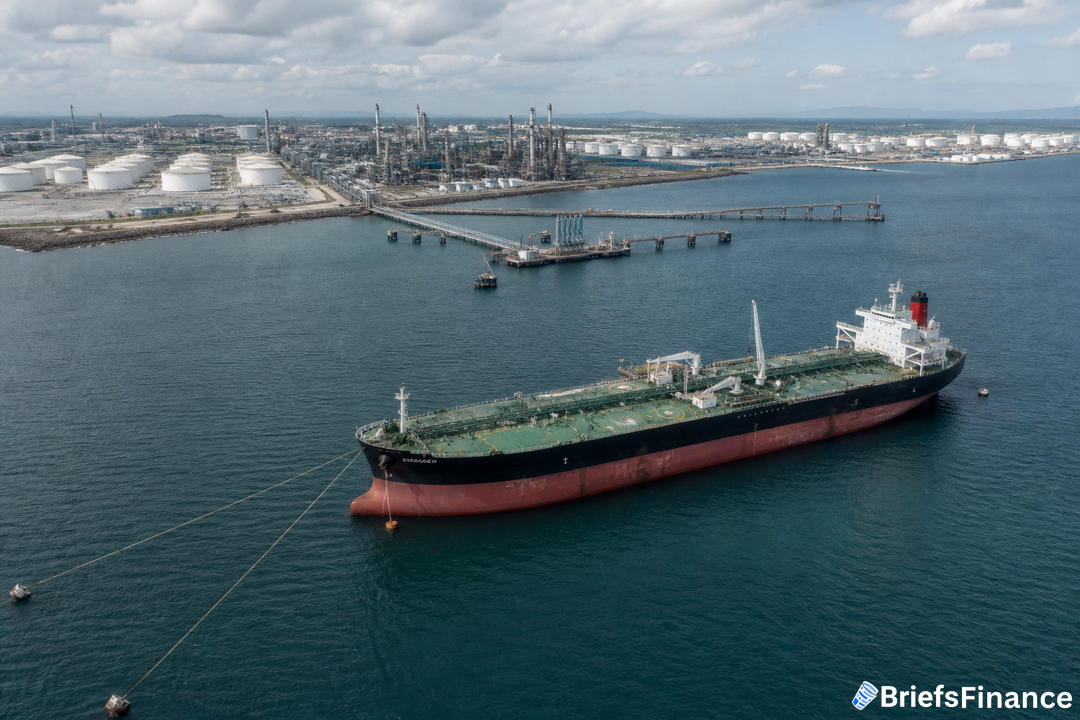
What changed and why
Indian refiners are tilting back to Gulf grades as long voyages get too expensive to make Russian oil pay. Traders involved in talks say certain Iraqi cargoes are set more than $25 a barrel under the Dubai benchmark before shipment, which works out to a discount of several dollars to Dated Brent once delivered. By contrast, traders report Russian grades are quoted roughly $2 above the benchmark, which dulls the economics for India.
The turn is not just about Iraq. Saudi Aramco's trading arm recently moved prompt Khafji cargoes at discounts as deep as $10 a barrel to Dubai, and Abu Dhabi National Oil Co. disposed of roughly 20 million barrels earlier this month at a modest discount.
What companies are saying and doing
"Cargoes from Russia have significantly reduced due to their commercial viability" in November, Bharat Petroleum Corp. Chief Financial Officer Vetsa Ramakrishna Gupta said Monday on an earnings call. "Due to the increase in freight, we are not getting good offers from Russia." Traders say BPCL had already cut Russian purchases sharply in October because the crude no longer added up. Gupta also noted that November imports from Russia are below supplies from the Gulf, which he called more commercially viable.
On Friday, Hindustan Petroleum Corp. Chairman Vikas Kaushal briefed analysts that Gulf suppliers are pricing sharply enough to counter what he termed "astronomical" freight rates. Larger peer Indian Oil Corp. and Mangalore Refinery and Petrochemicals Ltd. have likewise cut their intake of Russian crude.
When shipping and costs influence choices, staying informed matters, so sign up for the free Market Briefs newsletter.
The broader oil flow backdrop
Middle East exports have rebounded to roughly prewar levels despite a recent rise in attacks on ships, as oil-dependent economies keep barrels moving. Russian shipments, meanwhile, are slipping, and rising freight costs make the longer trip to buyers like India pricier.
Russia remains India's leading source, yet shifting economics are eroding its share and could reverse the trade relationships that took shape after Russia's invasion of Ukraine. Almost eight months into the war, this shift is reshaping India's crude trade.
How buyers are managing costs - and what it means for investors
To curb logistics costs, processors are hiring vessels themselves to steam to the Gulf and load Iraqi barrels. Russian barrels usually arrive in India on a delivered basis, which gives buyers less control over freight.
The bottom line: deeper Gulf discounts and steeper long-haul freight are reworking India's crude slate. Watch upcoming earnings for changes in feedstock mix, realized discounts to benchmarks, and freight expenses - that is where this pivot will show up.
As global supply chains shift, get a clear daily summary in minutes by subscribing to the free Market Briefs.