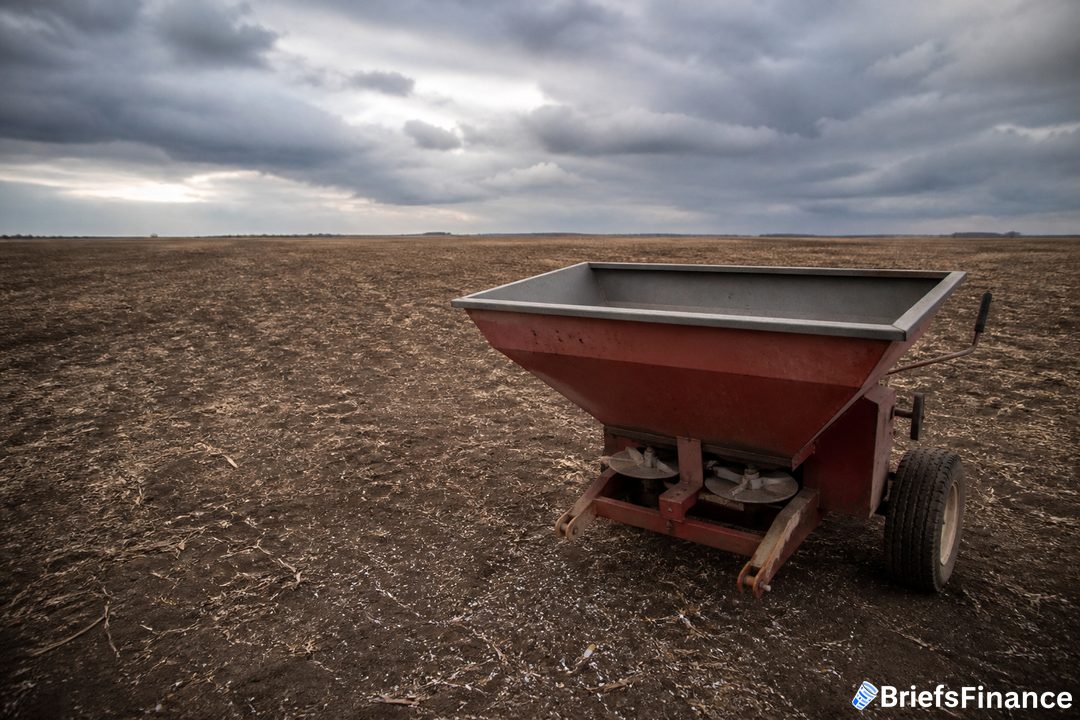
What buyers are doing now
Orders for key nutrients have slipped. ICIS, a price reporting agency, says nitrogen purchases are running as much as one fifth under normal levels for this point in the calendar, while separate estimates put phosphate demand down by 30% or more.
That slowdown follows a difficult harvest after drought and extreme heat hit European crops. Low soil moisture is already pressuring winter plantings, and applying less fertilizer could further trim yields next year.
After speaking with market participants at a Prague industry gathering this month, Chris Vlachopoulos, a senior editor at ICIS, said clearer signals should emerge soon. "Early December is when I would expect to have a definitive answer on demand destruction versus late buying," said Vlachopoulos.
Why supply and cost are a problem
The Iran war has pushed up costs for farm inputs like nutrients and diesel, while rising natural gas prices are eroding the economics of making fertilizer in Europe. Prices have come off the May and June highs but remain above year-ago levels, with EU ammonia up 12% year over year and a key fertilizer made from ammonia up 40%, according to Bloomberg Green Markets.
Trade lanes are another headache. Ongoing disruptions in the Black Sea and the Strait of Hormuz add uncertainty about whether supply can keep up if demand rebounds. From January, fertilizer brought into the bloc will fall under the European Union's carbon border levy, potentially tacking on extra costs as Europe sources more from overseas.
When market conditions change, informed investors look for smarter ways to gain an edge. We're hosting our first ever investor livestream on 11/17 to show you how to use ChatGPT and Claude to invest like a pro, hosted by Briefs Finance CEO Jaspreet Singh. Save your seat.
Trade volumes and timing to watch
The pullback is visible in customs data. In the first nine months through September, the EU imported about 13.8 million tons of fertilizer, around 25% under the five-year average for the same period, European Commission figures show. The tonnage that landed in September was the lowest for that month in a decade.
Big farm economies are leading the slowdown. As of September's close, fertilizer imports versus a year earlier had fallen 43% for France, 56% for Germany, and 50% for Poland. The purchasing window will be closely watched in the next few months, since nitrogen typically goes on winter crops like wheat and rapeseed in late February or March, and spring crops such as corn are usually fertilized around April or May.
"There is still time to catch up," Doriana Milenkova, a senior analyst focusing on farm inputs and sugar at Rabobank, said, "There is still time to catch up," "The risk increases as we move closer to the spring application window because a large volume would need to move through the supply chain in a relatively short period."
What this means for your portfolio
Watch whether late-season buying closes the gap or confirms demand destruction. Pricing, volumes and policy costs are all leaning tight, with implications for fertilizer producers, gas-sensitive European manufacturers, crop yield expectations and logistics exposure to the Black Sea and Hormuz. The bottom line: the next few weeks will set the tone for Europe's ag and input stocks into spring.
Observing how industries adapt can inspire investors to use better tools and insights. On 11/17, our CEO Jaspreet Singh goes live for our first ever investor livestream on how to use ChatGPT and Claude to invest like a pro. Register to join him.