What was said in Detroit
At a Reuters automotive conference in Detroit on Tuesday, American Honda Motor Co.'s Jennifer Thomas, the senior vice president of corporate affairs, warned that failure to land a new U.S.-Canada deal by year-end "really would be catastrophic for the entire industry." She also said she is "cautiously optimistic" that cooler heads will avoid that outcome.
Thomas backed a three-nation approach that keeps Mexico at the table, citing the United States-Mexico-Canada Agreement as the model. Trade associations representing Honda and the broader U.S. auto sector are pushing for that wider accord and arguing against two-country deals.
The trade backdrop
In August, President Donald Trump said that if no agreement is reached, duties on Canadian vehicles and parts would rise to 50% from 25% effective Jan. 1. He has since criticized Canada, claiming it had been "ripping off the United States of America for years."
Her remarks followed a statement by U.S. Trade Representative Jamieson Greer months earlier saying the U.S. would end automatic renewal of USMCA, turning it into an annual review rather than a 16-year trilateral rollover. Trump, during his first term, negotiated USMCA to replace NAFTA; the pact took effect in 2020, though he later soured on it.
Thomas said she is encouraged by reports that Washington and Ottawa have restarted talks, and that they may move to reduce tariffs on key inputs like aluminum.
Policy shifts remind investors that staying informed can sharpen decision making over time. We're hosting our first ever investor livestream on 11/17 to show you how to use ChatGPT and Claude to invest like a pro, hosted by Briefs Finance CEO Jaspreet Singh. Save your seat.
Why it matters for automakers
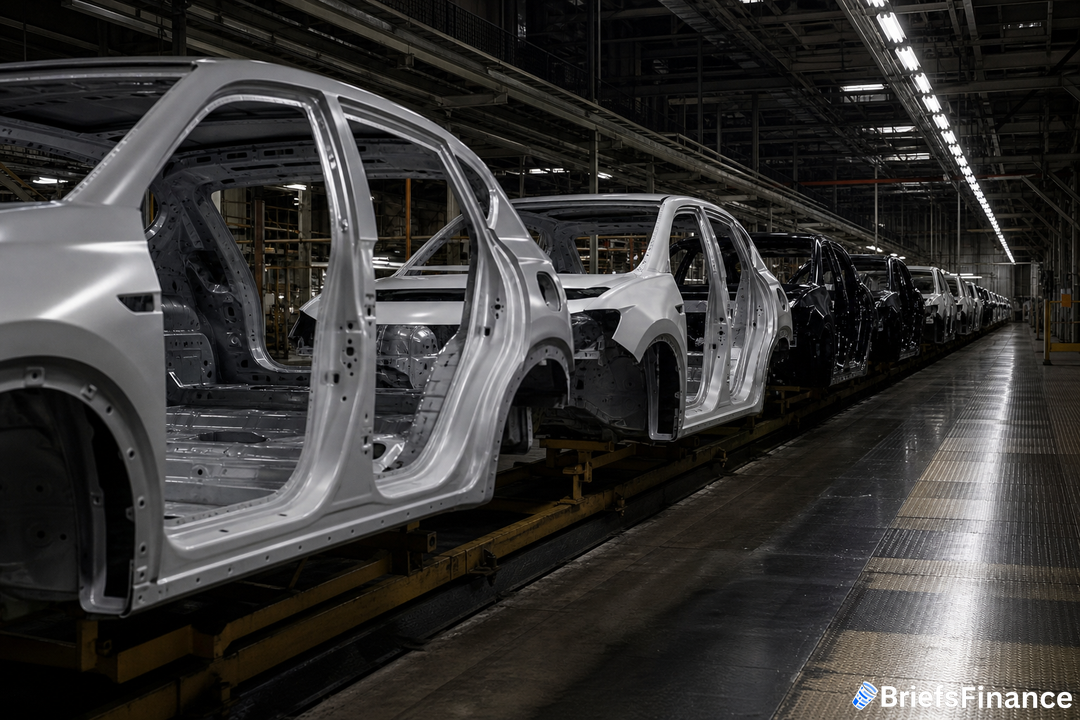
Honda is Canada's No. 2 vehicle producer behind Toyota Motor, but more than 60% of its U.S.-market sales come from models built at its factories in America. That cross-border production is why uncertainty around tariffs and the absence of a North American trade deal loom so large, given how often parts move back and forth during manufacturing.
"I never thought I would see the North American region be put at a disadvantage like this," Thomas said, noting some overseas markets enjoy better tariff terms. The Trump administration has reached deals with Japan and South Korea - both significant auto exporters to the U.S. - that impose 15% tariffs on vehicles.
What this means for your portfolio
Higher tariffs lift costs on vehicles and parts, which can ripple through margins, sticker prices, and production schedules. For supply chains built across the U.S., Canada, and Mexico, a jump to 50% would be felt from Canadian assembly lines to U.S. showroom floors.
The bottom line: watch the calendar and the talks. Preserving a trilateral framework like USMCA narrows uncertainty for automakers and suppliers, while a breakdown could add fresh volatility to auto stocks and the wider manufacturing trade.
New tools like AI can help investors spot opportunities and manage risk thoughtfully. On 11/17, our CEO Jaspreet Singh goes live for our first ever investor livestream on how to use ChatGPT and Claude to invest like a pro. Register to join him.