Free NewsletterPro Login

Warning: Undefined variable $stocks in /var/www/briefs.co/htdocs/wp-content/plugins/oxygen/component-framework/components/classes/code-block.class.php(133) : eval()'d code on line 448

Warning: foreach() argument must be of type array|object, null given in /var/www/briefs.co/htdocs/wp-content/plugins/oxygen/component-framework/components/classes/code-block.class.php(133) : eval()'d code on line 448

Warning: Undefined variable $funds in /var/www/briefs.co/htdocs/wp-content/plugins/oxygen/component-framework/components/classes/code-block.class.php(133) : eval()'d code on line 472

Warning: foreach() argument must be of type array|object, null given in /var/www/briefs.co/htdocs/wp-content/plugins/oxygen/component-framework/components/classes/code-block.class.php(133) : eval()'d code on line 472
/* the link was here */

Investors Show Caution on $12.3B BlackRock Bond for Data Center Backed by Meta

Published Jul 25, 2026
Share:
Investors Cautious on $12.3B BlackRock Bond
Summary:
  • BlackRock's $12.3 billion bond sale for a Meta data center drew only $17 billion in orders, weaker than typical demand.
  • The bonds from Sopaipilla Investor LLC offer a yield spread of 2.875 percentage points above 10-year Treasuries and mature in 2048.
  • Growing worries about tech overspending on AI infrastructure and a surge in bond supply dampened investor appetite.

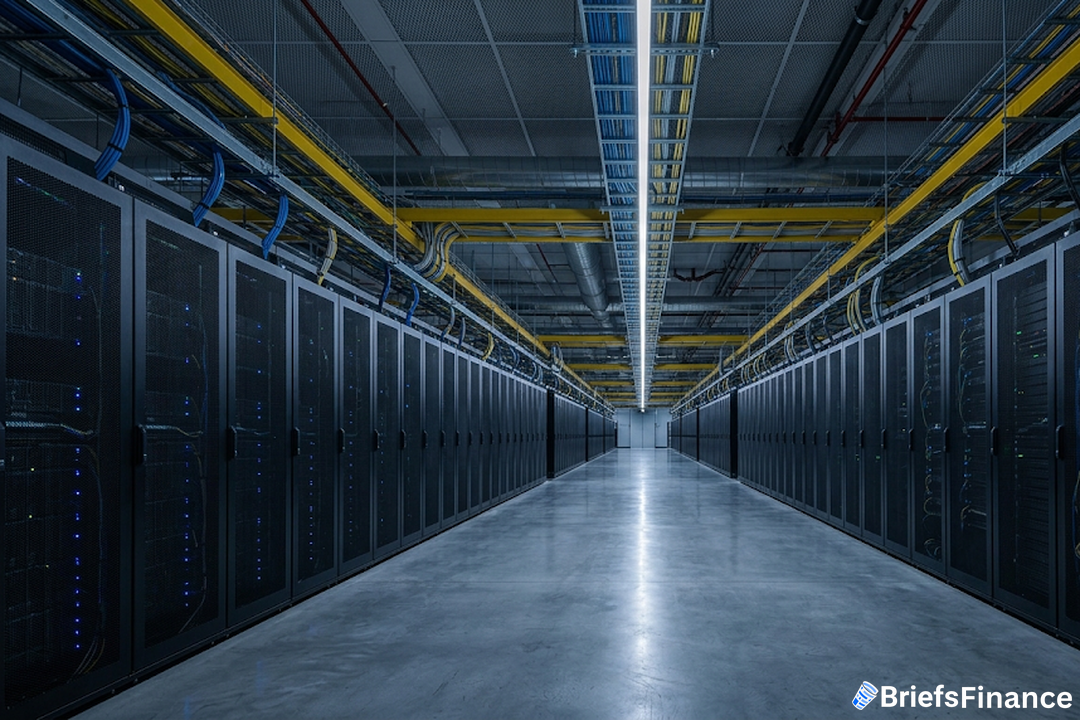
Data center bonds have seen intense demand as technology companies compete to expand their AI computing capabilities. This particular project - a 1-gigawatt campus in El Paso, one of the largest of its kind - is backed by Meta. Yet the sheer volume of similar debt financings is starting to weigh on investor appetite.

BlackRock's deal is just the latest in a wave that includes Hut 8 Corp.'s $4.25 billion raise last month and Blackstone-backed QTS's $4.6 billion bond for a Microsoft-tied project. The pattern is clear: the market is asking for a higher price to take on this risk.

The entity's name, Sopaipilla, follows a pattern seen in other BlackRock data center bonds, such as the Beignet offering, which also used a food-themed moniker. That earlier bond now trades at a narrower spread, making the new deal's pricing more expensive by comparison.

A Deal That Did Not Quite Land

Wall Street loves a good AI story. But even the best story gets old if you hear it too many times.

BlackRock found that out this week. The asset manager is trying to raise $12.3 billion through a bond sale to fund a massive data center campus in El Paso for Meta. The facility is expected to have 1 gigawatt of computing capacity - enough to make it one of the larger projects of its kind.

The response from investors? Lukewarm at best.

Get the market news that matters in a five-minute read with Market Briefs, our free daily newsletter

The gap between orders and the amount on offer is narrow enough to make the deal's pricing team work a little harder.

This spread is 0.4 percentage point larger than the current trading level of a comparable bond from a different BlackRock-related offering, called Beignet. "The bottom line," said a bond market participant, "the market is not handing out easy money for AI projects anymore."

Why Investors Are Getting Picky

This deal did not land in a vacuum. It arrived in a market that has been drowned in tech debt.

Amazon recently sold $25 billion in bonds, and its order-to-offer ratio came in at just 1.6 times. That is well below this year's average of four times for investment-grade bonds. Meta itself faced weak demand for a $25 billion bond offering back in April 2026, which followed a $30 billion deal six months earlier.

The pattern is clear: investors are starting to ask whether all of this spending on AI infrastructure will actually pay off. That question got louder after Alphabet raised its 2026 capital spending forecast. Higher spending on data centers and AI gear means more debt, and more debt means more supply hitting the market.

On top of that, oil prices have climbed because of the Iran conflict, which tends to make investors nervous across the board. The Sopaipilla bonds are due in 2048, which gives investors a long time to wait and see if the AI boom delivers. Right now, they are asking for more compensation for that wait.

What It Means for Your Portfolio

The pricing of this bond matters beyond Wall Street trading desks.

Some context: this is not the only big data center project looking for money. The numbers keep getting bigger. But the market is sending a signal.

When spreads widen - meaning bond yields go up - it makes borrowing more expensive for companies. If the cost of financing AI projects rises, that could slow down the whole building boom. And if that happens, the stocks of companies tied to AI spending could feel the pinch.

For investors holding bonds or bond funds, there is a different story. Wider spreads mean higher yields, which can be attractive for people looking for income. The Sopaipilla bonds are set to price on Monday, and during the syndication process the spread could tighten a bit - that is normal in these deals. But the initial numbers suggest the market wants a premium.

Join Market Briefs, our free daily newsletter, for a quick daily rundown of the markets
Disclosure

Recent News

1 2 3 … 101

Get Market Briefs delivered to your inbox every morning for free!

No fluff. No noise. No politics. Just finance news you can read in 5 minutes.

Blogs

October 5, 2026
What Is the Briefs Connector? A Simple Guide
  • The Briefs Connector lets your favorite AI read Briefs research, like Pro reports and the Briefs Score.
  • Without it, an AI asked about investing can give answers that sound right but aren't backed by that research.
  • It explains the research, but it won't tell you what to buy or sell.
Read More
October 5, 2026
Is a Recession Coming? What the Last Five Rate Hiking Cycles Say
  • The Fed has started raising rates again, and in the last five hiking cycles going back to 1994, a recession never started while the hikes were underway.
  • The pain showed up where there was a bubble to pop - housing in 2008, dot-coms in 2000, the pandemic money-printing boom in 2022 - and usually after the hikes ended.
  • Private equity and private credit are feeling this cycle first, and how far the pain spreads depends on how high rates go and how long they stay there.
Read More
October 2, 2026
Fed Interest Rates May Rise Again in 2026 - and the Newest Culprit Is AI
  • Fed Governor Barr told a meeting our head of investing research attended that higher rates are likely in 2026, lower inflation may not come soon, and AI is now pushing prices up.
  • The same week, President Trump asked the biggest AI companies to police themselves under an accord that's morally but not legally binding, because the White House sees AI as a race with China.
  • Higher rates put downward pressure on asset prices and squeeze borrowers, but the way through hasn't changed: own investments, buy on a schedule, and treat downturns as discounts.
Read More
October 1, 2026
Housing Market 2026: Why Office Buildings Are Cracking Before Houses Do
  • Office buildings are selling for 80% to 95% off because their five-year loans are resetting at much higher rates while half-empty floors have gutted the income those buildings are valued on.
  • Housing is under pressure, not cracking: a $400,000 mortgage costs $975 more a month than at 3%, but six of every seven mortgages are still under 6% and those owners are staying put.
  • Whether pressure turns into cracks is a race between unaffordability and the economy, and either way Jaspreet's rule is to treat your house as a liability and buy only what you can afford.
Read More
September 30, 2026
Dividend Investing vs. Growth Investing: Why the Slower Portfolio Can End Up Bigger
  • "What stock should I buy?" is the wrong first question. Growth, income, or wealth preservation comes first, and the goal changes which stocks even make sense.
  • At $500 a month for 30 years, 13% growth builds about $1.75 million. 10% growth plus a reinvested 4% dividend builds a little more than $2.2 million and pays a little more than $80,000 a year.
  • Income investors have US dividend ETFs, REITs, and international dividend funds to study. Growth investors have the Nasdaq 100, AI and chip funds, and small caps. None of it is a recommendation.
Read More
September 29, 2026
Why Is Gold Going Down? A 5.2% Treasury Yield Just Took Its Job
  • President Trump rejected Iran's deal to reopen the Strait of Hormuz, oil prices jumped back up, and gold fell instead of rising.
  • Treasury yields hit their highest level in more than 20 years, so investors sold gold and bought Treasuries that pay interest.
  • Higher Treasury yields make the national debt, mortgages, car loans, and credit cards more expensive, with the Fed's next rate decision due October 28.
Read More
September 28, 2026
The Strategic Bitcoin Reserve: Why the Government Wants Bitcoin to Explode
  • The US government holds about 328,000 Bitcoin, worth roughly $25 billion, and since a 2025 executive order it keeps seized coins instead of selling them.
  • Washington wants a bigger pile of assets so its $40 trillion national debt looks smaller next to them, which lets it keep borrowing and spending.
  • Bitcoin's wild price swings, and a government holding a coin built to escape governments, are the two risks investors need to watch.
Read More
September 25, 2026
BRIEFS EXCLUSIVE: 43% Of Respondents Say Bills Outran Their Income Over Past Two Years
  • 43% of the 494 Market Briefs readers surveyed said their bills grew faster than their income over the past two years, even though 79% could cover a surprise $5,000 expense tomorrow.
  • Half of readers own gold or crypto, the two classic bets against a weaker dollar, and only 13% bought nothing at all in the last 12 months.
  • The median reader says it takes $150,000 a year to feel financially secure, about $62,000 above the U.S. median household income.
Read More
September 25, 2026
The Economy Is Booming. So Why Did Stocks and Bonds Fall Together?
  • S&P Global says the US economy is growing at its fastest rate since 2021, with corporate profits up 28.9% in a year, almost four times the historical average.
  • Stocks and bonds fell at the same time, which is not how the two markets normally behave, because Treasury yields above 5% now compete with stocks for investors' money.
  • Jaspreet Singh lays out three ways to invest through a shift like this: always be buying, buy the crash, or follow the money before it hits the headlines.
Read More
September 24, 2026
The 2026 Economic Reset Is Starting: Are We in a Recession, or Is the Pain Still Ahead?
  • The Federal Reserve has flipped from stimulating the economy to fighting inflation with higher interest rates, while the White House still wants growth at almost any cost.
  • The national debt tops $40 trillion, has outgrown the entire U.S. economy, and its interest payments are now the government's fastest-growing expense.
  • Higher rates bring pain for private equity, private credit, and speculative assets, but they open opportunities for investors holding cash, treasuries, and value assets.
Read More
1 2 3 … 28
Share via
Copy link