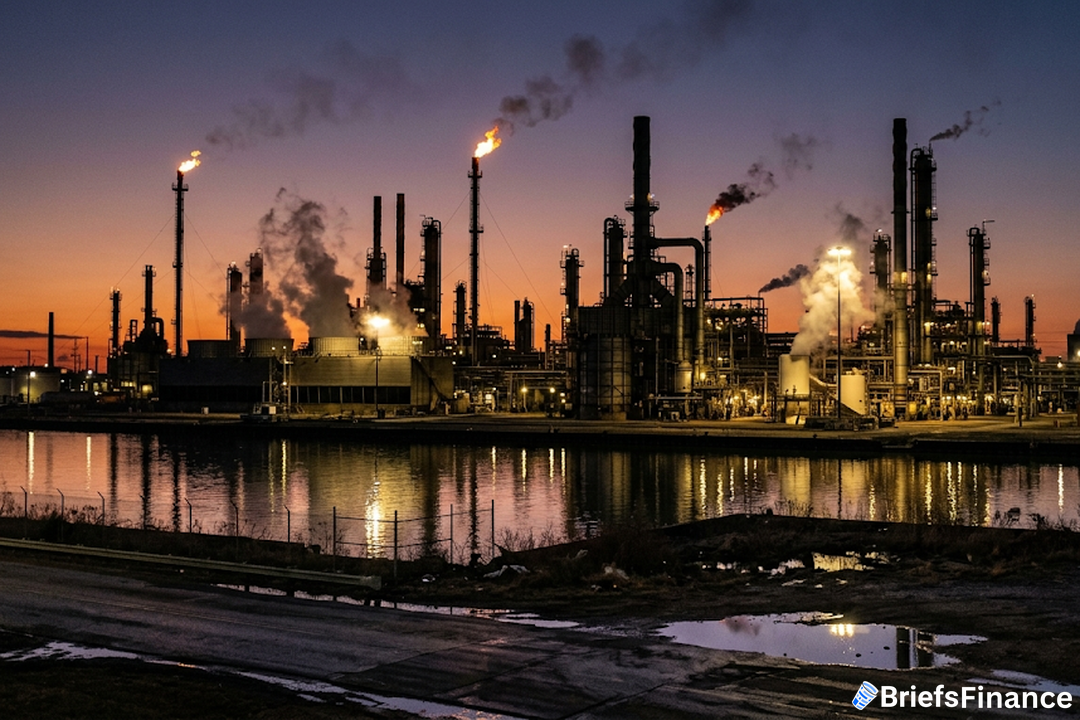
The Strait of Hormuz Just Became the World's Most Dangerous Chokepoint Again
The Strait of Hormuz is the crucial oil passage that gives Tehran its main bargaining chip in the conflict. The market reacted immediately.
He specified that such targets could be situated adjacent to or inside the capital, Tehran.
A Ceasefire That Lasted Less Than Two Weeks
To understand why this is happening, you have to look back about a month.
Get the market news that matters in a five-minute read with Market Briefs, our free daily newsletter
However, the agreement did not settle how the Strait of Hormuz would be managed going forward. Iran read the text as granting it a part in overseeing strait traffic and possibly imposing fees for maritime services after the first 60 days, whereas the U.S. insisted the waterway had to stay free and open.
Secretary of State Marco Rubio said Iran is not serious about a deal and accused the country of violating the June 17 agreement within two weeks. Meanwhile, U.S. Central Command has now carried out 11 straight nights of strikes on Iranian targets, targeting military command posts, drone depots, and military logistics hubs. Tensions escalated further after three U.S. service members were killed recently.
Iran is not backing down either. An Iranian military source, who spoke on condition of anonymity, told the state-run Tasnim News Agency that if the U.S. follows through on Trump's threat, Iran would attack regional infrastructure and bridges, especially energy facilities in which the U.S. holds investments. The source asserted that Iran is still committed to managing transit in the Strait of Hormuz, explaining that vessels would only be permitted safe passage if they coordinated with Tehran and followed Iranian procedures.
What This Means for Your Portfolio
Oil prices are up sharply in a single morning, but the real question is where they go from here.
The bottom line: The Strait of Hormuz is the world's most critical oil chokepoint. Secretary of State Rubio cautioned that allowing Iran to control a global waterway, collect fees, and attack vessels that refuse payment would set a hazardous precedent. When the two countries that control that strait are trading threats about bombing each other's infrastructure, the risk premium on oil does not go away overnight.
Rubio affirmed that the U.S. is still open to talks to end the conflict. "The U.S. would love to reach a diplomatic settlement, we'd love to reach an agreement if it were possible with Iran … where they say we'll no longer sponsor terrorism and we will not pursue a nuclear weapon or the things that you need for a nuclear weapon," he said. But his assessment was blunt: "Right now they don't seem to be serious."
For investors, the takeaway is straightforward but uncomfortable. Oil prices have room to run higher if the conflict keeps escalating. And those higher prices do not stay in the commodity markets. They show up at the pump, in airline stocks, in shipping costs, and in the inflation numbers that the Federal Reserve watches closely.
This is not a moment for panic. It is a moment for paying attention. Energy stocks tend to benefit from rising oil prices, but the broader market usually does not love the uncertainty. The next few weeks will tell us whether the 60-day deal ever had a real shot, or whether the fighting was always going to come back.
Join Market Briefs, our free daily newsletter, for a quick daily rundown of the markets