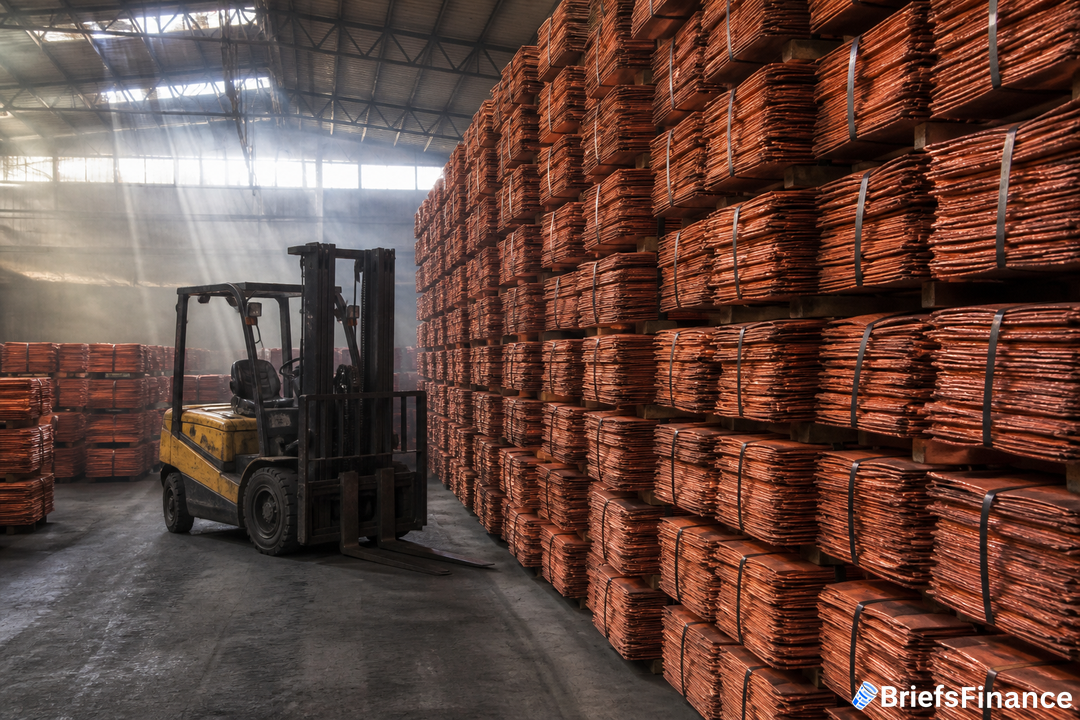
Trafigura leans in as near-term supply dries up
Trafigura Group has been on the bid for significant copper tonnage to channel into Asia as immediate availability thins out. Over the past two weeks, the Singapore-based trader approached multiple producers and merchants across the region to lock in sizable volumes earmarked for November and December, said people familiar with the talks who requested anonymity because the discussions were private.
Those sources said Trafigura has been willing to pay up versus competitors, a stance that has helped propel regional spot add-ons to fresh highs. A company spokesperson declined to comment.
China's tight market shows up in prices, spreads and stocks
Smelters in China are contending with scarce inputs, from mined concentrates to scrap, which has slowed refined output. Even with demand described as relatively soft, buyers have been forced to chase replacement spot units to fill gaps left by domestic suppliers. China consumes nearly 60% of global copper, and historically its buying has steadied prices during big pullbacks. Copper has slipped this week alongside the broader equity selloff, but there is growing chatter that Chinese manufacturers could buy the dip, which would further strain local availability.
The strain is visible in price signals. In Shanghai, the premium paid on top of futures for spot metal has surged to a record 2,615 yuan ($392) a ton after tripling in two weeks, per Shanghai Metals Market. Fastmarkets indicates that import premiums have leapt by over 40%, reaching $195-210 a ton, the highest in data back to 2017, and Southeast Asia has seen sharp increases as well.
The futures curve backs that up. On the Shanghai Futures Exchange, December contracts now sit above January, a textbook signal of a tighter near-term market. By late Friday, the nearest-month spread expanded to over 1,200 yuan a ton, the widest since 2005.
Market shifts can open opportunities for patient investors who use smarter tools. We're hosting our first ever investor livestream on 11/17 to show you how to use ChatGPT and Claude to invest like a pro, hosted by Briefs Finance CEO Jaspreet Singh. Save your seat.
Deliverable inventories at SHFE warehouses stood at 33,848 tons on Friday, approaching a 2022 multiyear low and covering less than a single day of nationwide copper use. Throughout this year, Chinese buyers have been running down inventories, as international miners and traders have preferred routing material to the US during the last two years. Some traders warn that high premiums, depleted stocks and tight spreads could flip if supply loosens, but see little near-term relief.
Extra pressure points: Congo disruptions and a US wildcard
Disruptions to exports from the Democratic Republic of Congo, China's largest source of refined copper, threaten to crimp domestic supply. Authorities, acting under a recent crackdown on illegal mining, seized more than 500 trucks and confiscated several thousand tons of copper as well as cobalt; in October, they also carried out raids at several Chinese-African copper plants.
There is also a left-field path for relief: tapping US supplies. A buildup of copper in the US has overlapped with speculation that President Donald Trump could impose import duties on the metal. On paper, the rise in Shanghai futures and spot premiums would cover the cost of shipping from the US to China, people familiar with the trade math said. The catch, they said, is that if tariffs are introduced, sellers could make more by keeping those cargoes in the US.
The tariff question picked up steam ahead of the midterms, and analysts and traders expected that imports to the US would decelerate if tariffs did not materialize. The mere possibility has been dragging on prices, and prior to China's squeeze, few anticipated that large volumes of US copper would be re-exported. According to Amy Gower, Morgan Stanley's metals strategist, "One of the main drivers for the tightness is the slowdown in refined production growth, which reflects the fact that smelters have been struggling for feedstock." On whether US metal moves to China, she added, "This is starting to become more of a question, but for it to happen I think you'd need tariffs to be definitively ruled out." Her base case: US stocks remain "quite sticky" and decline mainly through under-importing.
The bottom line for investors
Near term, Asia's physical market is tight: record spot add-ons, backwardation on Shanghai futures, and warehouse stocks near the floor. Trafigura's recent buying for November and December has reinforced that backdrop by lifting competition for metal. What could change it: a real improvement in feedstock for Chinese smelters, the outcome of DRC export disruptions, or clarity on US tariff policy that shifts trade routes.
For your watchlist: Shanghai spot premiums, SHFE inventory prints, the front-month spread, and any policy signals out of Washington. Those will tell you whether the squeeze persists or eases, and how that may ripple into miners, merchants and manufacturers in your portfolio.
Keeping an edge often means learning how new tools clarify investment choices. On 11/17, our CEO Jaspreet Singh goes live for our first ever investor livestream on how to use ChatGPT and Claude to invest like a pro. Register to join him.