Free NewsletterPro Login

The World's First Industrial-Scale Green Fertilizer Plant Just Got A $665 Million Greenlight

Published Apr 29, 2026
Share:
Summary:
  • Atome PLC reached a final investment decision on a 260,000-ton-per-year low-carbon fertilizer plant in Paraguay.
  • Total cost is $665 million, with $420 million in debt financing led by IDB Invest and the IFC.
  • Atome's CEO says war-driven supply shocks are making green fertilizer competitive for the first time.

Green fertilizer has long been the kind of project that pencils out on paper but never gets built at scale. That just changed - and a war helped push it across the line.

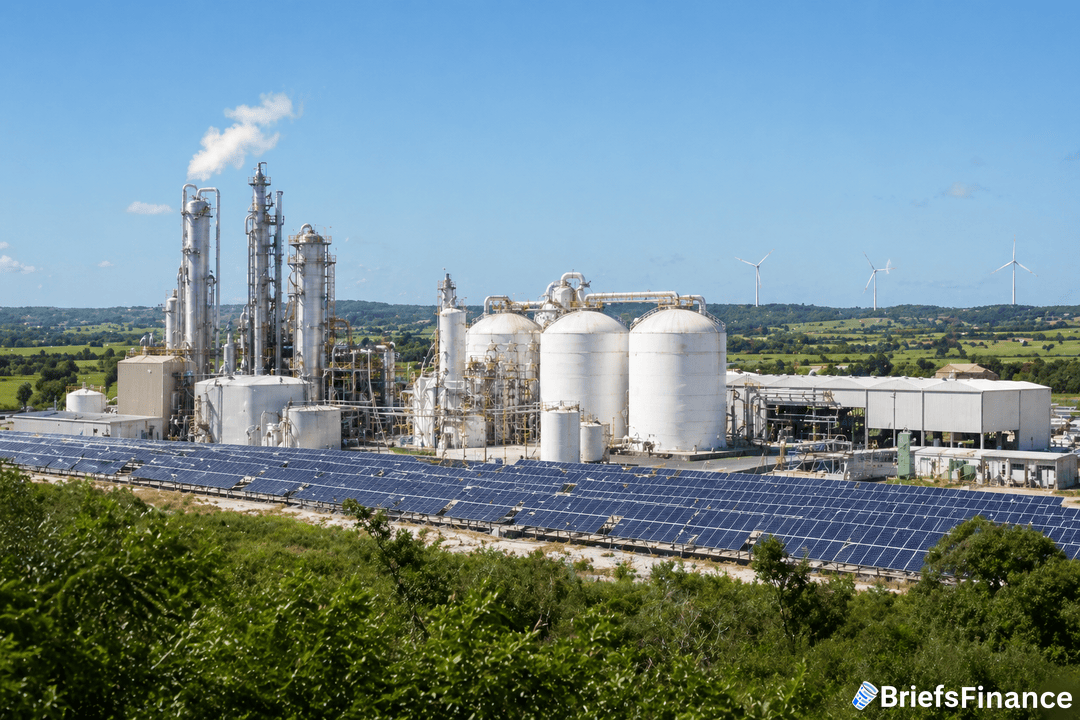
Atome PLC said this week it's reached a final investment decision on a 260,000-ton-per-year fertilizer plant in Villeta, Paraguay, with construction starting soon and full production targeted by October 2029.

The Project

The Villeta plant will run on 100% renewable power and produce calcium ammonium nitrate, which is the same fertilizer farms use today, just made without the carbon emissions tied to natural-gas-based production.

Atome has already locked in a 10-year buyer in Yara International, the Norwegian fertilizer giant, which has agreed to take the plant's full output for the duration.

The total project cost is $665 million, with $420 million of that coming as debt from international development banks led by IDB Invest and the International Finance Corp.

That makes Villeta the first industrial-scale plant of its kind anywhere in the world to clear a final investment decision.

Why The War Is The Real Story

Green fertilizer usually loses on price. Russia and its neighbors supply close to a third of the world's fertilizer at low cost, and roughly half of all fertilizer cargo passes through the Strait of Hormuz at some point in its journey to market.

Both of those numbers got harder to ignore this year as Iran's grip on the strait cut off Middle East exports and pushed spot fertilizer prices up about 50% over a recent three-week stretch.

That changes the math, since a green plant in Paraguay - far from any war zone - now looks like a hedge as much as a sustainability play.

"Supply chain disruption makes this as much a food security story as a green energy one," Atome CEO Olivier Mussat said in a recent interview with Proactive.

The Money Trail

The $420 million debt package is a big tell, since development finance institutions don't underwrite projects that can't service their debt at market terms.

That suggests the lenders are betting fertilizer prices stay high long enough to make the plant work - and Yara's 10-year offtake deal locks that view in.

For investors, it's a useful read on what supply-chain risk pricing looks like inside the global food system. Atome also signed a partnership with Casale, a Swiss engineering firm, to support future expansion - which means more plants like Villeta could be in the pipeline.

The Villeta facility is projected to displace 500,000 tons of CO2-equivalent emissions per year, which is the volume that helped unlock financing from climate-focused institutions.

What To Watch

Construction begins shortly, with full production set for October 2029 or earlier.

The swing factor is fertilizer prices. If they hold, more projects like this one clear the bar fast - if they fall, Villeta could end up being the only one of its size for years.

The London-listed Atome trades on the AIM market, and shares have been a small-cap watch for hydrogen and clean-fuel investors since the company first laid out the Villeta plan.

Disclosure

Get Market Briefs delivered to your inbox every morning for free!

No fluff. No noise. No politics. Just finance news you can read in 5 minutes.

Blogs

May 30, 2026
Financial Literacy Books That Actually Build Wealth
  • The best financial literacy books don't just teach budgeting, they shift how you think about money.
  • Two classics stand out: The Intelligent Investor for valuing investments, and Rich Dad Poor Dad for the owner's mindset.
  • Reading is only step one. The real wealth comes from acting on what you learn.
Read More
May 30, 2026
What Is a Roth Conversion? A Simple Guide
  • A Roth conversion moves money from a traditional retirement account into a Roth account.
  • You pay taxes on the money now, in exchange for tax-free growth and withdrawals later.
  • It can pay off if you expect higher taxes or more income in the future, but the timing and tax hit matter a lot.
Read More
May 30, 2026
Trailing Stop Loss: How to Protect Your Gains
  • A trailing stop loss is an order that automatically sells a stock if it falls a set percentage from its recent high.
  • As the stock rises, the sell point rises with it, locking in gains while capping losses.
  • It's most useful for active strategies like momentum investing, not for long-term buy-and-hold.
Read More
May 30, 2026
5 Types of Wealth: Why Money Is Only One of Them
  • Real wealth is more than a bank balance. It spans your finances, health, mind, purpose, and freedom.
  • Money is powerful, but it amplifies the life you already have rather than fixing a broken one.
  • True financial wealth means your cash flow covers your expenses, so your money works while you live.
Read More
May 30, 2026
How to Invest in Private Equity: A Beginner's Guide
  • Private equity means investing in companies that aren't listed on the stock market.
  • Traditional private equity is built for experienced, high-net-worth investors with large amounts to invest.
  • New rules have opened more accessible paths, like startup crowdfunding and real estate deals, often starting around $100.
Read More
May 30, 2026
What Is a Call Option? A Simple Guide With Examples
  • A call option gives you the right to buy a stock at a set price by a set date.
  • Investors buy calls when they expect a stock to rise, using less money than buying the shares outright.
  • The most you can lose buying a call is the premium, but time works against you, so it's an advanced tool.
Read More
May 30, 2026
EBITDA Formula: How to Calculate It Step by Step
  • EBITDA stands for Earnings Before Interest, Taxes, Depreciation, and Amortization, a measure of a company's core profit.
  • The formula adds those four items back to net income to show what the underlying business earns.
  • Investors use EBITDA to compare companies and to judge how many times earnings a stock is selling for.
Read More
May 30, 2026
What Is a Stock Option? A Plain-English Guide
  • A stock option is a contract giving you the right, but not the obligation, to buy or sell a stock at a set price by a set date.
  • There are two types: calls (the right to buy) and puts (the right to sell).
  • Options are powerful but risky, so they suit investors who already have the basics down.
Read More
May 30, 2026
Put Option: What It Is and How It Works
  • A put option gives you the right to sell a stock at a set price by a set date.
  • Investors use puts to bet a stock will fall, or as insurance to protect shares they own.
  • The most you can lose buying a put is the premium you paid, which makes it a defined-risk tool.
Read More
May 30, 2026
Operating Margin: What It Is and How to Calculate It
  • Operating margin shows how much profit a company keeps from its core business after paying its running costs.
  • The formula is operating income divided by revenue, shown as a percent.
  • A strong, steady operating margin signals a well-run business that controls its costs.
Read More
1 2 3 22
Share via
Copy link











