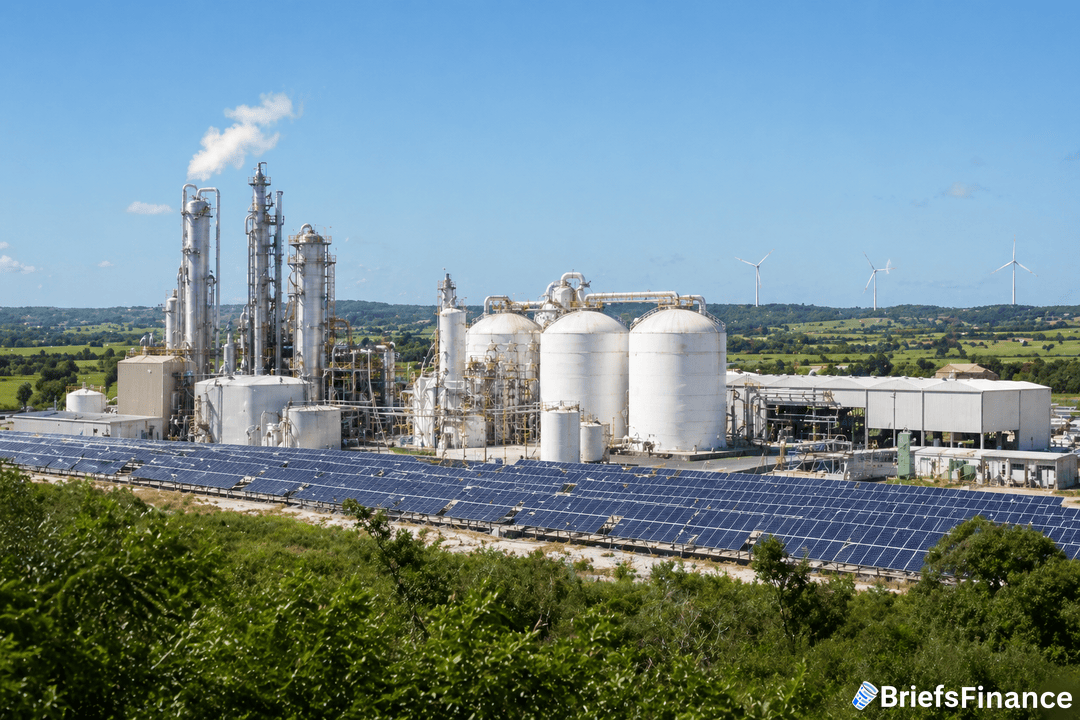
Green fertilizer has long been the kind of project that pencils out on paper but never gets built at scale. That just changed - and a war helped push it across the line.
Atome PLC said this week it's reached a final investment decision on a 260,000-ton-per-year fertilizer plant in Villeta, Paraguay, with construction starting soon and full production targeted by October 2029.
The Project
The Villeta plant will run on 100% renewable power and produce calcium ammonium nitrate, which is the same fertilizer farms use today, just made without the carbon emissions tied to natural-gas-based production.
Atome has already locked in a 10-year buyer in Yara International, the Norwegian fertilizer giant, which has agreed to take the plant's full output for the duration.
The total project cost is $665 million, with $420 million of that coming as debt from international development banks led by IDB Invest and the International Finance Corp.
That makes Villeta the first industrial-scale plant of its kind anywhere in the world to clear a final investment decision.
Why The War Is The Real Story
Green fertilizer usually loses on price. Russia and its neighbors supply close to a third of the world's fertilizer at low cost, and roughly half of all fertilizer cargo passes through the Strait of Hormuz at some point in its journey to market.
Both of those numbers got harder to ignore this year as Iran's grip on the strait cut off Middle East exports and pushed spot fertilizer prices up about 50% over a recent three-week stretch.
That changes the math, since a green plant in Paraguay - far from any war zone - now looks like a hedge as much as a sustainability play.
"Supply chain disruption makes this as much a food security story as a green energy one," Atome CEO Olivier Mussat said in a recent interview with Proactive.
The Money Trail
The $420 million debt package is a big tell, since development finance institutions don't underwrite projects that can't service their debt at market terms.
That suggests the lenders are betting fertilizer prices stay high long enough to make the plant work - and Yara's 10-year offtake deal locks that view in.
For investors, it's a useful read on what supply-chain risk pricing looks like inside the global food system. Atome also signed a partnership with Casale, a Swiss engineering firm, to support future expansion - which means more plants like Villeta could be in the pipeline.
The Villeta facility is projected to displace 500,000 tons of CO2-equivalent emissions per year, which is the volume that helped unlock financing from climate-focused institutions.
What To Watch
Construction begins shortly, with full production set for October 2029 or earlier.
The swing factor is fertilizer prices. If they hold, more projects like this one clear the bar fast - if they fall, Villeta could end up being the only one of its size for years.
The London-listed Atome trades on the AIM market, and shares have been a small-cap watch for hydrogen and clean-fuel investors since the company first laid out the Villeta plan.