Free NewsletterPro Login
S&P 500 6,287 +0.42%
DOW 44,521 -0.18%
NASDAQ 21,103 +0.71%
S&P 500 +12.4%
Briefs Finance Fund +24.8%
JOIN THE FUND →

The U.S. Just Lifted Some Iran Oil Sanctions

A stylized illustration of a cylindrical cup with blue arrows and lines indicating a swirling or rotational motion inside the cup.
Published Mar 22, 2026
[tts_player]
Share:
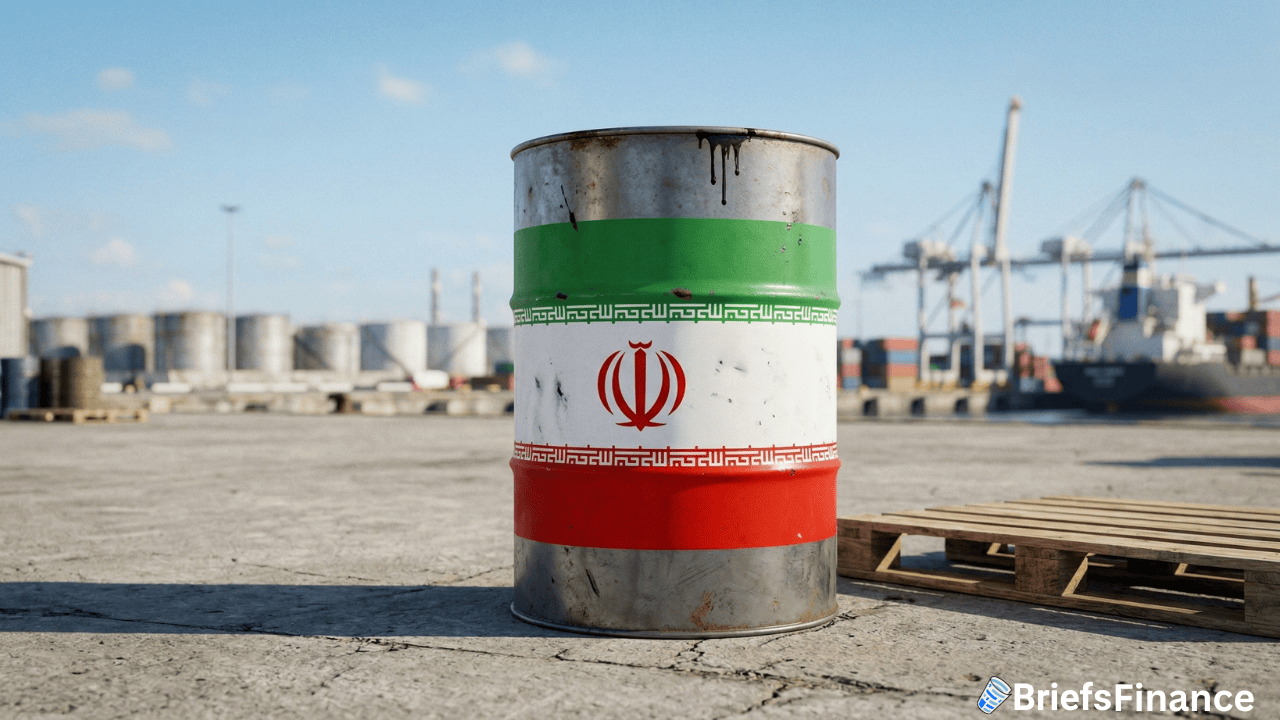
A metal oil barrel painted with the Iranian flag stands on a concrete surface in an industrial port area, hinting at the impact of U.S. sanctions, with shipping containers and a cargo ship in the background.
Summary:
  • The Treasury Department gave buyers a 30-day window to purchase roughly 140 million barrels of Iranian crude already sitting on tanker ships
  • Brent crude has blown past $110 a barrel - more than 50% higher than where it sat a year ago - as the war chokes off one of the world's most important shipping lanes
  • Critics warn the move could hand Tehran cash to fund its own defense, while supporters say it redirects cheap barrels away from China and toward global markets

The U.S. is at war with Iran. 

But plot twist: It's also telling buyers they can purchase Iranian oil - at least the barrels already floating on ships.

That contradiction landed Friday when Treasury Secretary Scott Bessent rolled out a short-term license letting companies buy Iranian crude that was loaded onto tankers before the end of Thursday. 

The window closes April 19.

It’s A Price Thing

Roughly 140 million barrels of Iranian oil are sitting on ships right now. 

Before the war, most of those barrels were headed to China at bargain prices because sanctions made other buyers too nervous to touch them.

Bessent's argument: Let other countries - India, Japan, Malaysia - compete for those barrels at full price. That puts more oil on the open market and takes away China's discount.

The catch? Iran loaded those ships. 

Why Prices Still Haven't Budged

The war has essentially shut down the Strait of Hormuz - think of it like a highway on the sea for oil.

Except this highway carries roughly 20% of the world’s oil through it.

Tanker operators won't risk the route because of Iranian attacks. 

So major producers can't get their oil out - even as Iran keeps exporting through the same channel.

The result: roughly one in every ten barrels the world uses each day has been knocked offline. 

  • That's a hole that 140 million barrels on ships can't fill for long.

The administration is throwing everything it can at the issue. 

  • A release of 172 million barrels from the country's emergency oil stockpile. 
  • Waivers that opened up domestic oil shipping to foreign-flagged vessels. 
  • A similar one-month pass on Russian oil that's already at sea.

Meanwhile, oil is still sitting near its highest levels in years.
Disclosure

Recent News

1 2 3 27

Get Market Briefs delivered to your inbox every morning for free!

No fluff. No noise. No politics. Just finance news you can read in 5 minutes.

Blogs

June 18, 2026
What Is a Stop Loss Order? A Simple Guide
  • A stop loss order automatically sells a stock once it falls to a price you set.
  • It's a tool to cap losses or lock in gains without watching the market all day.
  • It works best for active strategies, and can backfire if used carelessly on long-term holdings.
Read More
June 18, 2026
Best S&P 500 Index Fund: How to Choose One
  • The best S&P 500 index fund for most investors is simply the cheapest, most established one that tracks the index well.
  • Funds like VOO, IVV, and SPY all hold the same 500 companies, so the biggest difference is the fee.
  • Pick one, automate your buys, and let time do the heavy lifting.
Read More
June 17, 2026
What Are Penny Stocks? Risks and Rewards Explained
  • Penny stocks are very low-priced shares of very small companies, often trading for just a few dollars or less.
  • They promise huge gains but carry huge risks: low liquidity, high failure rates, and wild price swings.
  • Most investors are better served by quality companies and funds than by chasing cheap shares.
Read More
June 17, 2026
Best Stocks for Beginners With Little Money
  • The best stocks for beginners with little money usually aren't individual stocks at all - they're low-cost index funds.
  • You can start with $100 or less and use small, regular investments to build wealth over time.
  • Focus on diversification and consistency, not on picking the next big winner.
Read More
June 16, 2026
Tech Stocks: A Simple Guide for New Investors
  • Tech stocks are companies in the information technology and related sectors, from software to chips to the internet giants.
  • They've driven much of the market's growth, but they can be volatile and richly valued.
  • The smart approach is to understand what you own and not let one sector run your whole portfolio.
Read More
June 16, 2026
What Is a Joint Stock Company? A Simple Guide
  • A joint stock company is a business owned by many people, each holding shares of stock that represent a slice of ownership.
  • It's the basic idea behind every public company you can buy on the stock market today.
  • Owning a share makes you a part-owner, entitled to a piece of the profits and growth.
Read More
June 16, 2026
Capital Gains Tax in California: A Simple Guide
  • Capital gains tax is what you owe when you sell an investment for more than you paid for it.
  • How long you held it matters: long-term gains are taxed more gently than short-term gains at the federal level.
  • Smart investors lower the bill with tools like tax-loss harvesting and holding for the long run.
Read More
June 15, 2026
Top Covered Call ETFs: How to Compare Them
  • Top covered call ETFs are income funds that own stocks and sell call options against them to generate steady cash.
  • The best one for you is the fund whose income, holdings, and fees fit your goals, not simply the one with the flashiest yield.
  • They all share one trade-off: more income today, less upside in a big rally.
Read More
June 15, 2026
What Are Stock Options? A Plain-English Guide
  • Stock options are contracts that give you the right, but not the obligation, to buy or sell a stock at a set price by a set date.
  • There are two kinds: calls (the right to buy) and puts (the right to sell).
  • Options can multiply gains or wipe out your money fast, so they suit investors who already know the basics.
Read More
June 15, 2026
EBITDA Margin: What It Is and How to Calculate It
  • EBITDA margin measures how much core profit a company keeps from each dollar of sales, before interest, taxes, and accounting deductions.
  • The formula is EBITDA divided by revenue, shown as a percent.
  • A higher, steadier EBITDA margin usually signals a more efficient, more durable business.
Read More
1 2 3 23
Share via
Copy link










