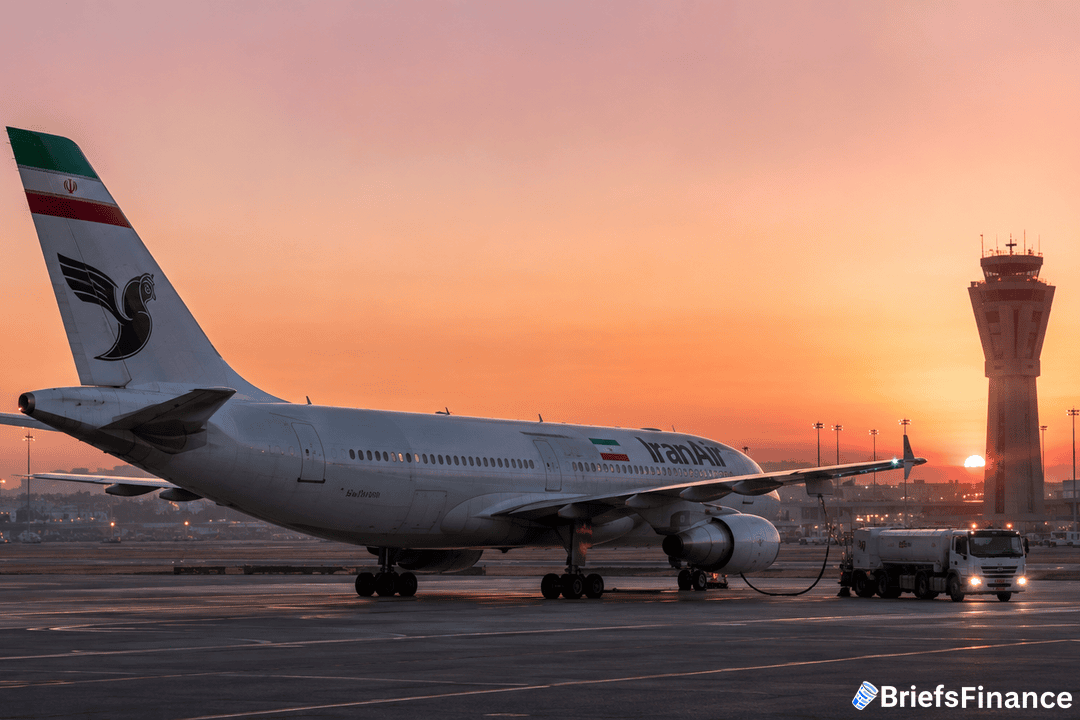
This follows a ceasefire in early April that largely stopped attacks over the Strait of Hormuz. Iran's Mehr news agency reported that officials at Tehran Imam Khomeini International Airport have finished arrangements to restart the Tehran-Dubai route, with the first flight departing on Monday. Mehr agency quoted an airport official as saying, "We have finished arrangements to restart the Tehran-Dubai route, and the first flight departed as scheduled."
In the first phase of restarting service, Iranian carriers will operate flights to the UAE, while Emirati airlines will join in a subsequent phase, according to the Islamic Republic News Agency, which cited a spokesperson for Iran's Civil Aviation Authority. Prior to the conflict starting on February 28, Emirates and Flydubai had regular flights to Iran. Both airlines did not reply promptly to inquiries about the reported plans to resume services.
Get your free investing masterclass bonus when you join Market Briefs, our free daily newsletter
The UAE's actions suggest a desire to improve relations with Iran, despite having been the primary target of Iranian drone and missile strikes during the conflict.
The conflict between the US/Israel and Iran severely disrupted regional aviation, leading numerous nations to shut their airspace for varying periods, while some airport infrastructure was harmed by Iranian airstrikes and debris from interceptions. Emirates, Qatar Airways, and Etihad Airways reduced their services and redesigned their global route networks to match the changed demand during the war. At times, Emirates operated aircraft with very few passengers to its Dubai base because travelers were avoiding the Persian Gulf region.
Background and Context
The resumption of flights comes amid broader efforts to de-escalate regional tensions. Before the war, the Tehran-Dubai route was one of the busiest in the Middle East, carrying hundreds of thousands of passengers annually - many of them Iranian businesspeople, tourists, and expatriates living in the UAE. The closure of that route in late February forced travelers to rely on indirect connections through third countries, adding time and cost.
Reopening the corridor is a significant confidence-building measure that signals a gradual return to normality after months of hostilities. Diplomatic channels remain active: US and Iranian representatives have held indirect talks mediated by Oman and other parties, focusing on strait security, nuclear safeguards, and broader de-escalation. The UAE, while a key US ally, has historically maintained strong economic and cultural links with Iran, and restoring direct air links could pave the way for wider commercial exchanges, including trade and investment flows.
The resumption also serves as a practical test of the ceasefire's durability. Both sides have an incentive to avoid a relapse: Iran needs to revive its battered economy, while the UAE seeks to restore its position as a regional hub for business and transport. Any renewed hostilities could quickly ground flights again, making the coming weeks critical for the broader peace process.
Subscribe to Market Briefs, our free daily newsletter, and claim your bonus investing masterclass